
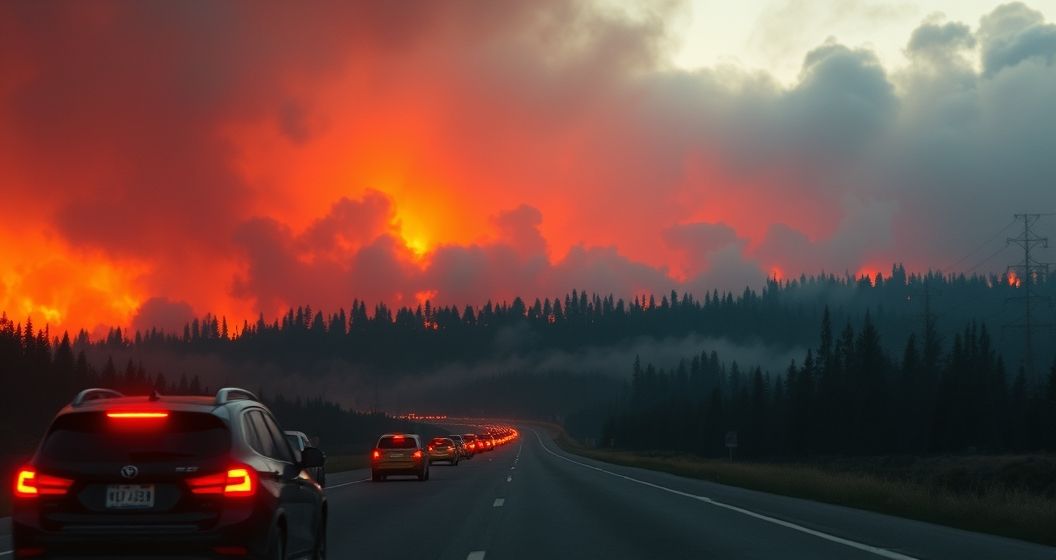
Intense wildfires are sweeping across Western Canada, prompting mass evacuation orders and placing several communities on high alert. The aggressive blazes, particularly in British Columbia and Alberta, have stretched emergency resources thin and raised significant concerns over air quality across large regions. Authorities are grappling with unpredictable conditions as the situation continues to evolve rapidly, marking an intense start to the fire season for the provinces.
British Columbia at the Epicenter
In northeastern British Columbia, thousands of residents have been forced to flee their homes as out-of-control fires threaten populated areas. The community of Fort Nelson and the nearby Fort Nelson First Nation are under a mandatory evacuation order, with a significant blaze burning just kilometres away. The fire has grown exponentially due to strong winds and dry conditions, creating a challenging environment for firefighters on the ground.
Emergency officials have described the situation as dynamic and extremely dangerous. Efforts are focused on protecting critical infrastructure while ensuring the safe evacuation of all residents. The rapid growth of these fires highlights the volatility of the region’s climate, which has become increasingly susceptible to extreme weather events. The focus remains on containment and preventing further spread toward residential zones.
Alberta on High Alert
Meanwhile, Alberta is also contending with multiple serious wildfires, triggering evacuation alerts for several communities, including areas surrounding Fort McMurray. This region has a history of devastating fires, and the current threat has brought back difficult memories for many residents. An out-of-control wildfire is moving closer to the city, forcing officials to issue alerts and prepare for potential large-scale evacuations if conditions worsen.
The government has mobilized significant resources, including air tankers and ground crews, to combat the flames. Favourable winds have provided some temporary relief, but officials warn that the situation remains critical. The dry, hot weather forecast for the coming days could exacerbate the fire danger, making containment efforts even more difficult for the hundreds of personnel battling the blazes.
Widespread Air Quality and Health Concerns
Beyond the immediate danger zones, smoke from the wildfires is causing significant air quality issues across Western Canada and extending into neighbouring provinces and parts of the United States. Environment Canada has issued special air quality statements for vast areas, advising residents to limit outdoor activities. The thick smoke poses a health risk, particularly for young children, the elderly, and individuals with respiratory conditions.
Health authorities are urging people in affected areas to stay indoors, keep windows closed, and use air purifiers if possible. The widespread haze is a stark visual reminder of the scale of the fires and their far-reaching impact. This secondary effect of the wildfires affects millions of people, disrupting daily life far from the front lines of the fires.
A Coordinated Emergency Response
The response to the wildfires involves a coordinated effort between provincial governments, local municipalities, and First Nations communities. Firefighters from other provinces and territories are being brought in to provide much-needed support. The primary goals are to protect human life, prevent the destruction of property, and contain the fires as quickly as possible. However, the sheer size and intensity of the blazes present a formidable challenge.

