
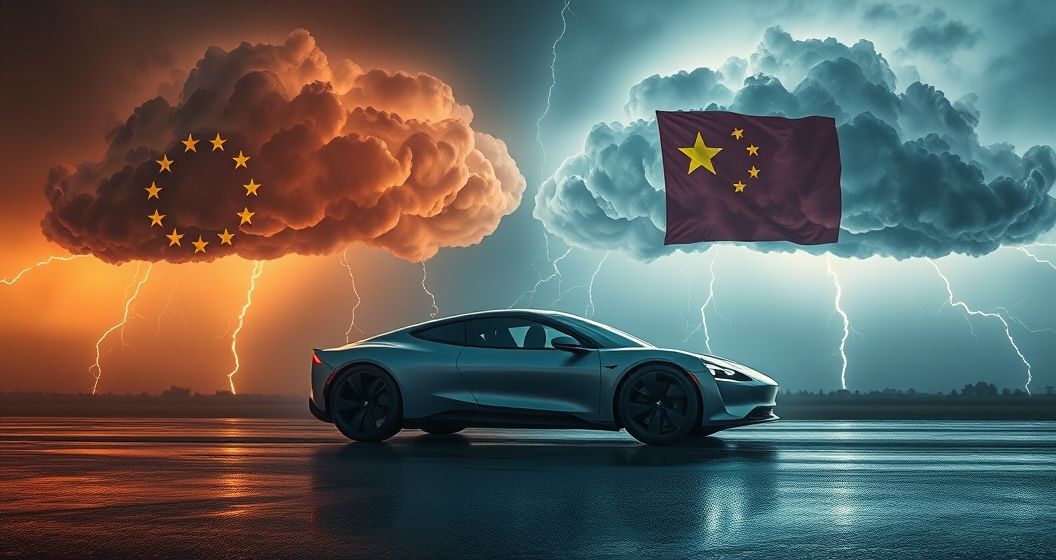
Tensions between Beijing and Brussels have escalated significantly following the European Union’s decision to impose new tariffs on Chinese-made electric vehicles (EVs). China’s commerce ministry has sharply criticized the move, labeling it as blatant protectionism that could trigger a wider trade conflict. The situation places the global automotive industry at a critical juncture, with potential consequences for both European consumers and international supply chains.
The Heart of the Dispute: Unfair Subsidies
The European Commission’s action stems from a lengthy investigation into China’s EV industry. According to EU officials, the probe concluded that Chinese electric car manufacturers benefit from unfair state subsidies, allowing them to sell vehicles at artificially low prices in the European market. This, they argue, poses a significant threat to European carmakers who are unable to compete on a level playing field. The new tariffs, which could reach up to 38% for some companies, are intended to counteract this perceived advantage.
These provisional duties are set to be applied on top of the existing 10% tariff on all imported cars. The specific rate will vary depending on the level of cooperation each Chinese manufacturer provided during the EU’s investigation. Companies like BYD and Geely face different rates, reflecting the Commission’s assessment of the subsidies they received. The move is designed to protect the EU’s domestic industry as it transitions to electric mobility.
Beijing’s Strong Condemnation and Potential Retaliation
China has vehemently denied the allegations of unfair competition and has vowed to take all necessary measures to protect its interests. The government has framed the EU tariffs as a violation of international trade rules and a move that will ultimately harm Europe’s own economic stability. Officials have warned that this decision could disrupt the global automotive supply chain and create a “lose-lose” scenario for both sides.
While specific countermeasures have not been officially announced, there is widespread speculation that Beijing could target key European exports. Industries such as agriculture, particularly pork and dairy products, as well as luxury goods and vehicles with large-displacement engines, are seen as potential targets for retaliatory tariffs. This strategic response is aimed at pressuring EU member states that supported the tariffs, particularly those with significant trade exposure to China.
A Critical Moment for Global Trade Relations
The dispute places major European automakers in a difficult position. Many, including prominent German brands, have substantial manufacturing operations and sales in China. They fear that a full-blown trade war could severely damage their profitability and market access. These companies have openly voiced concerns, advocating for dialogue and negotiation over punitive tariffs that could disrupt their global business models.
The coming weeks will be crucial in determining whether the two economic powers can de-escalate the situation through talks or if the conflict will intensify. The EU has left the door open for discussions to find a resolution, but China’s firm stance suggests that a swift compromise may be difficult to achieve. The outcome will have lasting implications for the future of green technology and international trade cooperation.


