
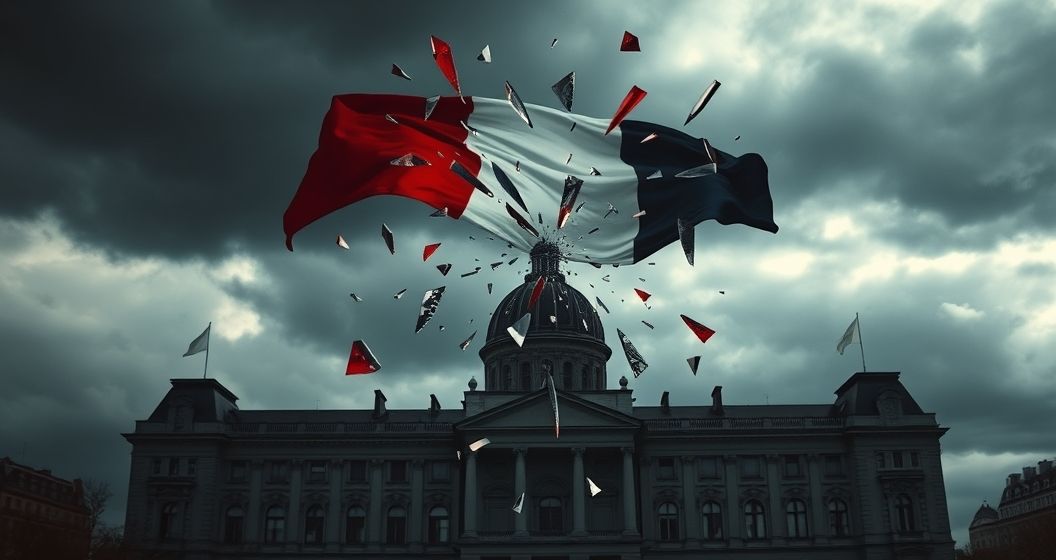
France is grappling with significant political uncertainty following President Emmanuel Macron’s decision to call a snap legislative election. This move came after a major defeat for his centrist party in the European Parliament elections, where the far-right National Rally secured a dominant victory. The nation now faces a pivotal choice between three distinct political blocs, with profound implications for its domestic and European policies.
A High-Stakes Political Gamble
President Macron’s call for a snap election is widely seen as a high-risk strategy to reset the political landscape and seek a clear mandate from voters. By dissolving the National Assembly, he aims to counter the momentum of the far-right. However, the gamble could backfire, potentially leading to a National Rally-led government and forcing Macron into a difficult power-sharing arrangement known as “cohabitation” for the remainder of his presidential term.
The Main Factions Battling for Power
The upcoming election has consolidated French politics into three primary forces, each presenting a starkly different vision for the country’s future. The campaigning period has been intense, with each bloc working to solidify its base and appeal to undecided voters who will ultimately determine the outcome.
The Far-Right’s Strong Position
Led by Jordan Bardella and Marine Le Pen, the National Rally (RN) is currently leading in opinion polls. Their platform focuses on restricting immigration, prioritizing national interests, and implementing protectionist economic policies. The party is aiming to translate its European election success into a parliamentary majority, a result that would represent a seismic shift in French politics and its relationship with the European Union.
A Newly Formed Left-Wing Alliance
In response to the far-right’s surge, left-wing parties have formed a coalition named the New Popular Front. This alliance brings together Socialists, Greens, Communists, and the hard-left France Unbowed party. While they have united on a common platform that includes reversing Macron’s pension reforms and increasing the minimum wage, internal divisions over economic and foreign policy remain a significant challenge to their long-term stability.
Macron’s Centrist Camp on the Defensive
President Macron’s centrist “Ensemble” coalition is fighting to maintain its position as a credible governing force. Positioned as the moderate alternative to the “extremes” of the right and left, the camp is warning voters about the potential for economic chaos and political instability. Prime Minister Gabriel Attal is leading the campaign, emphasizing the government’s track record and framing the election as a choice for stability and European integration.
Economic Jitters and Market Reaction
The political turmoil has already had a tangible impact on the economy. French stocks and bonds have experienced significant volatility, with the Paris stock market seeing sharp declines. Investors and business leaders have expressed concern over the high-spending proposals from both the National Rally and the New Popular Front, fearing a potential surge in public debt and a departure from pro-business reforms.


