
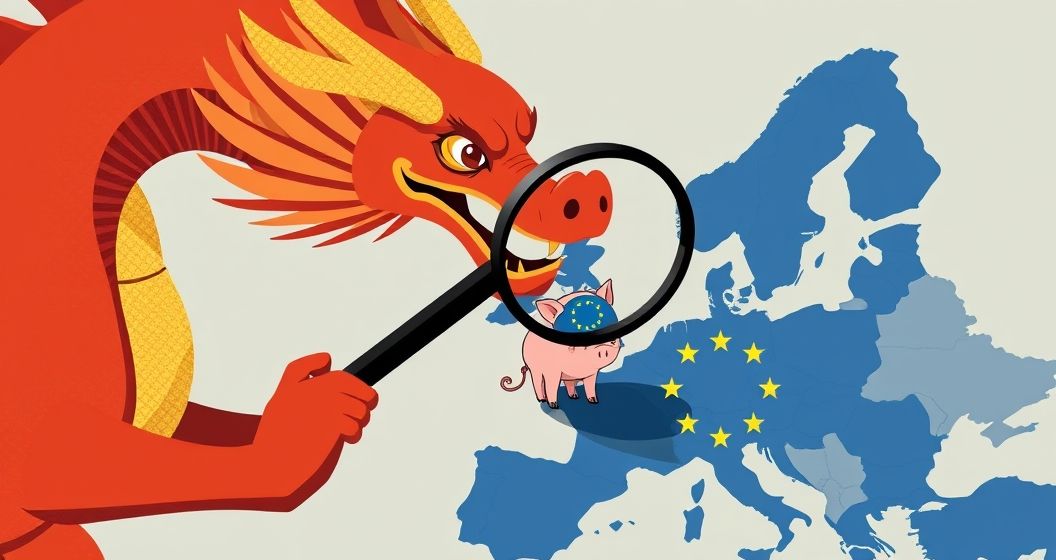
China’s Ministry of Commerce has initiated an anti-dumping investigation into pork imports from the European Union. The move is widely seen as a direct response to the EU’s recent decision to impose provisional tariffs on Chinese-made electric vehicles (EVs). This development signals a significant escalation in trade tensions between the two economic giants, raising concerns about a potential tit-for-tat trade dispute that could impact multiple industries and disrupt global supply chains.
A Direct Retaliation to EV Tariffs
The timing of the investigation is not coincidental. It was announced just days after the European Commission revealed plans to apply additional duties of up to 38.1% on imported Chinese EVs, citing unfair state subsidies. Beijing had previously warned it would take countermeasures if the EU proceeded with the tariffs. The pork investigation targets a key European agricultural export, suggesting a calculated move to apply pressure on EU member states that benefit significantly from this trade.
By targeting the agricultural sector, China aims to leverage the political influence of farmers and rural communities within the EU. This strategy has been used in past trade disputes to encourage affected member states to advocate for a de-escalation of tensions. The probe will focus on various pork products, including fresh, cold, and frozen items, which are popular in the Chinese market.
Economic Stakes for European Exporters
The European Union is the world’s largest pork exporter, and China is one of its most critical markets. Countries like Spain, the Netherlands, Denmark, and France are major suppliers of pork to China, with the trade valued at billions of dollars annually. An anti-dumping duty could make European pork significantly more expensive for Chinese consumers, potentially leading to a sharp decline in demand and causing substantial financial losses for European producers.
Industry groups in Europe have already expressed deep concern over the investigation. They argue that their exports are fairly priced and that any punitive measures would harm both European farmers and Chinese consumers who rely on these imports. The investigation is expected to last up to a year, creating a prolonged period of uncertainty for the agricultural sector.
A Pattern of Trade Friction
This is not the first time agricultural products have been caught in the crossfire of EU-China trade disputes. Earlier this year, China launched a similar anti-dumping probe into brandy imported from the EU, a move that was largely interpreted as a response to broader European trade scrutiny. The latest action involving pork reinforces a pattern of Beijing using targeted trade measures as a tool in its diplomatic and economic negotiations.
Navigating an Uncertain Path Forward
The unfolding dispute highlights the delicate balance in the EU-China economic relationship. While both sides are major trading partners, disagreements over market access, industrial subsidies, and geopolitical issues are growing. The key question is whether this series of retaliatory measures will spiral into a wider trade war or if diplomats can find a path to negotiation. The outcome of the pork investigation will be a crucial indicator of the direction these complex relations will take in the near future.


