
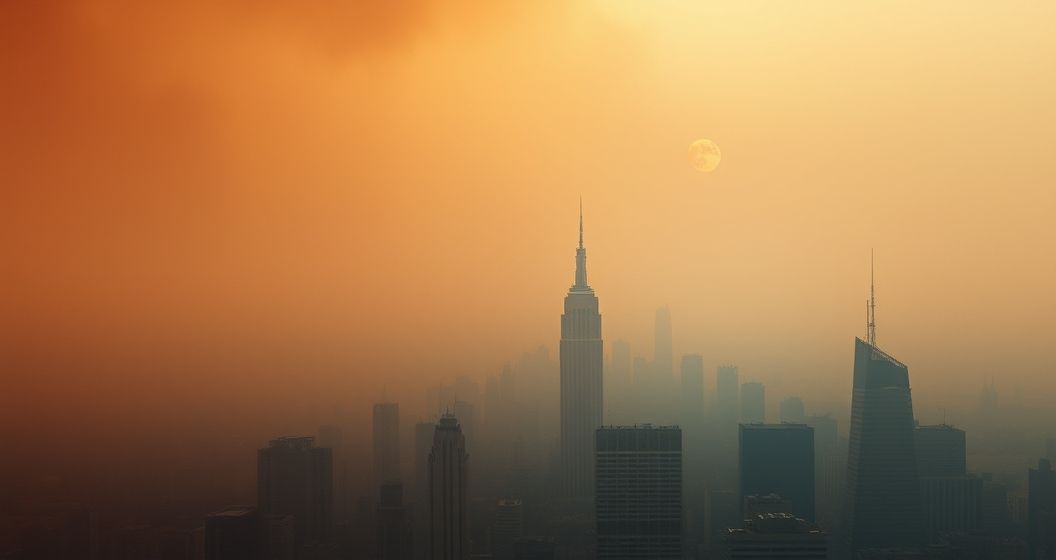
Intense wildfires burning across Western Canada are sending thick plumes of smoke across provincial lines, triggering widespread air quality advisories and raising significant health concerns for millions of residents. Environment Canada has issued special air quality statements for large areas, including major metropolitan centers, as fine particulate matter from the smoke settles over communities, drastically reducing visibility and posing risks to public health.
The Source of the Haze: Uncontrolled Burns
The primary sources of the smoke are numerous out-of-control wildfires located mainly in British Columbia and parts of Alberta. Firefighting crews are battling challenging conditions, including dry weather and winds, which are exacerbating the spread of both the flames and the resulting smoke. These fires consume vast tracts of forest, releasing immense amounts of pollutants into the atmosphere that can travel hundreds, and even thousands, of kilometers.
Widespread Impact on Canadian Cities
The atmospheric impact is not limited to areas near the fires. Major cities such as Calgary and Edmonton have experienced hazy skies and a distinct smell of smoke, with air quality health indexes reaching levels considered high risk. The smoke has also drifted eastward, affecting parts of Saskatchewan and Manitoba. This has led to cancelled outdoor events, school recess restrictions, and official advice for the general public to limit time spent outdoors.
Understanding the Serious Health Risks
Health officials are warning that exposure to wildfire smoke can have immediate and serious consequences. The fine particulate matter, known as PM2.5, can penetrate deep into the lungs and enter the bloodstream. Symptoms of exposure include coughing, throat irritation, headaches, and shortness of breath. For individuals with pre-existing respiratory conditions like asthma or heart disease, as well as children and the elderly, the risks are significantly higher.
Official Recommendations and Safety Measures
In response to the deteriorating air quality, authorities are urging residents in affected areas to take protective measures. The most effective recommendation is to stay indoors as much as possible with windows and doors closed. Using an air purifier with a HEPA filter can also help improve indoor air quality. If venturing outside is unavoidable, wearing a well-fitted N95 mask can offer protection by filtering out the harmful fine particles.
Officials emphasize the importance of monitoring local air quality forecasts and heeding all public health advisories. Avoiding strenuous physical activity outdoors is strongly recommended, as it increases the amount of smoke inhaled. The situation remains dynamic, with air quality expected to fluctuate based on wind patterns and fire activity, making vigilance a key part of public safety.