
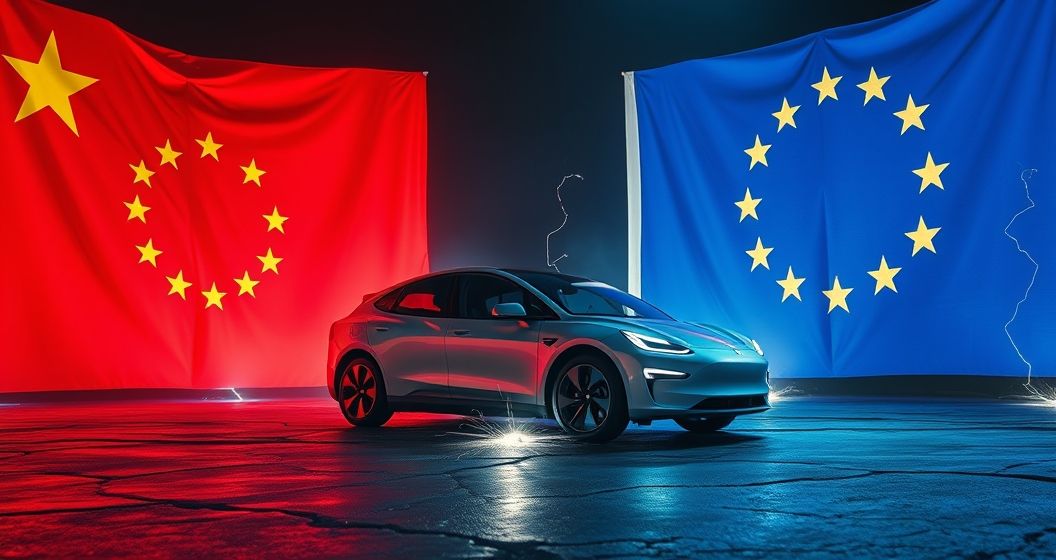
Trade relations between the European Union and China are facing a period of significant strain as Brussels considers imposing tariffs on Chinese electric vehicles (EVs). The potential move has prompted strong warnings from Beijing, signaling a possible escalation that could impact multiple global industries. This growing friction highlights the complex economic interdependence and strategic competition defining the relationship between the two economic giants.
The Heart of the Dispute: An Anti-Subsidy Investigation
The core issue stems from an ongoing anti-subsidy investigation launched by the European Commission. European officials are examining whether Chinese EV manufacturers benefit from unfair state subsidies, allowing them to sell vehicles in the European market at artificially low prices. The Commission argues that these practices could undermine European automakers, who face a highly competitive environment in the transition to electric mobility. The probe aims to determine if protective tariffs are necessary to level the playing field for domestic producers.
Beijing’s Response and Potential Retaliation
China has vehemently opposed the EU’s investigation, labeling it a protectionist act that violates international trade rules. Chinese officials have warned that they will not stand by if the EU imposes tariffs and have vowed to take all necessary measures to safeguard the interests of Chinese companies. While specific countermeasures have not been officially announced, state-affiliated media and trade groups have suggested that Beijing could target key European exports.
Sectors at Risk of Countermeasures
Potential targets for Chinese retaliatory tariffs include European agricultural products, aviation, and automobiles with large-displacement engines. Such a move would directly affect major European economies, particularly Germany, whose automotive industry relies heavily on the Chinese market. The threat of retaliation is designed to create pressure within the EU, urging member states to seek a diplomatic solution rather than engaging in a trade conflict.
Implications for the Global Auto Industry
An escalating trade dispute would have far-reaching consequences for the global automotive industry. European carmakers like Volkswagen, BMW, and Mercedes-Benz have significant manufacturing operations and sales in China. Retaliatory tariffs could severely impact their profitability and market share. Furthermore, a trade war could disrupt global supply chains, increase costs for consumers, and potentially slow down the global transition to electric vehicles by limiting competition and innovation.
A Diplomatic Path Forward
Despite the heated rhetoric, both sides have left the door open for dialogue. European leaders are internally divided, with countries like Germany advocating for caution to protect their economic interests, while others support a more assertive stance against what they see as unfair Chinese trade practices. The coming weeks will be critical as the European Commission concludes its investigation. The final decision on tariffs, and China’s subsequent reaction, will determine whether this dispute can be resolved through negotiation or if it will escalate into a broader trade conflict with global economic repercussions.


