
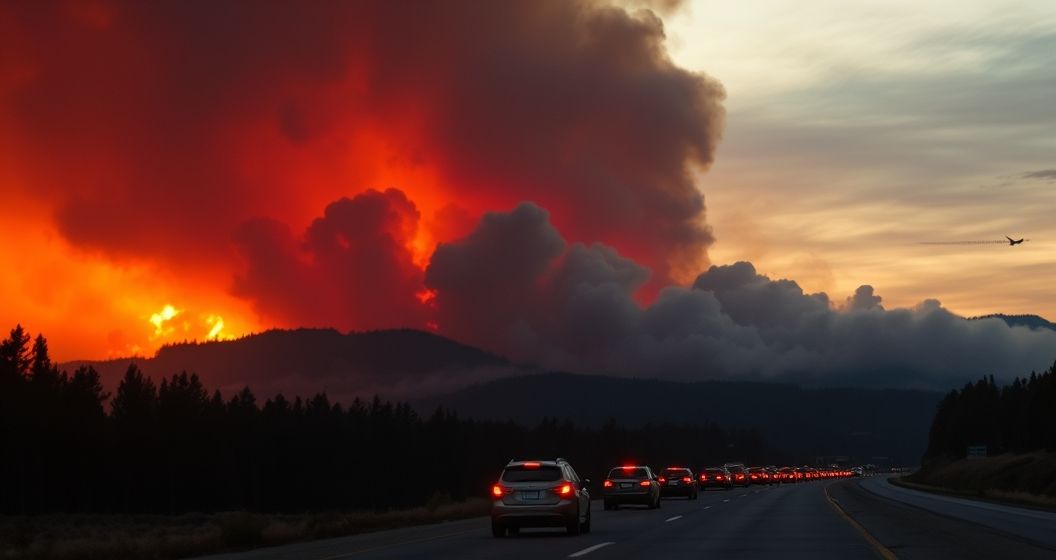
Thousands of residents in British Columbia and Alberta have been forced to flee their homes as aggressive wildfires rage across Western Canada. Emergency officials are battling numerous out-of-control blazes that threaten communities and have caused air quality to plummet across large regions. The rapidly evolving situation has put emergency crews on high alert as they work to protect lives and property from the fast-moving flames.
Crisis in British Columbia
In northern British Columbia, the community of Fort Nelson and the nearby Fort Nelson First Nation are under a mandatory evacuation order. A significant wildfire is burning just kilometers away, creating immense danger for the town’s several thousand residents. Authorities have described the fire’s behavior as extreme and have urged all remaining citizens to leave the area immediately for their safety. The blaze has grown rapidly, fueled by strong winds and critically dry conditions that have hampered initial containment efforts.
Alberta on High Alert
The situation is equally dire in parts of Alberta, where multiple communities are under evacuation orders, including areas surrounding Fort McMurray. This region, which experienced a catastrophic wildfire years ago, is once again facing a severe threat, reviving difficult memories for residents. Officials are closely monitoring the fires and have deployed significant resources to combat them. The province has warned that conditions remain volatile, with hot, dry weather posing a continued challenge for firefighting efforts across the region and threatening to expand the evacuation zones.
Widespread Air Quality Advisories
Beyond the immediate fire zones, dense smoke has blanketed vast areas of Western Canada and is drifting into neighboring provinces and even parts of the United States. Environment Canada has issued widespread air quality advisories, warning of high levels of fine particulate matter that pose a significant health risk. Health officials are urging people, especially those with respiratory conditions, the elderly, and young children, to remain indoors and avoid strenuous activity to minimize exposure to the hazardous smoke, which can cause irritation and breathing difficulties.
Response Efforts and Weather Outlook
Hundreds of firefighters, supported by aircraft and heavy equipment, are engaged in a massive effort to contain the fires. Federal assistance has been requested to bolster the provincial response teams as they face multiple fronts. While the current conditions are challenging, meteorologists are forecasting a potential shift in the weather pattern. Cooler temperatures and the possibility of rain in the coming days could provide a much-needed reprieve for crews on the front lines, potentially slowing the fires’ relentless growth and allowing for better containment.
The wildfire crisis in Western Canada remains a critical and ongoing emergency of significant scale. With thousands of people displaced and entire communities at risk, the immediate focus remains squarely on public safety and fire containment. The effectiveness of the massive emergency response, combined with a crucial dependency on changing weather conditions, will determine the outcome for these threatened regions in the days ahead. Authorities continue to provide updates as the fluid situation develops.


