
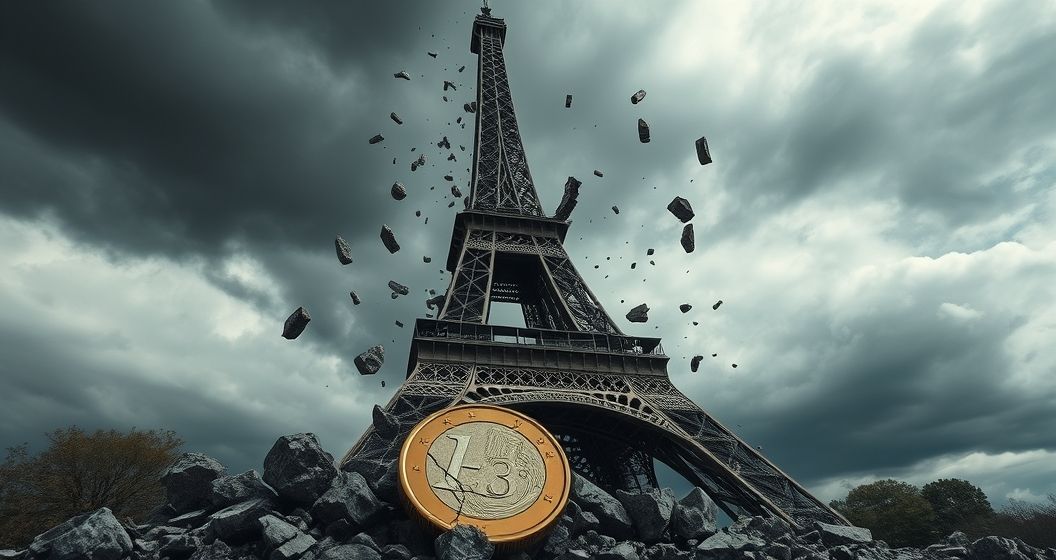
France is currently navigating a period of intense political and economic instability following President Emmanuel Macron’s unexpected decision to call a snap legislative election. This high-stakes move, prompted by a significant defeat in the European elections, has dissolved the National Assembly and thrown the nation’s political landscape into turmoil, causing immediate concern among investors and business leaders.
Macron’s Risky Political Maneuver
The decision to hold an early election came after the far-right National Rally (RN) party, led by Marine Le Pen and Jordan Bardella, secured more than double the votes of Macron’s Renaissance party in the European parliamentary polls. By calling for a new vote, Macron is gambling that French voters will reject the prospect of a far-right government when faced with the direct consequences of such a choice for their country, a strategy that many analysts have described as extremely risky.
The political scene has rapidly reorganized in response. Two major blocs have emerged to challenge Macron’s centrist alliance, creating a deeply polarized environment. This uncertainty has left the country’s future direction hanging in the balance, with significant implications for both domestic policy and France’s role within the European Union.
A Nation Divided Between Two Extremes
The election is shaping up to be a three-way contest, highlighting the deep divisions within French society. The outcome remains highly unpredictable, with each bloc presenting a vastly different vision for the country’s future.
The National Rally’s Growing Influence
The National Rally is currently leading in opinion polls, capitalizing on public discontent over issues like the cost of living, immigration, and security. The party’s economic platform, which includes protectionist policies and potential spending increases, has spooked financial markets. A victory for the RN could lead to significant policy shifts and potential friction with EU partners over budget rules and economic integration.
The New Popular Front’s Left-Wing Alliance
On the other side, left-wing parties have united to form the “New Popular Front,” a coalition of Socialists, Greens, Communists, and the hard-left France Unbowed party. Their platform proposes major changes, including repealing Macron’s pension reforms, increasing the minimum wage, and implementing a wealth tax. These proposals have also caused alarm in the business community, which fears a negative impact on investment and competitiveness.
Economic Fallout and Market Volatility
The immediate reaction to the political uncertainty was a sharp downturn in French financial markets. The Paris stock exchange, the CAC 40, experienced significant losses, while the borrowing costs for the French government surged. The spread between French and German bond yields—a key indicator of perceived risk—widened considerably. Finance Minister Bruno Le Maire has warned that a victory for either the far-right or the left-wing alliance could trigger a financial crisis, underscoring the gravity of the situation.
As the election approaches, France stands at a critical juncture. The results will not only determine the next government but also set the course for the nation’s economic stability and its position on the European stage for years to come.


