
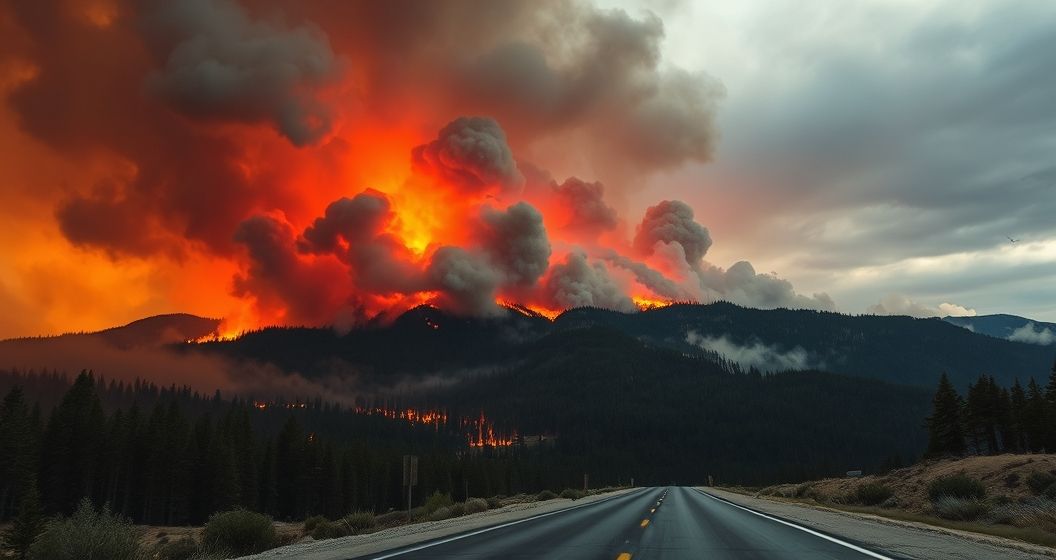
Intense and fast-moving wildfires are currently sweeping across parts of Western Canada, leading to widespread evacuation orders in British Columbia and Alberta. Thousands of residents have been forced to flee their homes as out-of-control blazes threaten communities. The fires are also creating hazardous air quality conditions that extend for hundreds of kilometres, impacting major cities and prompting public health warnings. Authorities are engaged in a critical battle to contain the flames amid challenging weather conditions.
The Epicentre in British Columbia
In northeastern British Columbia, the community of Fort Nelson and the nearby Fort Nelson First Nation remain under an evacuation order affecting thousands of people. An aggressive wildfire burning just outside the town has grown significantly, fueled by strong winds and dry conditions. Officials have described the fire’s behaviour as extreme and unpredictable, making containment efforts incredibly difficult. A state of provincial emergency has been declared to ensure a swift and coordinated response, allowing for rapid deployment of resources to the affected region.
Fire crews are working around the clock to establish containment lines and protect critical infrastructure, but the primary focus remains on public safety. The evacuation order is expected to remain in place for the foreseeable future as the threat to the community persists. Residents have been urged to stay away from the area until authorities deem it safe to return, with reception centres established in neighbouring towns to support those who have been displaced.
Alberta on High Alert
Similarly, the province of Alberta is facing a significant wildfire threat, particularly near the community of Fort McMurray. The situation has evoked memories of the devastating 2016 wildfire, prompting authorities to issue evacuation alerts for several neighbourhoods. A large, out-of-control wildfire is burning southwest of the city, and shifting winds have raised concerns that it could move closer to populated areas. Residents in the affected zones have been told to be prepared to leave on very short notice.
The Regional Municipality of Wood Buffalo has activated its emergency operations centre to manage the response. Air tankers, helicopters, and ground crews are actively fighting the blaze. The dry, windy weather forecast presents a major challenge, creating ideal conditions for rapid fire growth and making suppression efforts more dangerous for emergency personnel.
Widespread Air Quality Concerns
Beyond the immediate fire zones, thick smoke has blanketed vast areas of Western Canada and is drifting across the continent. Major cities including Edmonton and Calgary are experiencing poor air quality, with advisories in effect across multiple provinces. Environment Canada has issued special air quality statements, warning of high levels of fine particulate matter which can pose a significant health risk, especially for children, the elderly, and individuals with respiratory conditions.
Health Recommendations Amid Smoke
Health officials are advising residents in affected areas to take precautions to minimize their exposure to the smoke. Key recommendations include:
- Reducing or rescheduling strenuous outdoor activities.
- Keeping windows and doors closed to maintain cleaner indoor air.
- Using a portable air cleaner with a HEPA filter if available.
- Paying close attention to local air quality reports and health advisories.
As emergency crews continue their tireless efforts to protect lives and property, the situation in both provinces remains dynamic. The focus is on containing the most threatening fires while providing support to displaced residents. The coming days will be critical in determining the trajectory of this wildfire crisis.


