
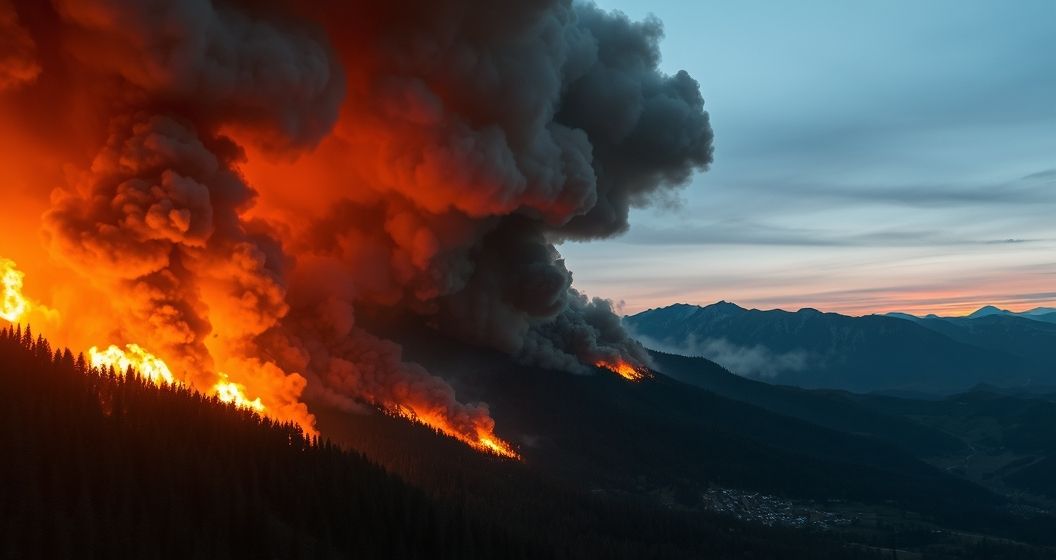
Wildfires are intensifying across Western Canada, forcing thousands of residents in British Columbia and Alberta to flee their homes. Fast-moving blazes, fueled by strong winds and dry conditions, have prompted widespread evacuation orders and alerts. Authorities are urging caution as the situation remains volatile, with air quality advisories extending across several provinces and into parts of the United States. Emergency crews are working tirelessly to contain the fires threatening numerous communities.
British Columbia Faces Growing Threat
In northeastern British Columbia, the community of Fort Nelson and the nearby Fort Nelson First Nation remain under a mandatory evacuation order. A significant wildfire burning just kilometers away has grown rapidly, posing a direct threat to the town. Officials have described the fire behavior as extreme, making containment efforts incredibly challenging. The blaze has disrupted essential services and created hazardous travel conditions, with main highways closed to ensure public safety during the evacuation process.
The Parker Lake fire is the primary concern for the region, and its rapid expansion highlights the severe drought conditions plaguing the area. Emergency responders have established reception centers for the thousands of displaced residents. The provincial government is coordinating a large-scale response, mobilizing firefighters and resources from across the region to combat the blaze and protect critical infrastructure from the encroaching flames.
Alberta on High Alert Near Fort McMurray
Meanwhile, in Alberta, an out-of-control wildfire has triggered evacuation alerts for several neighborhoods in Fort McMurray. The situation has brought back difficult memories of the devastating 2016 wildfire that destroyed large parts of the city. Residents in the affected areas have been told to be prepared to leave at a moment’s notice as the fire creeps closer. The Regional Municipality of Wood Buffalo has declared a local state of emergency to facilitate a swift and organized response.
Widespread Air Quality Concerns
Smoke from the fires is having a significant impact far beyond the immediate fire zones. Thick plumes of smoke have drifted eastward, causing poor air quality in cities across the prairie provinces, including Edmonton and Calgary. Health officials have issued special air quality statements, advising residents, particularly those with respiratory conditions, the elderly, and young children, to limit outdoor activities and take necessary precautions to avoid smoke exposure.
An Unpredictable Wildfire Season Ahead
The early and aggressive start to the wildfire season is a major concern for federal and provincial authorities. Experts point to a winter with low snowfall and a dry spring as contributing factors that have created a volatile landscape susceptible to fire. With conditions not expected to improve in the short term, officials are bracing for a long and difficult season. Residents in at-risk areas are being reminded to have an emergency plan and stay informed through official channels as the situation develops.
