
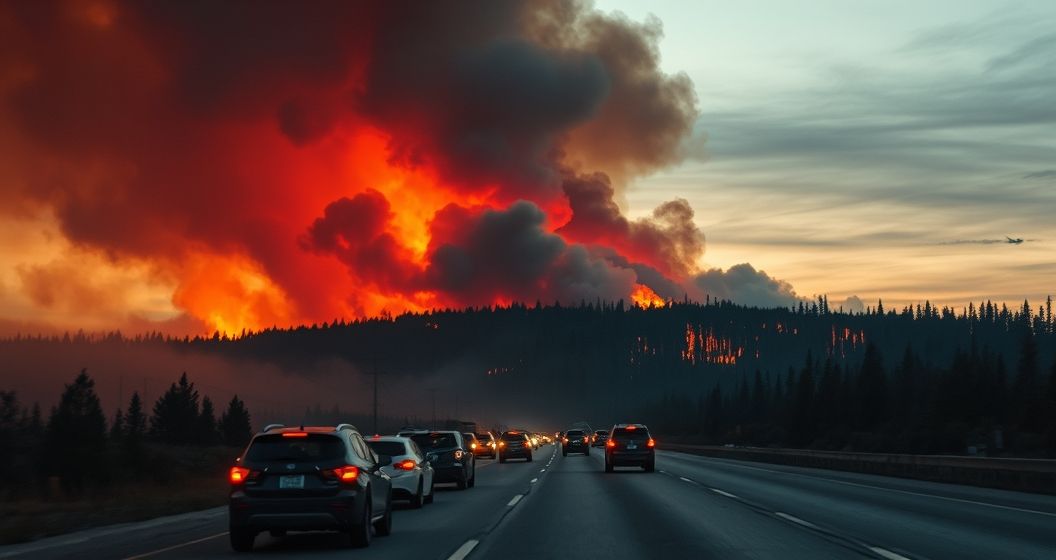
Intensifying wildfires across Western Canada are prompting mass evacuations, with thousands of residents in British Columbia and Alberta forced to flee their homes. Major blazes near communities like Fort Nelson, B.C., and Fort McMurray, Alberta, have triggered states of emergency and put emergency responders on high alert. The aggressive and early start to the fire season signals a challenging period ahead for the entire region, stretching resources and creating widespread safety concerns.
State of Emergency in British Columbia
In northeastern British Columbia, the community of Fort Nelson and the Fort Nelson First Nation remain under a mandatory evacuation order. The nearby Parker Lake wildfire has grown rapidly, fueled by strong winds and dry conditions. Officials have described the fire’s behaviour as extreme, making it difficult for crews to establish control lines. The Northern Rockies Regional Municipality has declared a state of local emergency, urging all remaining residents to leave immediately for their safety as the blaze threatens homes and critical infrastructure.
Fire crews are working tirelessly to protect the town, but the unpredictable nature of the wind continues to pose a significant threat. The evacuation affects several thousand people, who have been directed to reception centres in neighbouring cities. The situation underscores the volatility of the fire season, which has started much earlier and with more intensity than in previous years, largely due to persistent drought conditions across the province.
Alberta on High Alert Near Fort McMurray
Meanwhile, in Alberta, an out-of-control wildfire is menacing the southern outskirts of Fort McMurray, a city that experienced a catastrophic wildfire in 2016. Several neighbourhoods are under an evacuation alert, with residents told to be prepared to leave at a moment’s notice. The memories of the 2016 disaster, which destroyed thousands of homes, have heightened anxiety and prompted a swift, proactive response from authorities. The current fire is burning southwest of the city, and shifting winds could push it closer to residential areas.
The Regional Municipality of Wood Buffalo has activated its emergency operations centre to coordinate the response. Firefighters are using heavy equipment to build fireguards, and air tankers are dropping retardant to slow the blaze’s advance. The primary goal is to prevent a repeat of the past devastation by acting decisively and ensuring residents are informed and ready to move if the situation escalates further.
Widespread Air Quality and Health Concerns
Beyond the immediate fire zones, thick smoke has blanketed vast areas of Western and Central Canada, leading to significant air quality deterioration. Special air quality statements have been issued for parts of B.C., Alberta, Saskatchewan, and Manitoba. The smoke poses a serious health risk, particularly for children, the elderly, and individuals with respiratory conditions like asthma. Health officials are advising people to stay indoors, keep windows closed, and use air purifiers if possible to mitigate the effects of the hazardous particulate matter in the air.
A Challenging Season Ahead
The simultaneous, large-scale fires in both B.C. and Alberta are placing an immense strain on firefighting resources. As the season progresses, officials anticipate continued challenges due to below-average precipitation and ongoing drought. The situation highlights the growing impact of climate change on Canada’s wildfire seasons, which are becoming longer and more intense. The focus for now remains on community safety, protecting property, and managing the immediate threat posed by these dangerous wildfires.


