
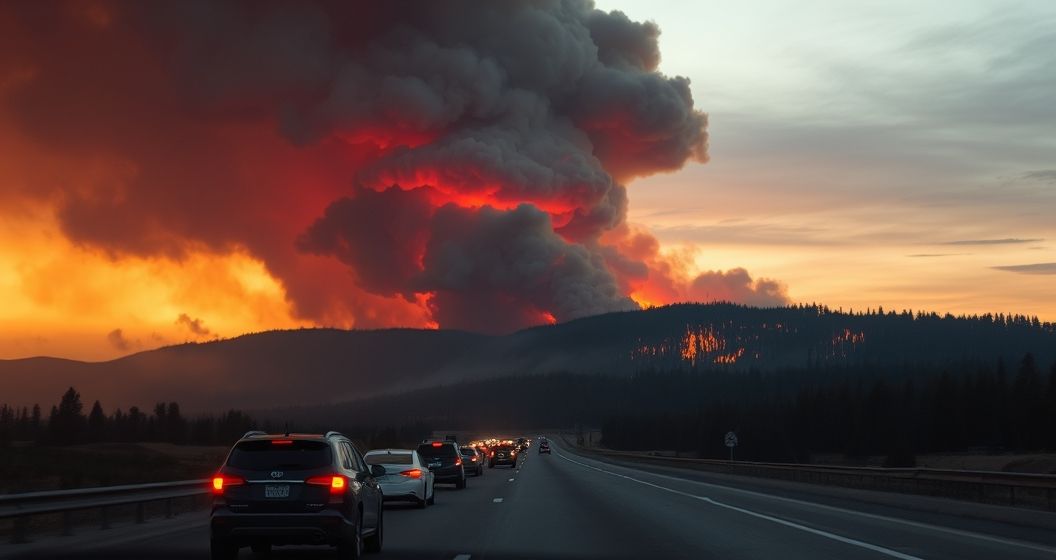
Intensifying wildfires across Western Canada have triggered widespread evacuation orders, forcing thousands of residents from their homes in British Columbia and Alberta. The rapidly spreading blazes, fueled by persistently dry conditions and strong winds, have created hazardous smoke plumes that are impacting air quality across a vast area. Emergency crews are engaged in a critical battle to contain the fast-moving fires, which mark a severe and challenging start to the country’s wildfire season.
British Columbia Becomes Epicenter of Crisis
British Columbia is currently the focal point of the crisis, with the most significant blaze threatening the town of Fort Nelson. The entire community of approximately 4,700 people has been ordered to evacuate as the out-of-control Parker Lake fire rages nearby. Officials have described the situation as extreme and rapidly evolving, with fire behavior making containment efforts incredibly difficult. The aggressive fire has already consumed thousands of hectares, and emergency services are focused on structure protection and ensuring the safe evacuation of all residents.
Alberta on High Alert as Fires Spread
The threat is not confined to one province. In Alberta, several communities are also on high alert, with evacuation orders issued for areas near Fort McMurray, a region that experienced a catastrophic wildfire in 2016. The current fires are stirring painful memories and prompting swift action from authorities. Unpredictable winds are a major concern for firefighters, as they can quickly change a fire’s direction and speed, putting more homes and critical infrastructure at risk. The province has mobilized significant resources to combat the growing threat.
Widespread Air Quality Advisories Issued
Beyond the immediate danger of the flames, dense smoke from the wildfires is causing significant health concerns. A thick haze has blanketed large parts of Western and Central Canada, prompting special air quality statements from Environment Canada. Cities including Edmonton and Calgary are experiencing poor visibility and high levels of fine particulate matter, which can cause respiratory issues. Health officials are advising residents, especially those with pre-existing conditions, children, and the elderly, to limit outdoor activities and stay indoors where possible.
An Unusually Early and Intense Season
Experts note that the intensity of these early-season fires is alarming. A combination of a low winter snowpack, ongoing drought conditions, and unseasonably warm temperatures has created a perfect storm for extreme wildfire activity. This situation has extended the traditional fire season, putting immense pressure on firefighting resources earlier than expected. Both provincial and federal governments are coordinating their response, deploying firefighters, aircraft, and other essential equipment to the front lines while providing support for displaced residents.