
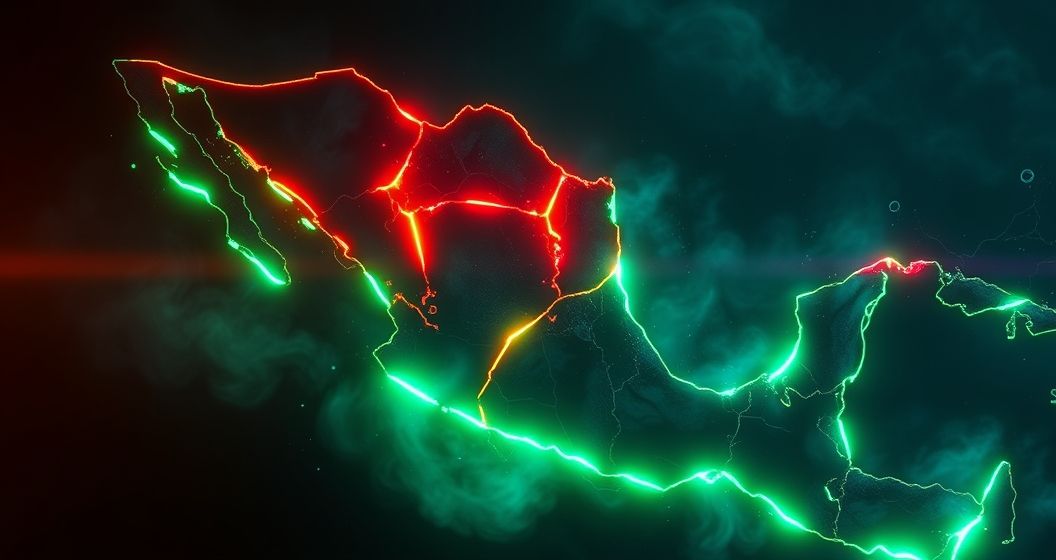
Mexico is a vibrant nation constantly at the crossroads of progress and challenge, and recent weeks have underscored a dynamic period marked by intense political maneuvering, persistent security concerns, and a resilient economic outlook. The nation finds itself deeply engrossed in the lead-up to the 2024 presidential elections, a contest that promises to reshape its political landscape, while simultaneously grappling with deeply entrenched issues of public safety and economic stability.
The Road to the 2024 Presidential Election: A Battle for Mexico’s Soul
The political arena in Mexico is currently dominated by the fervent campaigning and strategic positioning of the leading candidates for the upcoming presidential elections. With the election just months away, the political discourse is heating up, primarily focusing on two prominent figures: Claudia Sheinbaum of the ruling Morena party, representing a continuation of President Andrés Manuel López Obrador’s (AMLO) transformational agenda, and Xóchitl Gálvez, the flagbearer for the broad opposition coalition Frente Amplio por México. Polls suggest a competitive, albeit currently favoring Morena, race that is capturing the national imagination.
Sheinbaum, the former Mayor of Mexico City, is largely seen as the successor to AMLO’s populist movement, promising to deepen social programs and maintain a focus on sovereignty and state-led development. Her campaign emphasizes continuity and the consolidation of the “Fourth Transformation.” On the other hand, Gálvez, a senator with an indigenous background and a successful business career, presents herself as a fresh alternative, aiming to reverse some of AMLO’s policies and tackle issues like insecurity and economic stagnation with a different approach. Her narrative revolves around restoring institutional strength and promoting economic growth through private sector engagement. The coming months will be crucial as both candidates intensify their outreach, debate key policy issues, and strive to win over undecided voters in what is shaping up to be a defining moment for Mexican democracy.
Addressing Mexico’s Enduring Security Challenges
Beyond the political spectacle, Mexico continues to face an uphill battle against deeply rooted security challenges. Reports frequently highlight ongoing violence in various regions, particularly those impacted by organized crime and drug trafficking. The government’s strategy, often termed “hugs, not bullets,” emphasizes addressing the root causes of crime, such as poverty and lack of opportunities, rather than solely relying on military force. While this approach has seen some successes in social development, the immediate impact on reducing high-profile acts of violence remains a significant point of national debate and public concern.
Recent incidents, including clashes between criminal groups and attacks on local officials, underscore the complex nature of the security crisis. The government is continuously evaluating and adjusting its strategies, involving both federal forces and local police, to restore peace and order in affected communities. The border region, in particular, remains a hotspot, not only for internal security issues but also due to its role in international migration and trafficking. Addressing these multifaceted security threats will undoubtedly be a paramount task for the next administration, requiring innovative solutions and sustained efforts.
Economic Resilience Amidst Global Headwinds
Despite global economic uncertainties, Mexico’s economy has shown remarkable resilience. The peso has demonstrated relative strength against the U.S. dollar, and key economic indicators, such as remittances and foreign direct investment, continue to provide a solid foundation. The phenomenon of nearshoring – the relocation of manufacturing and supply chains closer to the U.S. market – is increasingly seen as a significant opportunity for Mexico to boost its industrial output and create jobs. However, challenges persist, including managing inflation, ensuring equitable distribution of economic benefits, and investing in crucial infrastructure to support this growth potential.
The upcoming elections will undoubtedly influence investor confidence and economic policy direction. Both leading candidates have outlined their economic visions, with varying degrees of emphasis on public vs. private investment, trade agreements, and energy policy. As the nation navigates these critical junctures, the interplay between political decisions, security advancements, and economic performance will determine Mexico’s trajectory in the years to come.