
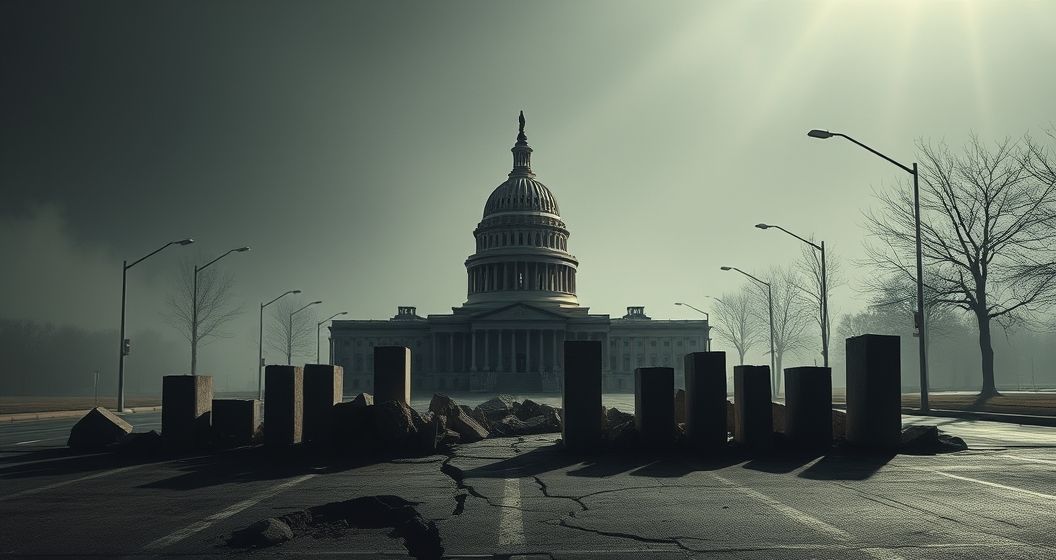
As the nation grapples with a multitude of pressing challenges, a sense of unease pervades across the United States. From the looming threat of a government shutdown to the ongoing debate over economic policy and the intensifying political landscape, Americans are navigating a complex and often turbulent news cycle. The urgency of these issues demands immediate attention, shaping both policy decisions in Washington and the daily lives of citizens.
Washington on Edge: Government Shutdown Threat Intensifies
The specter of a government shutdown once again looms large over Washington D.C., as lawmakers struggle to reach a consensus on federal funding. With critical deadlines fast approaching, bipartisan negotiations have been fraught with tension, leaving the nation’s essential services and federal employees in limbo. A failure to pass appropriations bills or a continuing resolution could lead to a partial or full cessation of government operations, impacting everything from national parks to federal assistance programs. Experts warn of potential economic fallout and a significant disruption to public services, urging political leaders to prioritize compromise over partisan gridlock. The House and Senate remain divided on spending levels and policy riders, making a last-minute resolution appear increasingly challenging.
“Bidenomics” Under the Microscope: Economic Realities and Debates
President Biden’s economic agenda, often dubbed “Bidenomics,” continues to be a central point of discussion and contention. While the administration touts declining inflation rates and robust job growth, many Americans still feel the pinch of high prices on everyday goods and services. The Federal Reserve’s aggressive interest rate hikes, aimed at cooling the economy, have begun to show effects, but concerns about a potential recession persist. Recent data indicates a mixed economic picture: consumer spending remains resilient, yet manufacturing sectors face headwinds. The debate over whether the economy is headed for a “soft landing” or a more significant downturn continues among economists and policymakers, directly influencing financial markets and household budgets.
Trump’s Legal Quagmire and the 2024 Election Race
The 2024 presidential election cycle is already in full swing, with former President Donald Trump at the forefront of the Republican primary and embroiled in multiple legal battles. His various indictments across different jurisdictions—ranging from alleged efforts to overturn the 2020 election to classified documents—are dominating headlines and shaping the political narrative. These legal challenges, unprecedented for a former president, are testing the boundaries of the justice system and sparking intense partisan debate. Despite the controversies, Trump maintains a significant lead in Republican primary polls, underscoring his enduring influence within the party. Meanwhile, other Republican candidates are working to carve out their own paths, attempting to differentiate themselves in a field largely overshadowed by the former president. The Democratic Party, with President Biden expected to run for re-election, is closely watching these developments, preparing for what promises to be a highly contentious and legally complex election season.
Local Concerns: Housing Markets and Infrastructure Needs
Beyond the national headlines, local communities across the U.S. are grappling with specific challenges. The housing market, while showing signs of cooling in some areas, remains unaffordable for many, particularly first-time buyers. High mortgage rates and limited inventory continue to drive up costs, pushing homeownership out of reach for a significant portion of the population. Simultaneously, infrastructure development and maintenance remain critical issues, with many states and cities facing aging roads, bridges, and public transit systems. Efforts to secure federal funding for these projects are ongoing, highlighting the importance of federal-state cooperation in addressing these fundamental needs that directly impact daily life and economic growth at the grassroots level.