
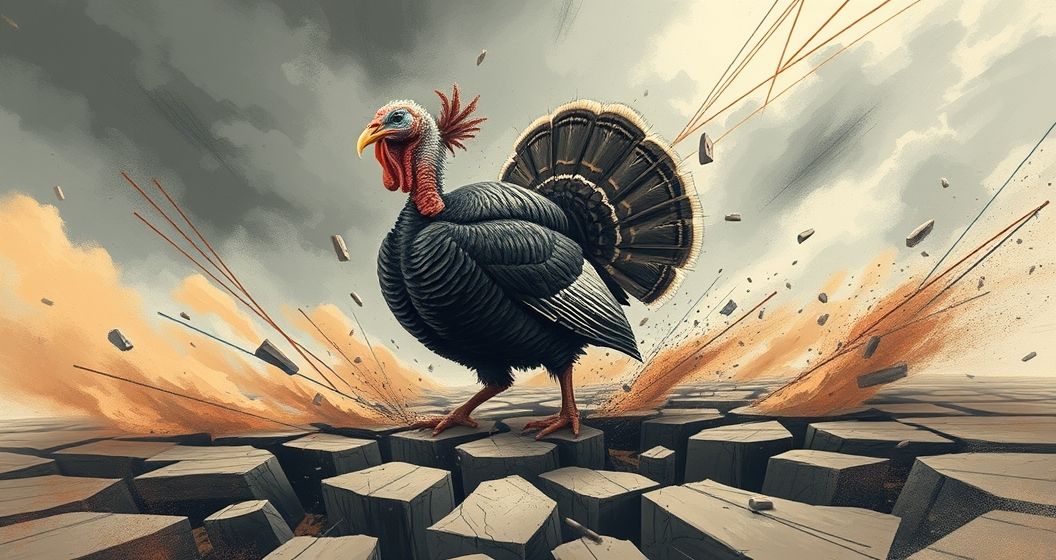
In a whirlwind of developments, Turkey finds itself at a pivotal juncture, navigating significant economic challenges while its political landscape continues to evolve post-local elections. The nation’s resilience is once again being tested as policymakers grapple with persistent inflation and a shifting domestic power balance, all against a backdrop of complex international relations.
Inflation’s Relentless Grip: Can the Economy Find Stability?
The Turkish economy remains firmly in the spotlight, with inflation figures continuing to dominate headlines. Recent data indicates annual inflation stubbornly hovering around the 75% mark, a figure that profoundly impacts the daily lives of millions. The Central Bank of the Republic of Turkey (CBRT) has maintained its commitment to a tight monetary policy, signaling that interest rates will remain elevated until a significant and sustained disinflationary trend is observed. This aggressive stance aims to anchor inflation expectations and restore price stability, a critical prerequisite for long-term economic health.
Economists and citizens alike are closely watching the effectiveness of these measures. The government’s medium-term economic program, which includes fiscal discipline and structural reforms, is seen as crucial for complementing monetary policy efforts. However, the path to single-digit inflation is expected to be arduous, requiring consistent policy implementation and a strong commitment to orthodox economic principles. Challenges include:
- Cost of Living Crisis: Escalating food and energy prices continue to squeeze household budgets.
- Lira Volatility: While somewhat stabilized by recent policies, the Turkish Lira remains susceptible to external shocks.
- External Financing: Attracting foreign direct investment (FDI) is vital for sustainable growth and reducing reliance on short-term capital inflows.
Post-Election Dynamics: A New Political Era?
The dust has settled from the recent local elections, but their reverberations continue to reshape Turkey’s political environment. The main opposition Republican People’s Party (CHP) scored significant victories, notably retaining control of key metropolitan municipalities like Istanbul and Ankara, and expanding its presence across other provinces. This outcome has been widely interpreted as a strong signal of public discontent with the economic situation and, for some, a potential shift in the national political balance.
President Recep Tayyip Erdoğan and his AK Party have acknowledged the election results, indicating a period of self-assessment and strategic recalibration. The opposition, emboldened by its successes, is now focused on consolidating its gains and presenting a more unified front ahead of future national elections. Key political takeaways include:
- Opposition Resurgence: The CHP’s performance marks its strongest showing in decades, offering a renewed challenge to the ruling coalition.
- Focus on Local Governance: Expect increased scrutiny on municipal services and urban development from both sides.
- Potential for Dialogue: Some analysts suggest the results might encourage a more conciliatory political discourse, though deep ideological divisions persist.
Turkey’s Diplomatic Balancing Act on the Global Stage
Beyond its domestic concerns, Turkey continues to play a pivotal role in regional and international affairs. The nation remains actively engaged in diplomatic efforts concerning the Gaza conflict, advocating for a permanent ceasefire and humanitarian aid. Its strategic position at the crossroads of Europe and Asia gives it significant geopolitical leverage, influencing debates within NATO and shaping relations with both the European Union and the United States.
Turkey’s foreign policy is characterized by a pragmatic approach, often seeking to balance competing interests while safeguarding its national security objectives. Recent discussions have focused on:
- EU-Turkey Relations: Efforts to revitalize dialogue on various fronts, including trade and visa liberalization.
- NATO Dynamics: Turkey’s role within the alliance, particularly concerning regional security issues and defense cooperation.
- Regional Stability: Ongoing involvement in Syria and the wider Middle East, aiming to de-escalate tensions and promote stability.
As Turkey navigates these intricate layers of economic, political, and diplomatic challenges, the coming months will be critical in determining the trajectory of this dynamic nation. The interplay of these forces promises a captivating and closely watched period for both domestic and international observers.


