
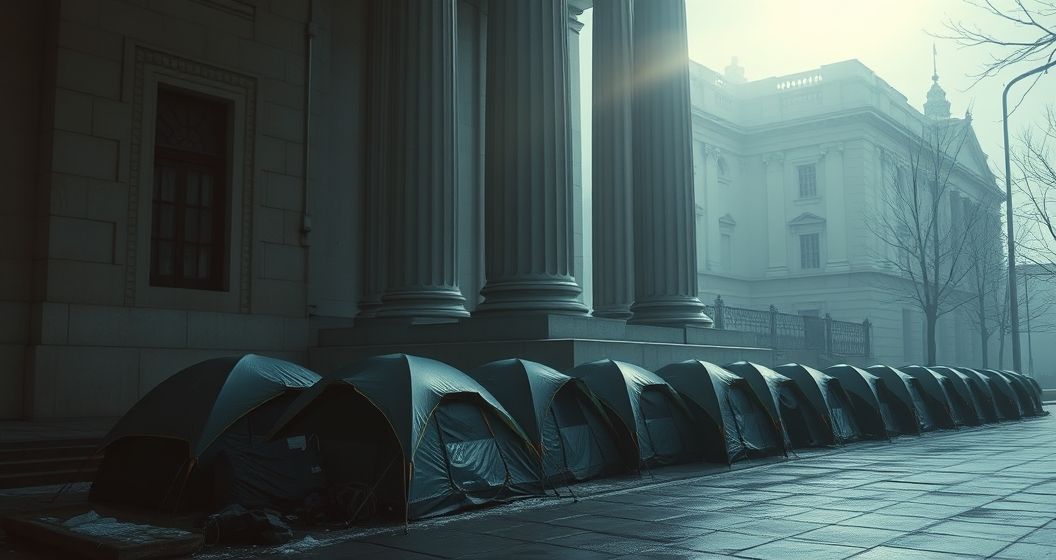
The Supreme Court has delivered a landmark ruling that significantly alters how cities across the United States can manage homelessness. In a decision with far-reaching consequences, the court determined that punishing individuals for sleeping in public spaces is not unconstitutional, even when adequate shelter space is unavailable. This judgment gives local governments broader authority to enforce anti-camping ordinances, a move that is already generating widespread debate among officials and advocacy groups.
The Core of the Grants Pass Ruling
The case, City of Grants Pass v. Johnson, centered on whether ticketing or arresting people for sleeping outdoors constitutes “cruel and unusual punishment” under the Eighth Amendment if they have nowhere else to go. The court, in a 6-3 decision, concluded that it does not. The majority opinion argued that the Eighth Amendment is intended to regulate forms of punishment, not to dictate local policies on public health and safety, such as the use of public parks and sidewalks.
This ruling effectively overturns a precedent set by lower courts, particularly in the western United States, which had limited the ability of cities to enforce such bans. The decision clarifies that homelessness itself is a status, but sleeping in a public space is an action that can be regulated by local law. This distinction is critical for understanding the legal foundation of the court’s conclusion and its future application by municipalities.
Background of the Legal Challenge
The legal battle originated in Grants Pass, a small city in Oregon that enacted ordinances imposing civil fines on individuals for sleeping or camping on public property. Homeless residents, represented by legal advocates, challenged these laws, arguing they were being punished for the unavoidable consequence of being homeless without access to shelter. The Ninth Circuit Court of Appeals had previously sided with the homeless residents, creating a legal standard that many other cities in the region had to follow.
The city appealed to the Supreme Court, contending that the lower court’s decision made it impossible to manage public spaces and address safety concerns. The case drew national attention as it highlighted the tension between maintaining public order and the rights of an unhoused population that has been growing in many parts of the country.
Implications for Local Governments
This ruling empowers city leaders who have argued that court restrictions hindered their ability to address encampments that pose health and safety risks. Officials in cities from California to New York are now expected to review and potentially strengthen their own anti-camping laws. Proponents of the decision believe it will allow for more effective management of public areas, while critics fear it will lead to the criminalization of poverty without addressing the root causes of homelessness.
The decision does not mandate that cities ban public camping, but it removes a significant federal legal barrier to doing so. The focus now shifts to state and local governments to create policies that balance enforcement with providing services, such as shelter, mental health care, and addiction treatment. The debate over the most humane and effective approach to the homelessness crisis is expected to intensify at the local level following this judgment.