
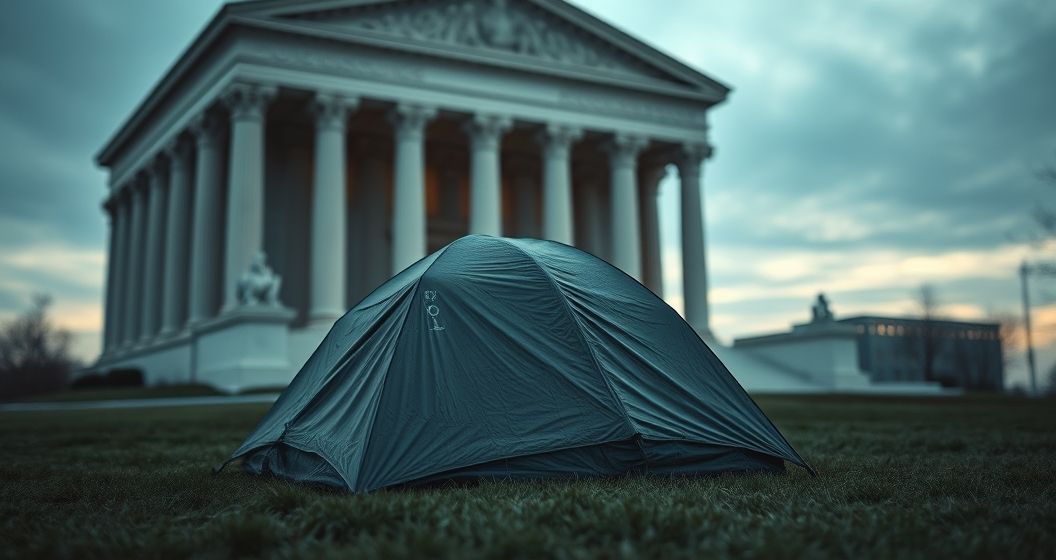
The Supreme Court has delivered a significant ruling that reshapes how cities across the United States can address homelessness. In a decision with far-reaching consequences, the court affirmed that imposing penalties on individuals for sleeping in public spaces when no adequate shelter is available constitutes cruel and unusual punishment. This landmark case clarifies the legal boundaries for local governments grappling with the complexities of managing public areas and assisting unhoused populations, setting a new national standard.
Understanding the Landmark Decision
The case, which originated from Grants Pass, Oregon, challenged local ordinances that fined and arrested homeless individuals for sleeping outdoors with basic protection like a blanket or pillow. The court’s majority opinion found that such laws effectively criminalize the status of being homeless. When a person has no access to indoor shelter, sleeping in public is an unavoidable consequence of their circumstances. The ruling establishes that punishing this involuntary act violates the Eighth Amendment.
This decision does not prevent cities from regulating public spaces entirely. Local governments can still prohibit the construction of encampments or enforce time and place restrictions on sleeping outdoors. However, it mandates that they cannot enforce a blanket ban on public sleeping if they lack sufficient shelter beds to offer as an alternative. The focus is on the availability of a viable, accessible place to go.
Implications for Cities Nationwide
This ruling places immediate pressure on municipalities to re-evaluate their current policies on homelessness. Many cities have relied on enforcement-heavy approaches to manage growing homeless populations, but these strategies are now legally untenable without a corresponding investment in support systems. The decision is expected to accelerate a policy shift from punitive measures toward more constructive, service-oriented solutions.
A Contentious Legal Debate
The issue remains deeply divisive, and the court’s opinion was not unanimous. Dissenting justices argued that the decision oversteps judicial authority and interferes with the ability of local elected officials to manage public health and safety. They contended that issues like sanitation and access to public parks are legitimate local concerns that ordinances are designed to address. This split reflects the broader national debate over how to balance compassion and public order.
The Path Forward for Homelessness Policy
In the wake of the ruling, experts anticipate that cities will increasingly focus on expanding shelter capacity, creating designated camping areas, and investing in permanent supportive housing. The decision effectively serves as a legal incentive to fund and develop robust social services, including mental health care and addiction treatment, which are often root causes of homelessness. The long-term impact will likely be a fundamental change in how public funds are allocated to address the crisis.
In conclusion, the Supreme Court’s decision marks a pivotal moment in the legal landscape of homelessness in the United States. By limiting the use of punitive measures, it compels local governments to pursue more humane and effective strategies. The ruling reframes the issue from one of law enforcement to one of public health and social welfare, setting a new course for how the nation confronts this complex challenge.