
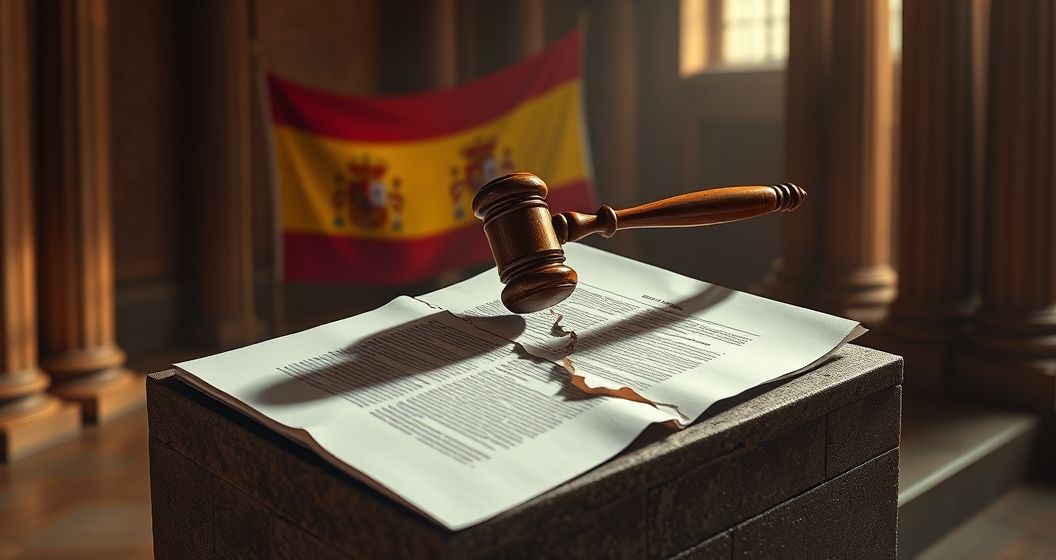
Spain’s government is advancing a controversial amnesty law aimed at pardoning Catalan separatists involved in the 2017 independence bid. The legislation, a cornerstone of Prime Minister Pedro Sánchez’s agreement to secure a new term, has passed a critical parliamentary committee vote. This development moves the bill closer to final approval, yet it continues to fuel intense political and social division across the country, highlighting the deep-seated tensions surrounding the Catalan issue.
A Complex Legislative Journey
The amnesty bill’s path through parliament has been fraught with challenges. An initial version was rejected earlier this year, forcing the ruling Socialist Party (PSOE) to renegotiate with its Catalan separatist allies. The revised text now includes broader protections, covering even terrorism-related charges, provided they did not cause serious human rights violations. Proponents argue this is a necessary step for reconciliation and to “de-judicialize” a political conflict.
With the support of Catalan pro-independence parties like Junts and ERC, the government successfully navigated the latest legislative hurdle. The bill is now set for a final vote in the Congress of Deputies, the lower house of parliament. If approved, it will proceed to the Senate, where the opposition holds a majority and is expected to create delays, although it cannot ultimately block the law’s passage.
Widespread Opposition and Legal Concerns
The proposed amnesty has ignited fierce opposition from conservative and far-right political parties, as well as segments of the judiciary and the public. Critics, led by the People’s Party (PP), argue that the law undermines the rule of law and creates a dangerous precedent by pardoning individuals for serious crimes against the state. They accuse Prime Minister Sánchez of trading justice for political power to remain in office.
Mass protests have taken place in Madrid and other cities, with demonstrators voicing their anger over what they see as an attack on Spain’s constitution. Furthermore, judicial associations have expressed grave concerns, warning that the law interferes with judicial independence and creates an unequal system of justice. The debate has polarized Spanish society, turning the amnesty into a symbol of the country’s ongoing political fragmentation.
Implications for Spain’s Future
The primary goal of the amnesty law, according to the government, is to normalize relations with Catalonia and move past the conflict that has defined Spanish politics for over a decade. The bill is expected to benefit hundreds of individuals, including high-profile figures like former Catalan President Carles Puigdemont, who has been in self-imposed exile. Supporters believe it will foster dialogue and allow for a fresh start.
However, opponents fear it will only embolden the separatist movement and fail to resolve the underlying issue. As the legislation approaches its final stages, its approval is set to be a defining moment for Sánchez’s government. The long-term consequences for Spanish unity, political stability, and the public’s trust in its institutions remain a subject of intense and passionate debate across the nation.