
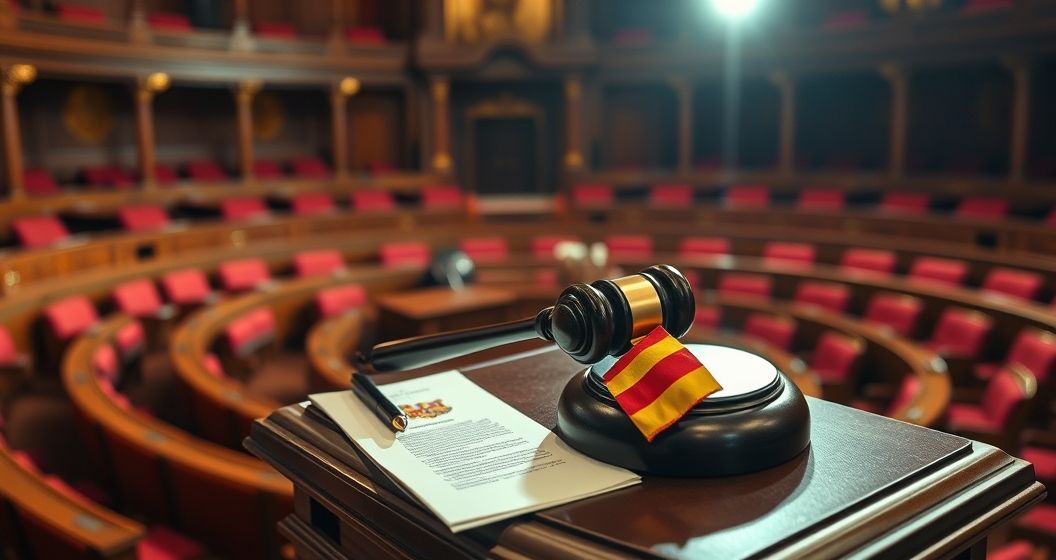
Spain’s lower house of parliament has given its final approval to a highly contentious amnesty law aimed at pardoning hundreds of Catalan separatists involved in the 2017 independence bid. The bill passed in the Congress of Deputies with a narrow majority, marking a pivotal moment in the nation’s political landscape and fulfilling a key promise made by Prime Minister Pedro Sánchez to his Catalan coalition partners. The decision concludes a tumultuous legislative process that has deeply divided Spanish society.
A Tense Vote Concludes Months of Debate
The legislation was approved with 177 votes in favor and 172 against, with no abstentions. The vote saw Prime Minister Sánchez’s Socialist Party (PSOE) and its left-wing ally Sumar join forces with Catalan and Basque nationalist parties to push the measure through. The passage of the law was a critical condition set by Catalan separatist parties in exchange for their support, which allowed Sánchez to form a government following an inconclusive general election last year. The opposition, led by the People’s Party (PP) and the far-right Vox party, has vehemently opposed the bill from the outset.
What the Amnesty Law Covers
The primary goal of the law is to annul the legal and criminal liabilities of activists and politicians who faced charges related to Catalonia’s secession attempt. It is expected to benefit approximately 400 individuals, including former Catalan regional president Carles Puigdemont, who has been in self-imposed exile in Belgium since 2017 to avoid prosecution in Spain. The law covers acts from November 2011 to November 2023, encompassing the organization of the unconstitutional independence referendum and subsequent protests.
Deep Divisions and Future Challenges
Proponents of the law, including the government, argue that it is a necessary step towards reconciliation and normalizing the political situation in Catalonia. They present it as a gesture of goodwill intended to heal the social fractures caused by the independence crisis. Prime Minister Sánchez has defended the move as a brave step toward ensuring coexistence and dialogue, asserting that “in politics, as in life, forgiveness is more powerful than resentment.”
Conversely, critics condemn the law as an unconstitutional attack on the rule of law and the principle of equality among Spanish citizens. The opposition accuses Sánchez of trading justice for political power, arguing that the amnesty undermines the judiciary and creates a dangerous precedent. They have pledged to challenge the law at Spain’s Constitutional Court and have encouraged regional governments they control to do the same. The next phase will see judges applying the law on a case-by-case basis, a process that is expected to face significant legal hurdles and further political conflict.