
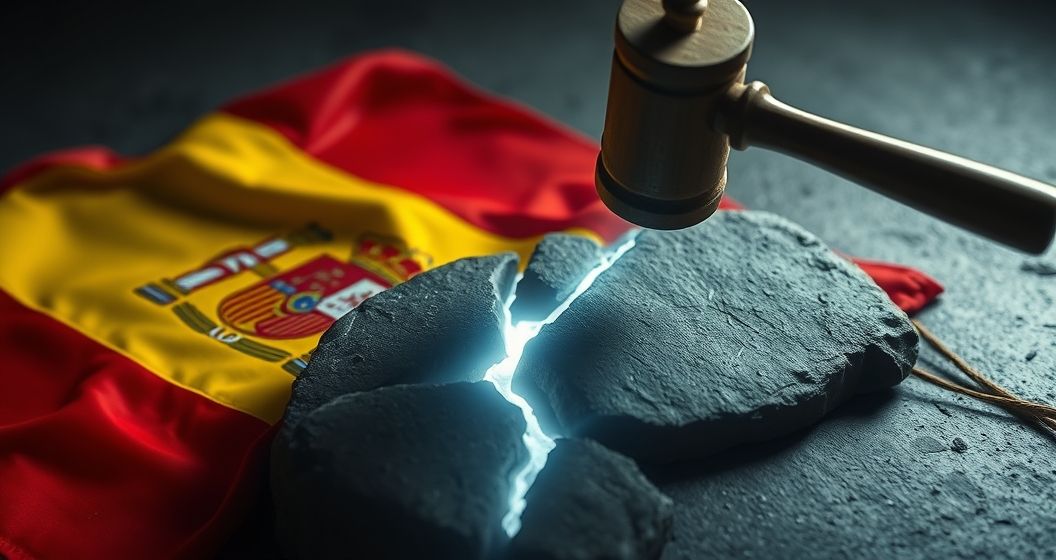
Spain’s proposed amnesty law for Catalan separatists continues to dominate the political landscape, creating deep divisions across society. The legislation, a key condition for the ruling coalition’s formation, aims to pardon individuals involved in the 2017 independence bid. However, it faces fierce opposition from political rivals and the judiciary, who question its constitutionality and impact on national unity. The debate highlights the ongoing tensions surrounding regional autonomy and the rule of law in the country.
The Purpose Behind the Proposal
The government, led by Prime Minister Pedro Sánchez, defends the amnesty law as a necessary step towards reconciliation and the “normalization” of relations with Catalonia. Proponents argue that it will help to de-escalate the long-standing political conflict and allow for a new phase of dialogue. The bill is a cornerstone of the agreement that secured the support of Catalan pro-independence parties, which was essential for Sánchez to form a government after an inconclusive general election.
The legislation is designed to cover a wide range of offenses allegedly committed in connection with the independence movement over the last decade. This includes not only high-profile leaders who organized the illegal referendum but also hundreds of activists and local officials facing charges. By clearing these legal cases, the government hopes to close a painful chapter and foster a more stable political environment for all of Spain.
Fierce Opposition and Legal Hurdles
The amnesty proposal has been met with widespread condemnation from opposition parties, most notably the People’s Party (PP) and Vox. They describe the law as a “betrayal” of the Spanish constitution and an attack on the principle of equality before the law. Critics claim that the government is trading justice for political power, creating a dangerous precedent where illegal acts are forgiven in exchange for parliamentary support. This political backlash has fueled significant public discontent.
Beyond the political arena, the law faces significant legal challenges. Associations of judges and prosecutors have voiced grave concerns, arguing that it infringes upon the independence of the judiciary and undermines the separation of powers. Many legal experts believe the law will be challenged before Spain’s Constitutional Court and potentially European courts. This legal uncertainty casts a long shadow over the bill’s implementation, even if it successfully passes through parliament.
Public Reaction and Social Division
The debate has spilled onto the streets, with large-scale protests organized across the country. Opponents of the amnesty have mobilized in major cities, waving Spanish flags and demanding the resignation of the prime minister. These demonstrations reflect a deep-seated public sentiment that the law undermines national unity and rewards those who sought to break up the country. The issue has become highly polarizing, deepening the existing social and political fractures within Spanish society.
Ultimately, the path forward for the amnesty law is fraught with difficulty. Its passage through parliament is just the first step in a long process that will likely involve intense legal battles and continued social unrest. The outcome will not only shape the future of the Catalan independence movement but also define the political landscape of Spain for years to come, testing the resilience of its democratic institutions.