
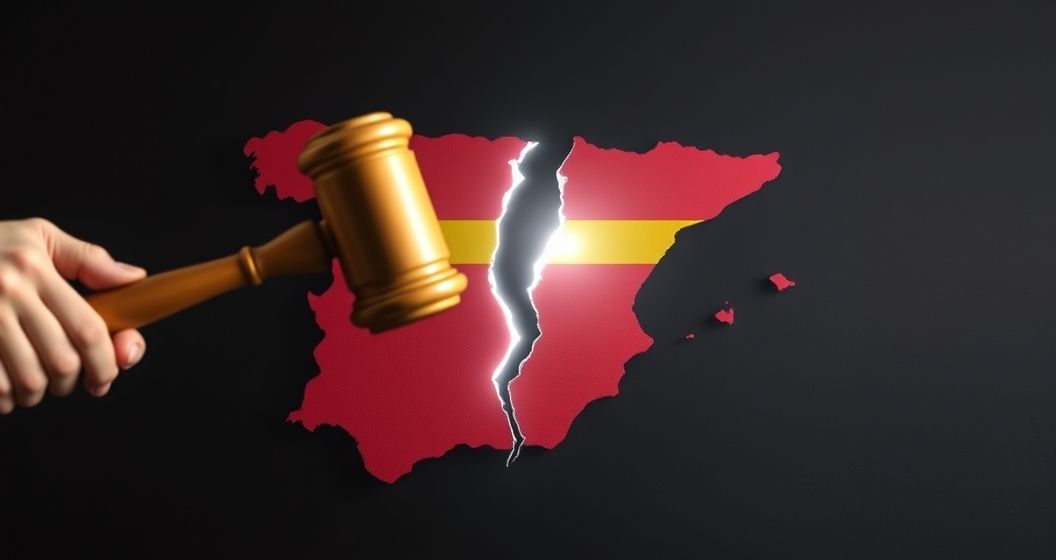
Spain’s parliament has given its final approval to a highly contentious amnesty law aimed at pardoning hundreds of Catalan separatists involved in the 2017 independence bid. The legislation, a cornerstone of Prime Minister Pedro Sánchez’s political strategy, passed by a narrow margin, highlighting the deep political divisions it has created across the country. The law is intended to promote reconciliation but has instead sparked fierce opposition and legal challenges.
A Narrow Victory for Sánchez’s Government
The amnesty bill was approved with 177 votes in favor and 172 against in the lower house of parliament. This crucial victory for the Socialist-led coalition government was made possible by the support of smaller regional parties, including the Catalan separatist groups that demanded the law in exchange for their backing of Sánchez. The journey to this approval has been fraught with political tension, including an initial rejection of the bill earlier this year before it was renegotiated and sent back for the final vote.
Opponents, led by the conservative People’s Party (PP) and the far-right Vox party, have vehemently criticized the law. They argue that it undermines the rule of law and creates a dangerous precedent by forgiving serious crimes for political gain. The opposition has promised to fight the law at every level, including in Spanish courts and at European Union institutions, ensuring the political and legal battle is far from over.
What the Amnesty Law Covers
The legislation is designed to absolve individuals facing legal action for their roles in the Catalan independence movement over the last decade. It is expected to benefit approximately 400 people, including low-level activists, politicians, and public officials. The law covers a range of offenses, from disobedience and misuse of public funds to public disorder. Most notably, it is expected to clear the way for the return of Carles Puigdemont, the former Catalan regional president who has been in self-imposed exile since the 2017 referendum.
Lingering Legal and Social Hurdles
Despite its passage, the implementation of the amnesty law is expected to face significant obstacles. Conservative judges have expressed strong skepticism and may raise legal questions with both Spain’s Constitutional Court and the European Court of Justice. This could delay the application of the law for months or even years. The judiciary’s resistance suggests that the pardons will not be automatic, setting the stage for further confrontations between the government and the legal system.
While the government presents the law as a necessary step to “turn a new page” in Catalonia, public opinion remains sharply divided. Large-scale protests have taken place, and critics maintain that the law does not foster unity but rather rewards illegal actions. The coming months will be critical in determining whether the amnesty can achieve its stated goal of reconciliation or if it will only deepen the political fractures within Spain.