
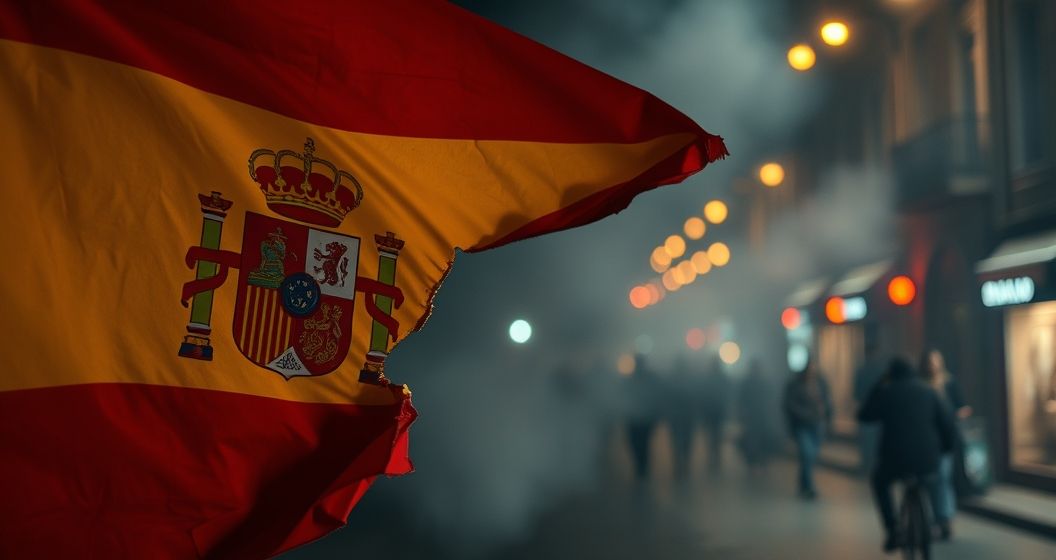
Spain is currently navigating a period of intense political tension as acting Prime Minister Pedro Sánchez and his Socialist party (PSOE) finalize a controversial amnesty deal with Catalan separatist parties. The agreement, crucial for Sánchez to secure another term in office, has ignited widespread protests and sharp criticism from opposition parties and judicial bodies, creating a deeply polarized national atmosphere.
The Path to a New Government
The core of the political crisis stems from the results of the recent general election, which left no single party with a clear majority. To form a government and avoid a repeat election, Sánchez’s PSOE requires the support of several smaller regional parties, including the hardline Catalan separatist group, Junts per Catalunya. In exchange for their critical votes, Junts has demanded a sweeping amnesty law for individuals facing legal action related to the 2017 Catalan independence referendum.
Negotiations have been complex and closely watched, with officials from both sides meeting to hammer out the final details of the proposed legislation. The agreement is seen by Sánchez’s supporters as a pragmatic step to ensure governmental stability and de-escalate the long-running conflict in Catalonia. They argue it is a necessary compromise to move the country forward.
Widespread Opposition and Public Unrest
The proposed amnesty has been met with fierce resistance from a broad spectrum of Spanish society. The conservative People’s Party (PP) and the far-right Vox party have vehemently condemned the deal, accusing Sánchez of trading justice for political power. They argue that the law undermines the Spanish Constitution and the principle of equality before the law, effectively pardoning individuals convicted of serious crimes against the state.
This political opposition has translated into significant public unrest. Major cities, particularly Madrid, have witnessed large-scale demonstrations, with thousands of citizens taking to the streets to protest the amnesty deal. These gatherings have been organized to voice opposition to what many perceive as a threat to the rule of law and national unity.
Judicial Concerns Over the Rule of Law
Beyond political and public spheres, Spain’s judiciary has also expressed grave concerns. Numerous associations of judges and prosecutors have issued statements warning that the proposed amnesty could represent an unacceptable interference with judicial independence. They argue that it erodes the separation of powers, a fundamental pillar of democracy, by nullifying court sentences through a political decision.
An Uncertain Political Future
As the deal appears to be reaching its conclusion, Spain stands at a critical crossroads. If the agreement is successful and Sánchez is sworn in as Prime Minister, he will lead a fragile coalition government under constant pressure from a unified and energized opposition. The implementation of the amnesty law is certain to face legal challenges, promising a prolonged period of institutional conflict. The political and social divisions exposed by these negotiations are likely to define the country’s landscape for the foreseeable future.