
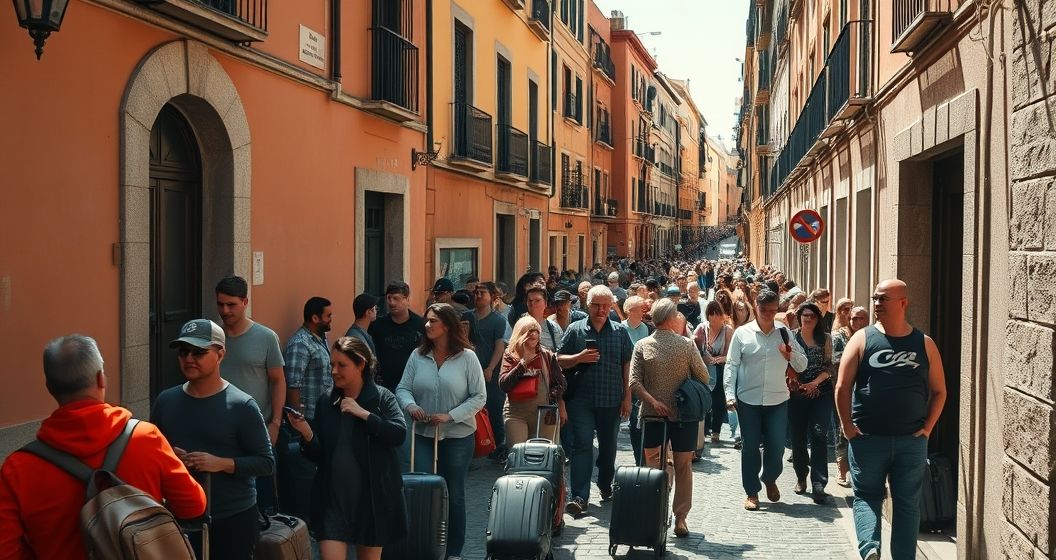
Spain is currently navigating a complex challenge as its booming tourism industry, a cornerstone of its economy, sparks widespread discontent among local residents. While the country celebrates record-breaking visitor numbers and revenue, a growing movement is protesting the negative impacts of “overtourism.” The primary grievances include a severe housing crisis, strained public services, and the erosion of local culture, leading to significant social tension in popular destinations.
The Two Sides of the Tourism Coin
On one hand, the economic benefits are undeniable. The tourism sector has been a powerful engine for Spain’s post-pandemic recovery, generating billions of euros and supporting millions of jobs. Government figures consistently point to new records in tourist arrivals and spending, highlighting the industry’s critical role in national prosperity. This influx of foreign capital is vital for many regions, from the sunny coasts to historic inland cities, fueling local businesses and infrastructure projects.
However, this success has come at a high price for many citizens. Critics argue that the relentless growth has led to an unsustainable model. The proliferation of short-term holiday rentals has pushed long-term housing out of the market, causing rental prices to skyrocket and making it nearly impossible for local workers, particularly young people, to find affordable homes in their own communities. This has created a paradox where the industry that employs them also displaces them.
Protests Erupt in Tourist Hotspots
The Canary Islands have become the epicenter of the resistance. Tens of thousands of people have taken to the streets in massive demonstrations under slogans like “Canarias tiene un límite” (The Canaries have a limit). Protestors are not against tourism itself but are demanding a fundamental shift in the current development model. They are calling for urgent measures, including a moratorium on the construction of new hotels and tourist complexes and stricter regulations on the purchase of property by non-residents.
These sentiments are not confined to the islands. Similar protests and grassroots movements have emerged in other major destinations, including Barcelona, Malaga, and the Balearic Islands. Residents report that their neighborhoods are becoming “theme parks” where local shops are replaced by souvenir stores and traditional tapas bars are outnumbered by tourist-focused restaurants. The strain on public resources like water, sanitation, and healthcare is another major point of contention.
A Search for a Sustainable Future
In response to the growing unrest, both regional and national authorities have acknowledged the need for change. The Spanish government has begun discussions about implementing new regulations to better manage tourist flows and mitigate the negative social impacts. The debate now centers on finding a delicate balance between maximizing economic gain and ensuring the well-being of local populations and the preservation of natural environments.
The challenge for Spain is to redefine its tourism strategy for the long term. The goal is to transition from a model based purely on volume to one focused on sustainability, quality, and harmony with local communities. This involves promoting responsible tourism, diversifying the economy, and ensuring that the benefits of the industry are more equitably distributed, securing a viable future for both visitors and residents alike.