
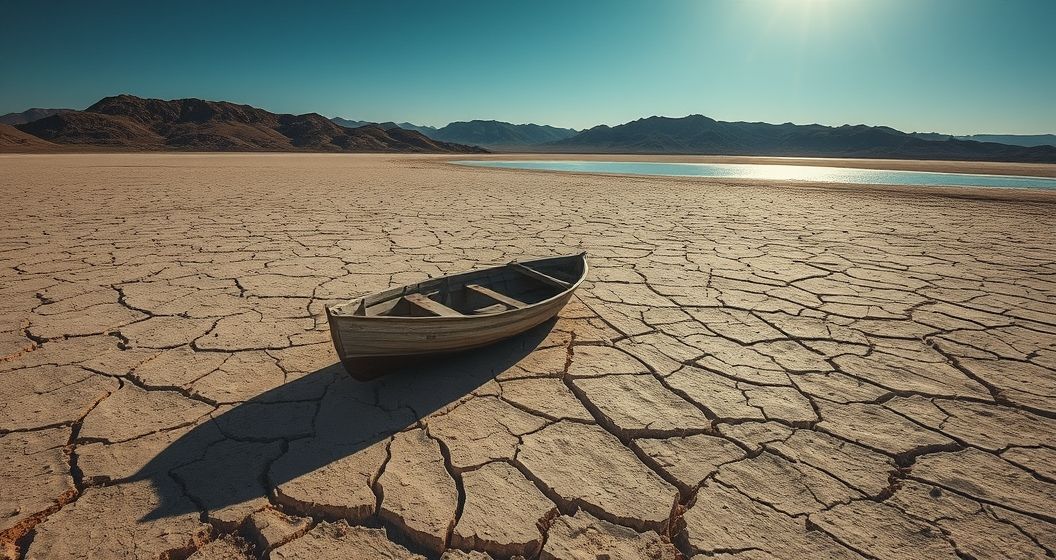
Spain is currently confronting one of the most severe droughts in its recent history, with the region of Catalonia at the epicentre of the crisis. After more than three years of significantly below-average rainfall, reservoirs have fallen to critically low levels, prompting authorities to declare a state of emergency. This situation has forced the implementation of stringent water restrictions affecting millions of residents, as well as the region’s vital agricultural and industrial sectors, highlighting the urgent challenges posed by climate change.
The Scale of the Water Shortage
The severity of the drought is starkly illustrated by the condition of the reservoirs in the Ter-Llobregat system, which supplies water to Barcelona and its surrounding areas. Water levels have plummeted below 16% of their total capacity, a threshold that automatically triggers the highest level of emergency measures. This prolonged water deficit is not a recent phenomenon but the culmination of several years of scarce precipitation, leading to a situation officials have described as unprecedented in modern times.
The lack of rainfall has transformed landscapes, leaving riverbeds dry and reservoir basins exposed. This persistent aridity has exhausted the region’s natural water reserves, placing immense strain on infrastructure and forcing a complete re-evaluation of water management strategies. The situation serves as a critical reminder of the region’s vulnerability to climatic shifts and the pressing need for sustainable water conservation efforts to secure future supply.
Emergency Measures and Restrictions
In response to the crisis, the Catalan government has rolled out a series of stringent measures designed to drastically reduce water consumption. For residents, this includes a cap on daily water use, reduced water pressure in many municipalities, and comprehensive bans on non-essential activities. These prohibitions include washing cars, watering private gardens, and filling swimming pools. The goal is to ensure that the remaining water supply is prioritized for essential human consumption and sanitation.
These restrictions are not limited to households. The agricultural sector, a cornerstone of the local economy, faces an 80% cut in water allocation for irrigation, posing a significant threat to crop yields. Similarly, industrial water use must be reduced by 25%. These measures are enforced to manage the dwindling resources carefully and extend the availability of water for as long as possible while hoping for significant rainfall.
Impact and Future Outlook
The economic and social impacts of the drought are far-reaching. Farmers are facing the potential loss of entire harvests, and industries are adapting their processes to operate with less water. The crucial tourism sector is also under pressure, with authorities working to balance the needs of visitors with the imperative of conservation. The crisis has sparked a broader conversation about long-term solutions and resilience.
Looking ahead, authorities are focused on both immediate and future strategies. Plans include expanding the capacity of desalination plants, which turn seawater into fresh water, and improving water reclamation technology. Investing in more efficient irrigation systems and repairing aging infrastructure to prevent leaks are also key priorities. This historic drought is acting as a catalyst for accelerating Spain’s transition towards a more sustainable and climate-resilient water management model.