
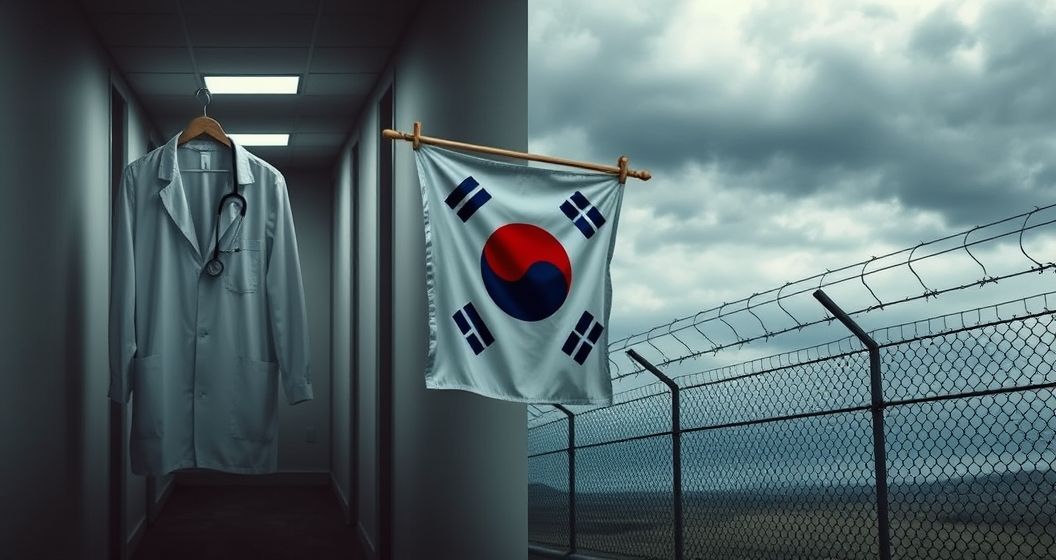
South Korea is currently navigating a period of significant tension, facing a deepening internal crisis within its healthcare system and renewed, unconventional provocations from North Korea. The government is under immense pressure as a nationwide doctors’ strike escalates, threatening to paralyze medical services. Simultaneously, the nation remains on high alert following a series of bizarre cross-border incidents, creating a complex challenge for the administration on both domestic and national security fronts.
Medical Sector Turmoil Intensifies
The long-simmering dispute between the South Korean government and the medical community has reached a critical point. The conflict stems from a government proposal to significantly increase medical school admissions to address a doctor shortage, particularly in rural areas and essential fields. However, thousands of trainee doctors walked off the job in protest, arguing the plan will not solve fundamental issues and could dilute the quality of medical education and services.
The situation has now escalated dramatically, with senior doctors and private practitioners threatening to join the walkout in a full-scale strike. The government has maintained a hardline stance, issuing back-to-work orders and initiating procedures to suspend the medical licenses of striking junior doctors. This stalemate has left major hospitals struggling to operate, forcing them to cancel surgeries and turn away patients, leading to growing public anxiety over access to critical healthcare.
Unprecedented Provocations from the North
While dealing with the domestic healthcare crisis, South Korea has also faced a new form of aggression from North Korea. In a highly unusual move, Pyongyang launched hundreds of large balloons carrying trash, manure, and other waste materials across the heavily fortified border. The act was described by North Korea as a retaliatory measure against South Korean activists who send balloons carrying anti-regime leaflets, food, and USB drives into the North.
A Shift in Nuisance Tactics
This “trash balloon” campaign marks a departure from North Korea’s more conventional military provocations, such as missile tests. While not physically destructive, the balloons are designed to cause public disruption, spread alarm, and create a cleanup burden for South Korean authorities. The military has advised citizens not to touch the objects and to report them immediately, as the contents could be hazardous. The South Korean government has condemned the act as a “low-class” and dangerous provocation that violates the armistice agreement.
Government Navigates Multiple Fronts
The Yoon Suk Yeol administration is now tasked with managing two distinct but simultaneous crises. The government’s firm response to the doctors’ strike is framed as a necessary step for future medical reform, but it risks alienating a crucial professional group and jeopardizing public health in the short term. Strong public support for the medical expansion plan has been a key factor in the government’s strategy, but patience may wear thin if hospital disruptions continue to worsen.
On the national security front, the response to North Korea’s actions requires a careful balance. Seoul has vowed a strong and proportional response, hinting at the potential resumption of loudspeaker propaganda broadcasts into the North, a tactic that has previously drawn a furious reaction from Pyongyang. These compounding challenges are testing the resilience of the nation and the strategic capacity of its leadership during a period of heightened uncertainty.


