
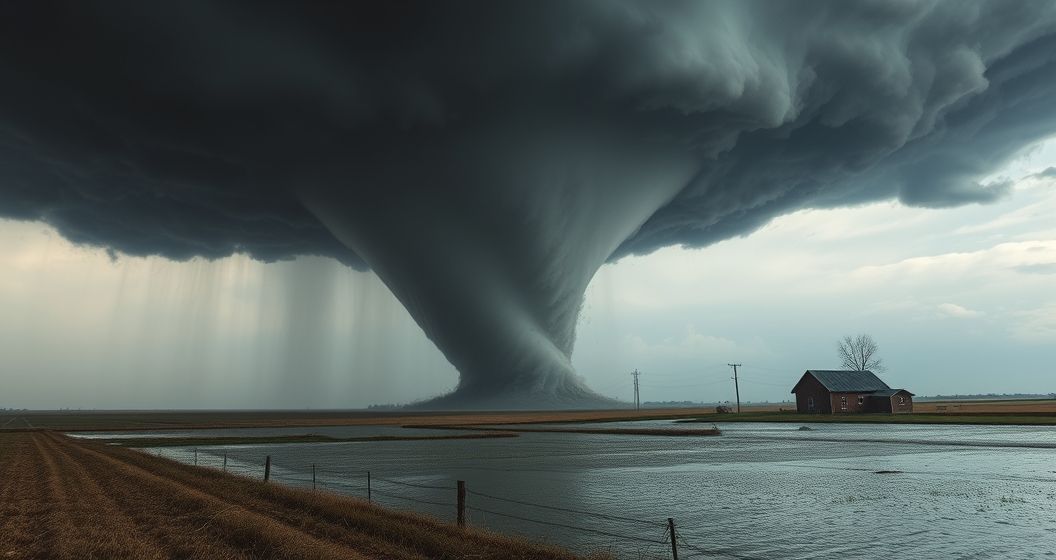
A powerful and dangerous severe weather system is sweeping across the central United States, bringing life-threatening conditions to millions of residents. The multi-day event has already spawned numerous tornadoes, produced damaging high winds, and triggered widespread flash flooding. States from the Plains to the Midwest and into the South are on high alert as the storm continues its destructive path, prompting urgent warnings from national weather authorities.
A Widespread and Dangerous System
Meteorologists describe the event as a classic clash of air masses, where warm, moist air from the Gulf of Mexico meets a colder, drier front, creating the perfect fuel for explosive thunderstorms. The system is exceptionally large, with weather alerts stretching over a dozen states. This broad impact is straining emergency resources and has put a significant portion of the country’s population in the path of potentially severe weather, from large metropolitan areas to rural communities.
Tornadoes and High Winds Cause Major Damage
The most immediate threat has been the outbreak of tornadoes. Multiple confirmed twisters have been reported, causing significant structural damage to homes, businesses, and critical infrastructure. Preliminary reports indicate entire neighborhoods have been impacted, with winds strong enough to rip roofs off buildings and topple large trees and power lines. Emergency crews are actively conducting search and rescue operations in the hardest-hit areas, though the full extent of the damage is still being assessed.
Flooding and Power Outages Compound the Crisis
In addition to the tornadic activity, the storm system is dumping torrential rain, leading to dangerous flash flooding. Many areas have received several inches of rain in a very short period, overwhelming drainage systems and causing rivers and streams to rise rapidly. This has resulted in numerous road closures and water rescues. The combination of high winds and saturated ground has also led to widespread power outages, leaving hundreds of thousands of customers without electricity and complicating response efforts.
Authorities Urge Residents to Stay Alert
State and local officials are strongly advising residents to remain vigilant and heed all warnings issued by the National Weather Service. Emergency management agencies have emphasized the importance of having multiple ways to receive alerts, as conditions can change rapidly. Residents in the storm’s path are advised to take the following precautions:
- Monitor local weather broadcasts and have a weather radio ready.
- Know the location of the safest shelter in your home, typically a basement or an interior room on the lowest floor.
- Never attempt to drive through flooded roadways.
- Keep a fully charged mobile phone and an emergency kit accessible.
As the system continues to move eastward, forecasters predict the threat of severe weather will persist. The focus now is on public safety and mitigating the impact of what is proving to be a significant and destructive weather event for the nation.