
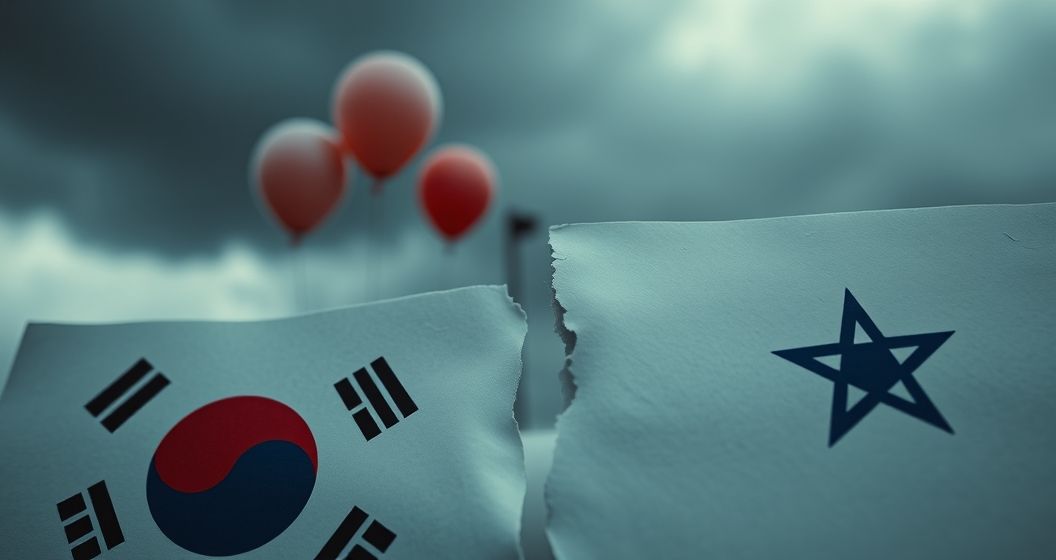
Tensions on the Korean Peninsula have sharply escalated following South Korea’s decision to fully suspend a 2018 inter-Korean military agreement. This move is a direct response to North Korea sending hundreds of balloons filled with trash and manure across the border, an act Seoul has condemned as a low-grade, psychological provocation. The suspension of the pact effectively removes key de-escalation measures, raising concerns about potential military clashes along the heavily fortified border.
An Unprecedented Balloon Barrage
Over the past week, North Korea has launched nearly a thousand balloons carrying bags of refuse, including waste paper, cloth, and what South Korean military officials identified as manure. The balloons drifted across the border, landing in various parts of the country, including the capital, Seoul. While no dangerous substances were found, the campaign caused public anxiety and prompted emergency alerts, disrupting daily life for many citizens who were warned to avoid the objects.
Pyongyang has claimed the balloon campaign is retaliation for South Korean activists sending anti-North Korea leaflets, food, and USB drives with K-pop and dramas across the border. This tit-for-tat exchange of propaganda is not new, but the use of trash-filled balloons represents a bizarre and unsanitary escalation in tactics, designed to create a nuisance and stoke internal discontent within the South.
South Korea’s Firm Response
In response to the provocations, South Korea’s National Security Council convened and approved the motion to suspend the Comprehensive Military Agreement (CMA). Officials stated that the pact was hindering the military’s ability to maintain readiness against ongoing threats from the North. The suspension, which was later approved by the cabinet, allows Seoul to resume military activities and drills near the Military Demarcation Line (MDL) that had been halted under the agreement.
This includes the potential resumption of propaganda loudspeaker broadcasts directed at North Korea. These broadcasts, which blare news, criticism of the Pyongyang regime, and K-pop music, have historically been a source of extreme irritation for the North Korean government and have led to military confrontations in the past. The move signals a significant shift towards a more hardline policy from Seoul.
The End of a De-escalation Symbol
The 2018 military agreement was a cornerstone of the diplomatic engagement between the two Koreas during a period of rapprochement. It established no-fly zones, removed guard posts within the Demilitarized Zone (DMZ), and halted all hostile acts between the two sides. Its suspension effectively dismantles a key symbol of inter-Korean peace efforts and returns the peninsula to a state of heightened military readiness and confrontation.
Heightened Risk of Miscalculation
With the military agreement no longer in effect, both North and South Korea are free to conduct military exercises and surveillance activities closer to the border. This significantly increases the risk of accidental clashes or miscalculations that could quickly spiral into a more serious conflict. International observers are closely monitoring the situation, urging both sides to exercise restraint and return to dialogue to prevent further escalation in this volatile region.


