
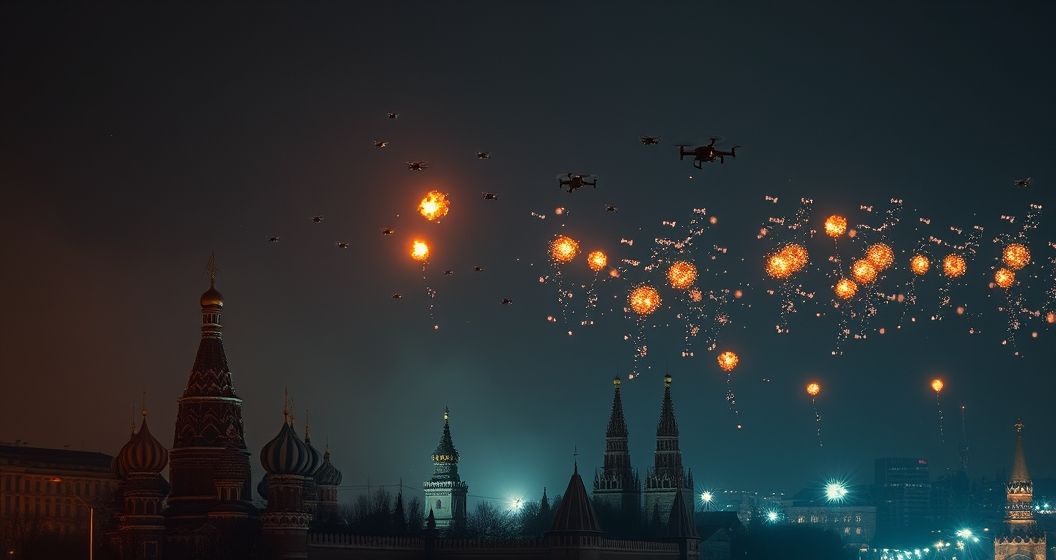
Russia’s Ministry of Defence has reported the successful interception of a significant number of Ukrainian drones over several regions. The incidents, which targeted areas including Bryansk, Oryol, and Kursk, represent one of the largest coordinated aerial assaults in recent weeks. Authorities have stated that air defence systems effectively neutralized the threats, with minimal damage reported on the ground. This wave of attacks highlights an escalating pattern of cross-border aerial confrontations, testing Russia’s defensive capabilities and bringing the conflict’s realities to its own territory.
Coordinated Attacks Target Key Regions
According to official statements, the overnight attacks involved dozens of unmanned aerial vehicles (UAVs) aimed at infrastructure within Russian territory. The Bryansk region reportedly faced the most intense barrage, with air defences actively engaged for several hours. Local governors in the affected areas urged residents to remain calm while emergency services worked to assess any potential damage from falling debris, confirming that all incoming threats were successfully neutralized before reaching their intended targets. The scale suggests a well-planned operation designed to overwhelm defensive systems.
These incursions follow a recurring pattern of attempts to strike targets deep inside Russia. The strategy appears aimed at disrupting logistics, creating psychological pressure, and demonstrating long-range strike capabilities. While Russian officials maintain that their multi-layered air defence network is robust and effective, the increasing frequency and scale of such attacks necessitate a constant state of high alert across western and southern territories of the country. The effectiveness of electronic warfare systems in jamming and diverting drones has become a critical component of this defensive posture.
Official Response and Strategic Implications
In response to the ongoing hostilities, the Kremlin has reiterated its strategic objectives. President Vladimir Putin recently emphasized that the fundamental goals of the “special military operation” remain unchanged, including what he termed the “denazification” and “demilitarization” of Ukraine. This rhetoric underscores Moscow’s firm stance and suggests that such cross-border incidents will not alter its long-term military and political strategy. Officials frame these successful defensive actions as proof of military readiness and the competence of its armed forces in protecting the nation’s airspace.
Beyond the immediate drone threat, military activity continues to be a focus in other areas, particularly in the Black Sea. Reports indicate ongoing naval manoeuvres and a heightened state of alert for Russia’s Black Sea Fleet. These actions are part of a broader strategy to control key maritime routes and project power in the region. The military command is simultaneously adapting its tactics to counter new threats, including the use of sophisticated UAVs and naval drones, which have become a prominent feature of the conflict’s naval dimension.
Domestic Impact and Future Outlook
The continuous threat of aerial attacks has a tangible impact on the civilian population in border regions, leading to increased security measures and public awareness campaigns. For residents in cities like Belgorod and Kursk, air raid alerts have become a more common occurrence. As the nature of the conflict evolves, both sides are expected to further invest in drone technology and electronic warfare capabilities. For Russia, the key challenge remains balancing offensive operations with the increasingly complex task of defending its vast territory from a diverse and technologically advancing range of threats.


