
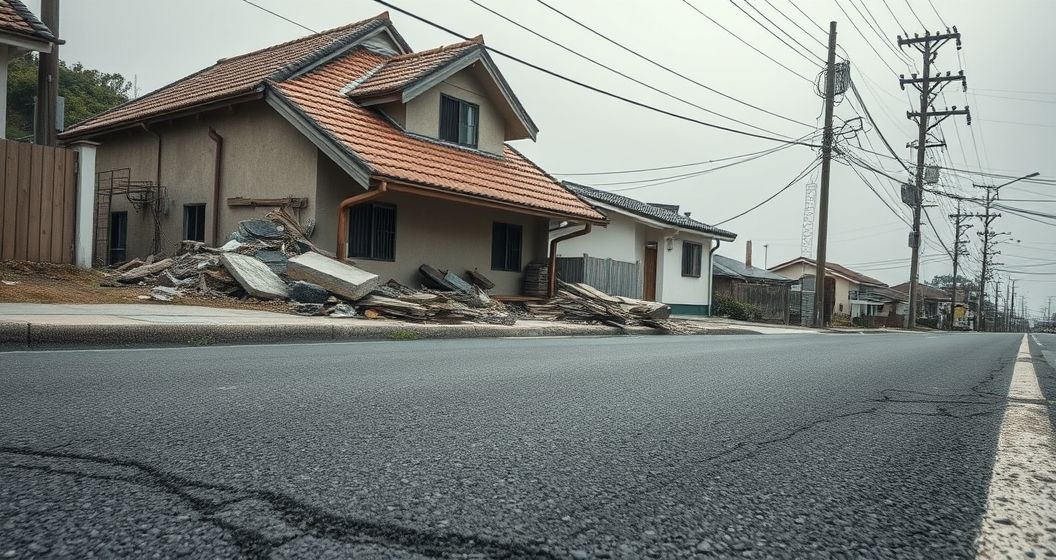
A major earthquake with a preliminary magnitude of 7.6 has struck the Noto Peninsula in Ishikawa Prefecture, causing extensive damage, triggering tsunami warnings, and disrupting critical infrastructure. The powerful tremor prompted immediate evacuation orders for coastal areas as authorities warned of potentially large waves. The event has placed the nation’s robust disaster response systems on high alert as the full scale of the impact continues to be assessed.
Widespread Damage and Infrastructure Impact
Initial reports and footage from the region depict significant damage to buildings and infrastructure. Multiple structures, including residential homes and commercial buildings, have collapsed, particularly in cities like Wajima. The quake caused large cracks to appear on major highways, forcing road closures and complicating access for emergency services. Power outages have affected tens of thousands of households across Ishikawa Prefecture, with utility companies working to restore services amid challenging conditions.
Transportation has been severely affected. Several local airports, including Noto Airport, reported damage to runways, leading to the cancellation of flights. Shinkansen bullet train services in the region were also suspended as a precautionary measure, leaving many travelers stranded while safety checks are conducted on the tracks. The widespread disruption underscores the quake’s powerful impact on daily life and regional connectivity.
Tsunami Alerts and Coastal Evacuations
The Japan Meteorological Agency (JMA) immediately issued a major tsunami warning for the Noto Peninsula, the highest level of alert, and tsunami warnings for neighboring prefectures along the Sea of Japan coast. The agency warned of waves potentially reaching up to five meters, urging residents in low-lying areas to evacuate to higher ground without delay. Waves over a meter high were observed in some coastal cities shortly after the main tremor.
Local authorities relayed the evacuation orders through public broadcast systems and emergency alerts. While the major tsunami warning was later downgraded, officials have advised the public to remain vigilant. The swift issuance of warnings is a testament to Japan’s advanced early-warning system, designed to provide crucial minutes for residents to seek safety following a major seismic event.
Emergency Response and Rescue Operations
The Japanese government quickly established an emergency response office to coordinate rescue and relief efforts. Prime Minister Fumio Kishida instructed officials to prioritize human lives and mobilize all available resources. The Japan Self-Defense Forces (SDF) have been dispatched to the hardest-hit areas to assist with search and rescue operations, provide essential supplies, and help clear debris from damaged roads.
Rescue teams are facing considerable challenges due to aftershocks and blocked transportation routes. The focus remains on locating and assisting individuals who may be trapped in collapsed structures. Local governments have opened evacuation centers in schools and public halls to provide shelter, food, and water for those displaced by the earthquake and tsunami threat.