
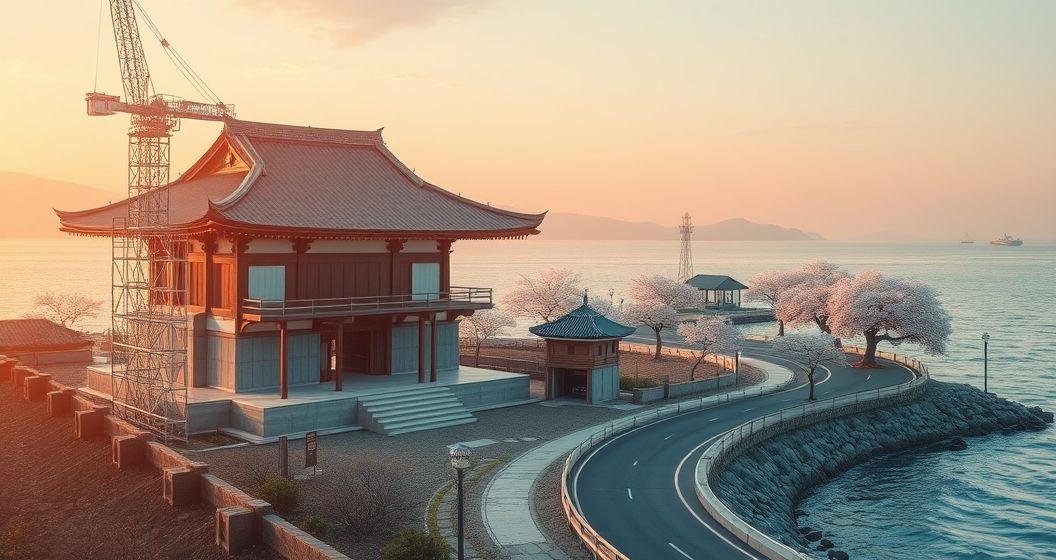
Following the devastating earthquake that struck the Noto Peninsula, recovery efforts are now intensely focused on two critical areas: rebuilding essential infrastructure and revitalizing the region’s heavily damaged tourism industry. Officials and local communities face a monumental task in restoring normalcy and ensuring a sustainable future for the area, which has long been celebrated for its scenic beauty and cultural heritage. The path forward requires a coordinated approach to address both immediate needs and long-term economic stability.
The Scale of the Infrastructure Challenge
The primary hurdle in the recovery process is the extensive damage to critical infrastructure. Many roads, including major arteries, suffered collapses and severe cracks, isolating numerous communities and hampering the delivery of aid and supplies. Restoring these transportation networks is the top priority, as they are essential for both emergency services and the eventual return of economic activity. The rugged terrain of the peninsula further complicates repair work, demanding specialized engineering solutions and significant investment.
Beyond transportation, the restoration of utilities remains a major concern for residents. Water supply systems were severely compromised, leaving thousands of households without reliable access to clean water for an extended period. While temporary solutions are in place, the complete reconstruction of the water and sewage pipeline network is a long-term project. The structural integrity of countless buildings, from private homes to public facilities, also requires thorough assessment and, in many cases, complete rebuilding to meet modern earthquake-resistance standards.
Revitalizing a Battered Tourism Industry
Tourism has long served as the economic backbone of the Noto region, attracting visitors with its dramatic coastlines, traditional crafts, and renowned cuisine. The earthquake dealt a severe blow to this sector, damaging hotels, historic sites, and local businesses that depend on visitor spending. Rebuilding traveler confidence is just as important as repairing the physical damage. The immediate goal is to make the area accessible and safe for visitors once again.
To accelerate this recovery, government-led initiatives are being launched to encourage domestic travel to the region. Programs offering significant travel subsidies and promotional campaigns are designed to attract tourists back to Noto and the wider Hokuriku area. These efforts aim to provide a direct economic injection into local businesses, from small inns to souvenir shops, helping them to reopen and re-employ staff. The success of these campaigns will be crucial for the region’s economic survival in the coming months.
A Long-Term Vision for Rebuilding
The reconstruction effort is not merely about restoring what was lost but also about building a more resilient Noto for the future. Planners are focused on “creative reconstruction,” an approach that incorporates stronger, more disaster-resistant infrastructure and community planning. This includes developing improved evacuation routes, reinforcing public buildings, and creating systems that can better withstand future seismic events. This forward-looking strategy aims to turn a catastrophic event into an opportunity to create a safer and more sustainable community for generations to come.