
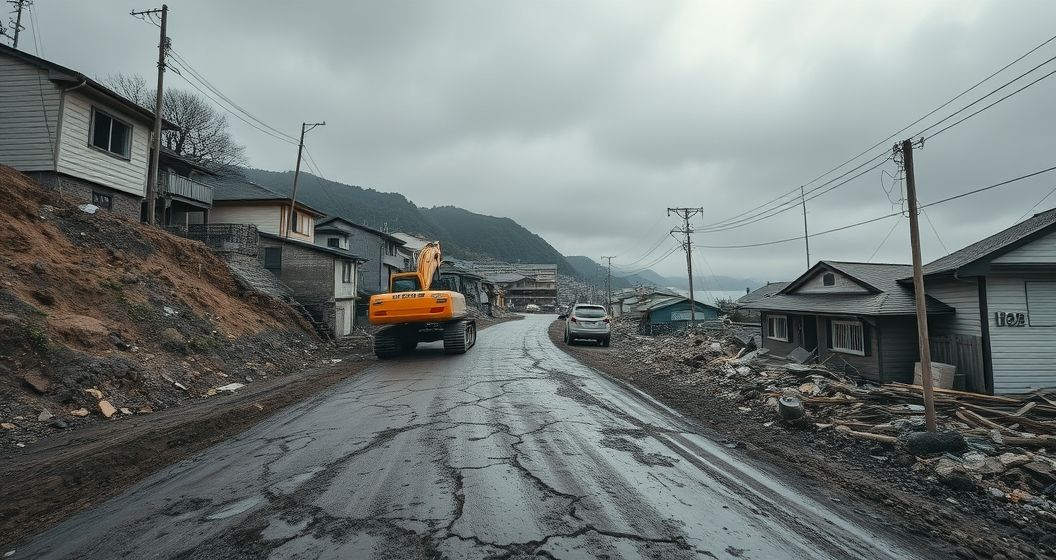
Months after a powerful earthquake devastated the Noto Peninsula, recovery and reconstruction efforts are in full swing but face immense challenges. Officials and relief workers are contending with severe infrastructure damage, a growing housing crisis, and the complex logistics of supporting displaced residents. The road to recovery for the region is proving to be a long and arduous journey, testing the resilience of local communities and the efficiency of national support systems.
Widespread Infrastructure Damage Hampers Progress
One of the most significant obstacles to recovery is the extensive damage to critical infrastructure. Many key roads, bridges, and tunnels in the mountainous region were destroyed or rendered unsafe by the quake and subsequent landslides. This has severely restricted access to numerous isolated communities, slowing the delivery of essential supplies, heavy machinery, and personnel needed for rebuilding efforts. Crews are working tirelessly to clear debris and establish temporary routes, but the difficult terrain makes progress slow.
Beyond transportation, the restoration of basic utilities remains a top priority. While power has been restored to most areas, ensuring a stable supply of clean drinking water is an ongoing issue. Many water pipes were ruptured, and treatment facilities were damaged, forcing residents in some towns to continue relying on water trucks. The complete restoration of these vital services is a foundational step for any meaningful reconstruction and the return of evacuees.
The Pressing Need for Housing and Support
The earthquake has left thousands of people without homes, creating a severe housing shortage. Many are still living in designated evacuation centers, such as schools and community halls, while others have moved into temporary housing units. However, the demand for secure, long-term shelter far exceeds the available supply. The construction of more prefabricated homes is being expedited, but a permanent solution for all displaced families remains a distant goal.
Challenges for an Aging Population
The crisis is particularly acute for the region’s large elderly population. Many older residents who have lost their homes face not only physical hardship but also immense psychological stress. Leaving their lifelong communities is a difficult prospect, and adapting to life in temporary shelters presents unique challenges. Health and welfare services are focused on providing specialized care, mental health support, and ensuring these vulnerable individuals are not left isolated during the recovery process.
Economic Impact and the Path Forward
The local economy, heavily reliant on tourism, fishing, and traditional crafts like Wajima lacquerware, has been crippled. The destruction of fishing ports, workshops, and famous tourist sites, including the Wajima morning market, has erased the livelihoods of many. The government has introduced financial support packages and aid for small businesses, but rebuilding consumer confidence and attracting visitors back to the peninsula will be a long-term endeavor. The focus is now on helping local industries get back on their feet as a cornerstone of the region’s revival.