
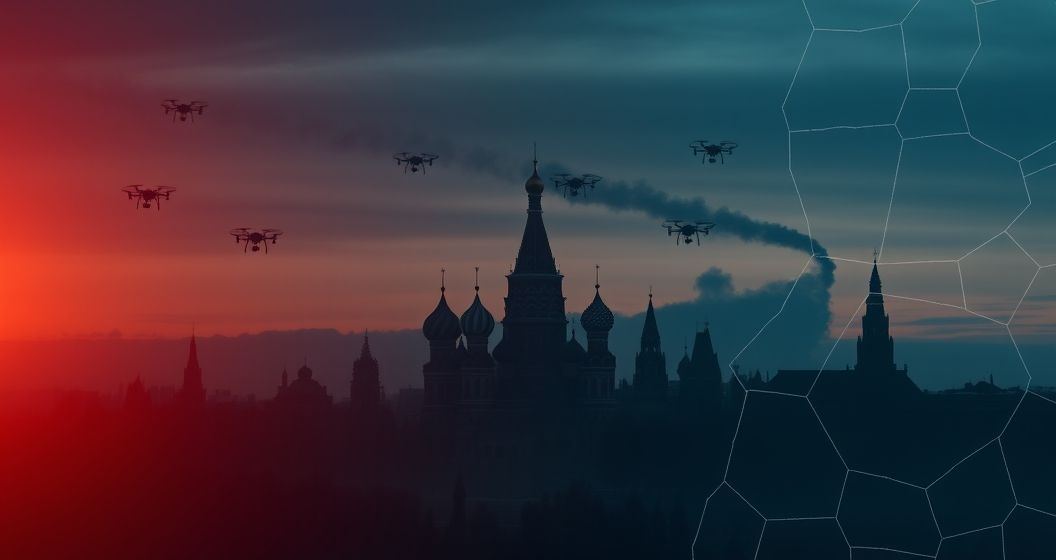
Russia is currently navigating a complex landscape marked by intensified cross-border military actions and significant realignments in its foreign policy. Recent events highlight a dual focus on managing persistent drone attacks on its territory while simultaneously forging deeper strategic partnerships with nations in the East. These developments are unfolding against a backdrop of continued international economic pressure, forcing Moscow to adapt its military and diplomatic strategies in response to evolving challenges on multiple fronts.
Escalating Cross-Border Conflict
In recent days, Russian territories, particularly the Belgorod region, have experienced a notable increase in drone and missile attacks. Defense officials report successfully intercepting a significant number of aerial threats, including unmanned aerial vehicles (UAVs) and rockets. These attacks primarily target infrastructure and civilian areas, prompting heightened air defense measures and emergency responses. The ongoing strikes underscore the changing nature of the conflict, with both sides leveraging long-range capabilities to exert pressure far from the front lines.
The strategic aim of these aerial campaigns appears to be multifaceted, ranging from disrupting logistics to impacting public morale. Russia’s Ministry of Defence regularly provides updates on these incidents, framing its response as a successful defense against “terrorist attacks.” The persistence of these cross-border engagements indicates a sustained effort to challenge Russia’s domestic security and force the diversion of military resources to protect its own territory, creating a new and unpredictable dimension to the conflict.
A Strategic Pivot to the East
On the diplomatic front, Russia has made a significant move to solidify its alliances outside of the Western sphere. A landmark development is the signing of a comprehensive strategic partnership treaty with North Korea. This agreement, formalized during a high-profile summit, includes a mutual defense clause, committing each nation to provide immediate military assistance if the other is attacked. This pact represents one of Moscow’s most significant strategic shifts in Asia in recent years.
International Reactions and Implications
The new Russia-North Korea alliance has drawn swift condemnation from the United States, South Korea, and Japan, who view it as a destabilizing move that could embolden both nations. Concerns are centered on the potential for increased arms transfers, with allegations that Pyongyang is supplying Moscow with artillery and missiles. In response, Seoul has indicated it may reconsider its policy of not supplying lethal aid to Ukraine, signaling a potential escalation of geopolitical tensions across the Eurasian continent.
Navigating Economic Pressure
Simultaneously, Russia continues to contend with robust international sanctions aimed at crippling its economy and war machine. The latest measures from Western nations have targeted Russia’s financial system, including the Moscow Exchange, to further restrict its access to global markets and limit its ability to procure technology. These sanctions are designed to create friction within Russia’s economy and complicate its efforts to fund its ongoing military operations through alternative financial channels.
In response, Moscow has accelerated its de-dollarization strategy and is working to strengthen trade and financial ties with non-Western partners, particularly within the BRICS bloc. The government is actively promoting the use of national currencies in trade settlements and developing alternative payment systems to bypass Western-controlled financial infrastructure. This economic maneuvering reflects a broader strategy of building a resilient economy capable of withstanding sustained external pressure while reorienting trade flows toward friendlier nations.