
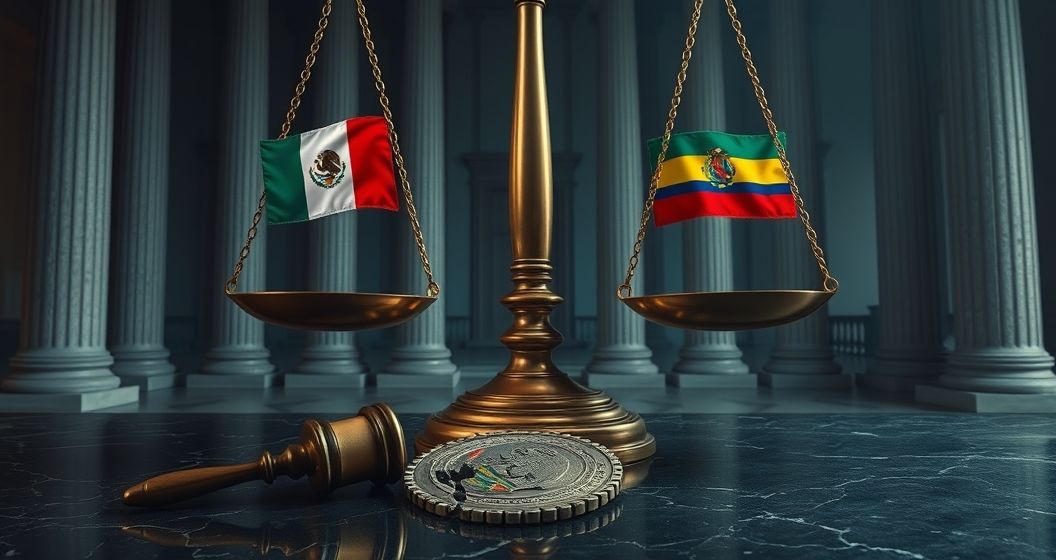
Mexico has officially filed a lawsuit against Ecuador at the International Court of Justice (ICJ), the United Nations’ top court. This significant legal action comes in response to the recent raid by Ecuadorian police on the Mexican embassy in Quito. The incident, which led to the arrest of a former Ecuadorian official seeking asylum, has caused a complete rupture in diplomatic relations between the two nations and sparked widespread international condemnation.
The Raid That Severed Diplomatic Ties
The diplomatic crisis erupted when Ecuadorian police forces stormed the Mexican embassy to arrest former Ecuadorian Vice President Jorge Glas. Glas, who had been convicted on corruption charges, had been residing in the embassy since December, seeking political asylum from what he claims is political persecution. Mexico had just granted his asylum request moments before the raid occurred, escalating the tension significantly.
The raid is considered a severe violation of long-standing international treaties, particularly the Vienna Convention on Diplomatic Relations. This convention establishes that diplomatic missions are inviolable, meaning host country authorities cannot enter the premises without the ambassador’s permission. The dramatic footage of armed police scaling the embassy walls has been circulated globally, highlighting the gravity of the breach.
Mexico’s Firm Legal and Diplomatic Response
In response, Mexican President Andrés Manuel López Obrador immediately suspended diplomatic relations with Ecuador. The subsequent lawsuit filed at the ICJ seeks not only to hold Ecuador accountable for its actions but also to request its suspension from the United Nations. Mexico argues that Ecuador’s government must face consequences for undermining the fundamental principles that govern international relations and protect diplomatic personnel and facilities.
A Clear Breach of International Law
Mexico’s legal argument centers on the principle of diplomatic inviolability. This concept is a cornerstone of international law, designed to ensure that diplomats can perform their duties without fear of coercion or harassment by their host country. By forcibly entering the embassy, Ecuador disregarded a universally accepted norm. The Mexican government asserts that this sets a dangerous precedent that could endanger diplomatic missions worldwide if left unaddressed by the international community.
Global Condemnation and Regional Impact
Ecuador’s actions have been met with a wave of criticism from governments across Latin America and the world. Leaders from Brazil, Colombia, Chile, and Argentina, as well as the Organization of American States (OAS), have condemned the raid as a violation of international law. The United States and the European Union have also urged for a resolution in accordance with diplomatic norms. The incident has isolated Ecuador diplomatically and raised concerns about political stability and respect for legal frameworks in the region.
The case now rests with the ICJ in The Hague. Its eventual ruling will be closely watched, as it could have lasting implications for the sanctity of diplomatic missions and the enforcement of international law. For now, relations between Mexico and Ecuador remain completely frozen as the legal battle begins on the world stage.