
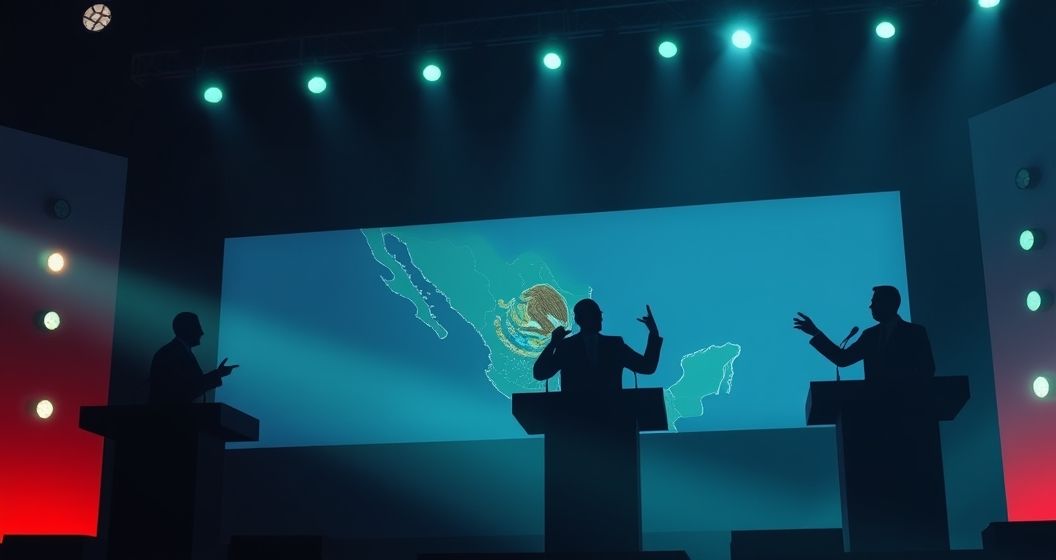
The race for Mexico’s presidency intensified as the three leading candidates faced off in a highly anticipated second debate. Claudia Sheinbaum, Xóchitl Gálvez, and Jorge Álvarez Máynez presented their visions for the country, focusing on critical issues like economic growth, public security, and social inequality. The event was marked by sharp exchanges and direct accusations, providing voters with a clearer view of their distinct approaches ahead of the upcoming general election.
Key Themes Dominate the Discussion
The debate structure allowed for a deep dive into several topics crucial to Mexico’s future. The candidates were pressed to outline their plans on matters that directly impact citizens’ daily lives, leading to heated but informative segments. Each participant attempted to position themselves as the most capable leader to handle these complex challenges, often by criticizing their rivals’ past actions and proposals.
Economic Growth and Foreign Investment
A significant portion of the debate centered on the economy. Discussions revolved around strategies to combat inflation, promote sustainable growth, and manage poverty. Claudia Sheinbaum, representing the ruling party, defended the current administration’s economic policies, highlighting social programs and stability. In contrast, Xóchitl Gálvez, from the opposition coalition, argued for policies that would attract more foreign investment and reduce bureaucratic hurdles for businesses, promising a more dynamic economic environment.
Security and Justice Reform
Public security remains a top concern for Mexican voters, and the candidates offered contrasting solutions. Sheinbaum proposed continuing and strengthening the current strategy of addressing the root causes of crime while professionalizing law enforcement. Gálvez advocated for a tougher stance against organized crime, suggesting a new security framework with greater collaboration between federal and local forces. Jorge Álvarez Máynez presented a third way, focusing on comprehensive justice reform and demilitarization.
A Shift in Strategy and Tone
Compared to the first encounter, the second debate saw a noticeable shift in tactics, particularly from the opposition. Xóchitl Gálvez adopted a more aggressive and confrontational style, directly targeting front-runner Claudia Sheinbaum with accusations related to her tenure as mayor of Mexico City. Sheinbaum, in turn, spent much of her time defending her record and that of the current government, aiming to project an image of experience and continuity. This dynamic created a tense atmosphere throughout the event.
Voter Reactions and What Lies Ahead
Following the debate, political analysts and social media were abuzz with commentary on each candidate’s performance. While polls have consistently shown Sheinbaum with a significant lead, the impact of these televised encounters is still being measured. The debate served to energize the candidates’ respective bases and provided undecided voters with substantive policy differences to consider. With one final debate remaining, the pressure is on for each campaign to consolidate support and make a final push before voters head to the polls.