
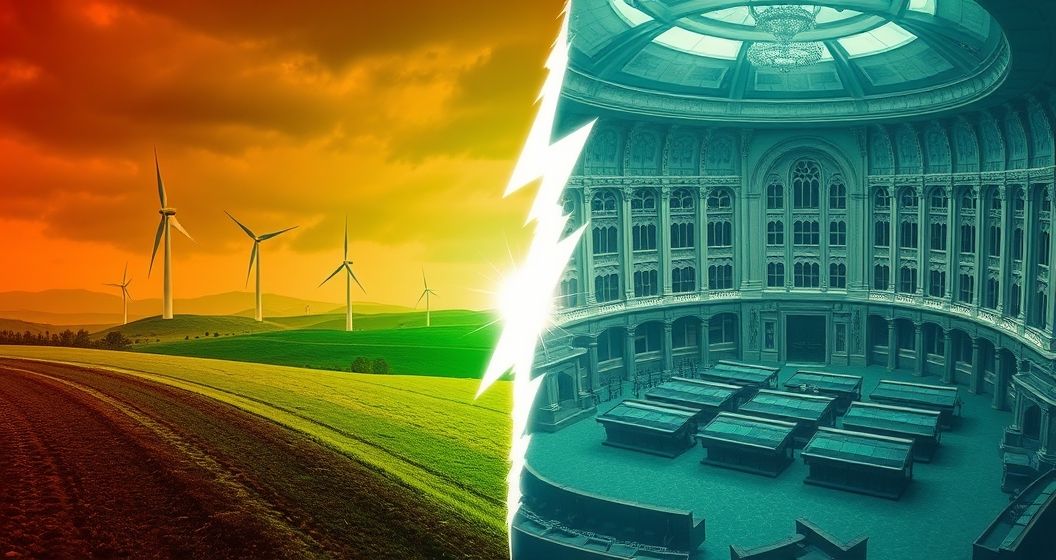
The general election campaign has intensified as the Labour Party unveiled its flagship green energy policy, immediately drawing sharp criticism from the Conservative Party. The proposal, centred on creating a publicly-owned energy company, has become a key battleground, highlighting the starkly different approaches the two main parties offer for the United Kingdom’s future energy security and economic strategy. The debate places a critical choice before voters on how the country should tackle climate change and rising energy costs.
Labour Unveils Ambitious Green Investment Plan
At the heart of Labour’s strategy is the creation of a new entity named Great British Energy. This publicly-owned company would be tasked with investing in renewable and clean energy projects across the country. Proponents argue that this state-led investment would accelerate the transition to sources like wind, solar, and nuclear power, ultimately reducing the UK’s reliance on volatile international gas markets. The party claims this would lower household energy bills over the long term and create thousands of skilled jobs in the green technology sector.
The plan is presented as a dual-purpose solution aimed at both environmental responsibility and economic revitalisation. By co-investing in new technologies alongside the private sector, Labour suggests that Great British Energy would ensure that the profits and benefits of the green transition are shared more widely across the public, rather than being concentrated solely in private hands. This model, they argue, provides greater control over the nation’s energy infrastructure and strategic direction.
Conservatives Question Economic Viability
In response, the Conservative Party has launched a robust critique of the plan, focusing primarily on its economic implications. Senior party figures have questioned the feasibility of funding such an ambitious state-run enterprise without resorting to significant government borrowing or tax increases. They argue that the policy represents a return to outdated nationalisation and would ultimately place a heavy burden on the taxpayer. The central concern is that the initial investment required would be substantial and potentially inefficiently managed.
Focus on Household Costs
The Conservatives have framed their opposition around the immediate impact on household finances. They contend that while the long-term goal of lower bills is appealing, the short-term cost of establishing and funding Great British Energy could lead to higher taxes for working families. Their counter-proposal emphasizes stimulating private sector investment through tax incentives and deregulation, arguing that market competition is a more effective and less costly route to innovation and lower prices for consumers.
Voters Face a Clear Choice on Energy Policy
This clash over energy policy presents voters with a clear ideological choice. On one side is Labour’s vision of a state-led green industrial strategy, where public investment drives the transition to renewable energy. This approach prioritises national control and aims to capture the economic benefits for the public purse. On the other side is the Conservative belief in a market-driven solution, where private companies, encouraged by government policy, lead the charge on innovation and infrastructure development.
As the campaign continues, this debate is set to remain a central theme. It touches upon fundamental questions about the role of the state in the economy, how best to achieve net-zero carbon emissions, and who should bear the financial risk of the energy transition. The outcome will not only shape the UK’s energy landscape for decades but also signal a significant shift in the country’s broader economic philosophy.
