
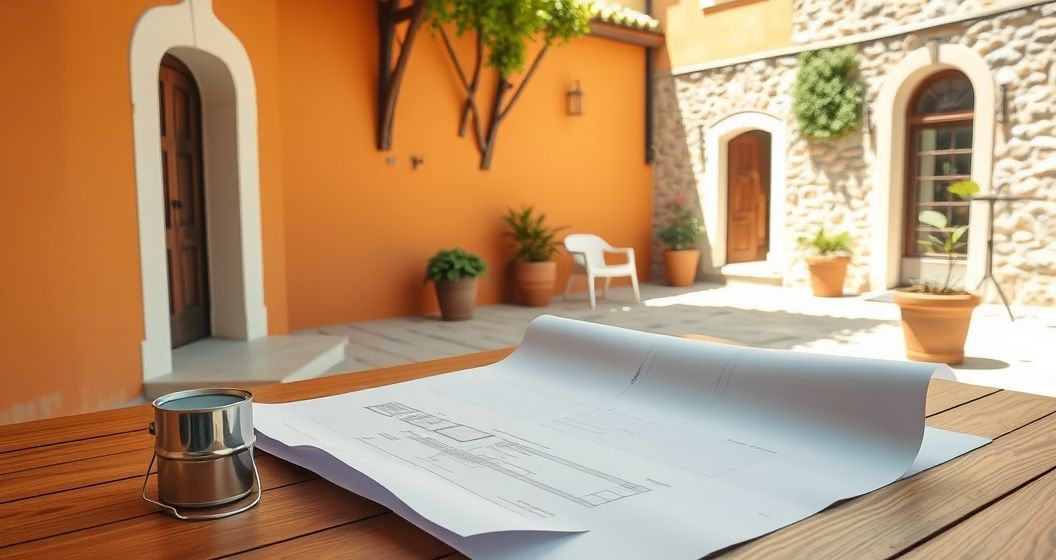
The Italian government has introduced a significant new measure, widely known as the ‘Salva-Casa’ (House-Saving) decree, aimed at simplifying the process for homeowners to regularise minor building discrepancies. This legislation seeks to address a widespread issue where small, non-structural irregularities in properties often complicate or completely block real estate sales and renovation projects. The plan is designed to cut through bureaucratic red tape and unlock the value of countless properties currently stuck in administrative limbo.
What the ‘Salva-Casa’ Decree Addresses
At its core, the decree provides a form of amnesty for minor construction and renovation non-compliance that does not affect the structural safety or stability of a building. These issues are common throughout Italy and can range from internal partition walls moved without a permit to windows or balconies that differ slightly from the original approved plans. The legislation specifically targets these small divergences that, while technically illegal, pose no danger but create major administrative headaches for property owners seeking to sell or renovate their homes.
The new rules aim to distinguish between serious building code violations and these minor formal irregularities. By providing a clear and simplified path to legalize these small issues, the government hopes to resolve longstanding problems for millions of homeowners. This move is expected to have a significant impact on the efficiency of the country’s property market by removing a common obstacle in transactions.
Key Objectives of the New Legislation
The primary goal of the ‘Salva-Casa’ decree is to stimulate the real estate sector by making it easier to buy and sell properties. The legislation is built on several key pillars designed to achieve this broad objective.
Streamlining Property Sales
A major hurdle in Italian property transactions is the requirement for a certificate of conformity, which proves a property matches its official building plans. Even a minor discrepancy can prevent this certificate from being issued, halting a sale indefinitely. This decree allows for such issues to be resolved through a simplified declaration and the payment of a fine, thereby unblocking the sale process and making the market more fluid.
Reducing Bureaucracy for Renovations
Homeowners planning renovations often discover past irregularities that must be rectified before new work can be approved. This creates long delays and additional costs. The new measure simplifies this process, allowing owners to regularise the property’s status more quickly and proceed with planned improvements. This is also expected to encourage more renovation projects, including those focused on energy efficiency, which supports broader environmental goals.
Potential Economic Impact and Outlook
Economists and real estate experts anticipate that the ‘Salva-Casa’ decree could provide a notable boost to the Italian economy. By freeing up a large number of properties for sale and renovation, the measure is expected to increase activity for real estate agents, construction companies, notaries, and other related professions. While critics have raised concerns that it could be seen as rewarding past non-compliance, proponents argue it is a pragmatic solution to a deeply entrenched problem that hinders economic growth and penalizes ordinary citizens for minor historical issues.
