
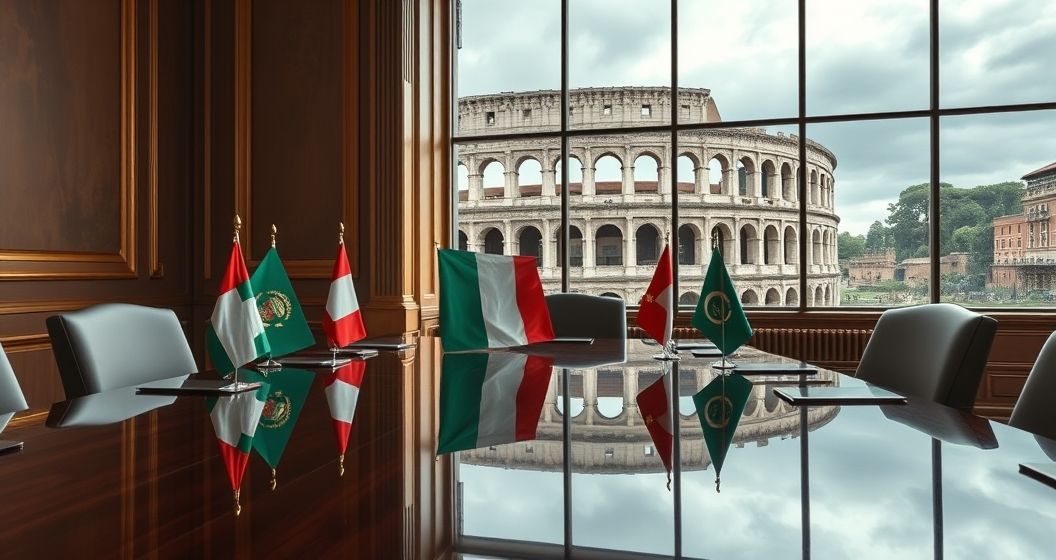
As Italy takes center stage by hosting the G7 summit, the nation is simultaneously grappling with significant domestic issues, including new economic policies and a severe heatwave impacting the country. The government, led by Prime Minister Giorgia Meloni, is balancing its international leadership role with pressing internal challenges that affect citizens’ daily lives and the nation’s financial future. These developments highlight a crucial period for Italy on both global and local fronts.
Global Leadership at the G7 Summit
Italy’s presidency of the G7 has placed it at the heart of major international discussions. The summit agenda has focused on critical global issues, including continued support for Ukraine, the regulation of artificial intelligence, and economic security. Prime Minister Meloni has utilized this platform to champion Italy’s strategic interests and reinforce its position as a key player within the European Union and the wider international community. Key outcomes have included agreements on using frozen Russian assets to aid Ukraine, demonstrating a united front among the world’s leading economies.
The discussions also extended to global development, with a particular focus on Africa, a cornerstone of Meloni’s foreign policy. The summit aimed to foster partnerships that address migration, energy, and economic growth. By leading these complex negotiations, Italy is working to shape international policy while showcasing its diplomatic capabilities to a global audience. The event has been a significant test of the government’s ability to manage high-stakes international relations.
Navigating Domestic Economic Policies
While the world’s eyes are on the G7, the Italian government continues to navigate a complex domestic economic landscape. Recent debates in parliament have centered on fiscal reforms and the budget for the upcoming year. The government is focused on managing public debt while attempting to stimulate economic growth through targeted investments and tax adjustments. One of the key talking points remains the future of building renovation incentives, such as the “Superbonus,” which has had a significant impact on public finances.
These economic measures are designed to provide relief to families and businesses facing inflationary pressures, but they also require careful financial management. The government’s challenge is to implement policies that support the economy without further straining the national budget. The decisions made in the coming months will be critical in determining Italy’s economic trajectory and stability, affecting everything from employment rates to consumer confidence.
Nationwide Heatwave Poses Health Risks
Adding to the domestic pressures, Italy is currently experiencing a major heatwave, with temperatures soaring across the peninsula. Major cities, including Rome, Florence, and Bologna, have been placed on high alert by the Ministry of Health. Authorities are urging residents, especially the elderly and vulnerable, to take precautions against the extreme heat. The “codice rosso,” or red alert, signifies a significant risk to public health, prompting public service announcements and the opening of cooling centers.
This early-season heatwave also raises concerns for the country’s vital tourism and agricultural sectors. The extreme weather could impact crop yields and create challenging conditions for the millions of tourists who visit Italy during the summer months. The situation underscores the growing impact of climate change on the country and highlights the need for adaptive strategies to protect both its population and its economy from future climate-related events.


