
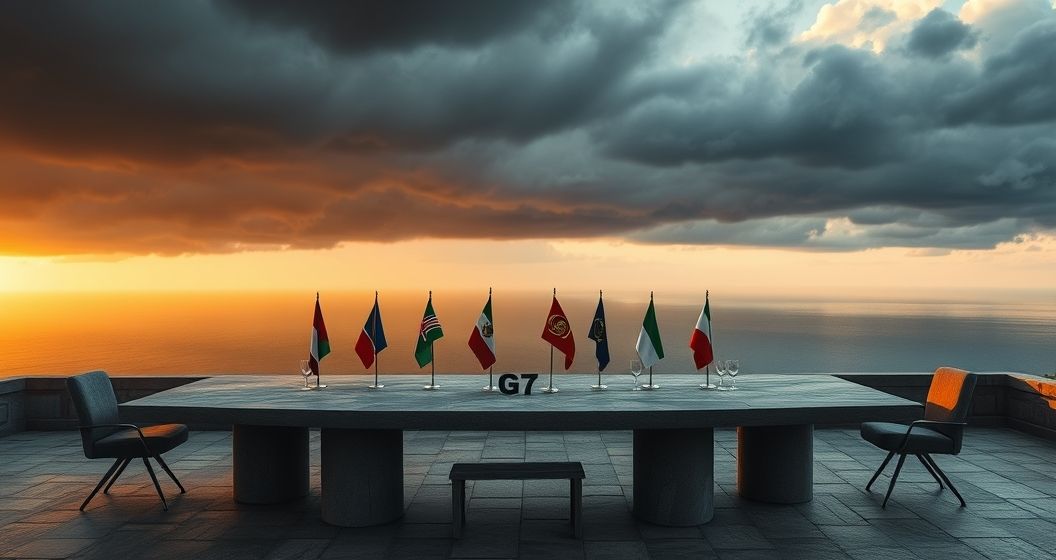
Leaders from the world’s leading economies have gathered in Puglia, Italy, for the annual G7 summit, navigating a complex agenda dominated by geopolitical crises and technological challenges. Hosted by Italian Prime Minister Giorgia Meloni, the summit aims to project a unified front on key issues, including long-term support for Ukraine, economic competition with China, and the ethical development of artificial intelligence. The high-stakes discussions reflect a world grappling with multiple overlapping conflicts and transformations.
Ukraine Support and Russian Assets Take Center Stage
A major breakthrough was achieved as G7 leaders agreed on a landmark deal to provide Ukraine with a $50 billion loan. This financial package will be backed by the interest earned from frozen Russian sovereign assets, most of which are held in Europe. The agreement sends a powerful message of sustained support for Kyiv and demonstrates a creative approach to financing Ukraine’s defense and reconstruction efforts. The move is designed to ensure that support remains robust, regardless of political changes within member nations.
While the technical details are still being finalized, the political commitment marks a significant victory for the coalition supporting Ukraine. This decision underscores the G7’s determination to make Moscow pay for its ongoing aggression. The funds are expected to be disbursed starting later this year, providing crucial assistance for military, humanitarian, and economic needs as the conflict continues. It represents one of the most consequential actions taken during the summit.
A Historic Papal Visit to Discuss AI Ethics
In an unprecedented event, Pope Francis became the first pontiff to address a G7 summit. His historic appearance was dedicated to the topic of artificial intelligence, where he urged leaders to prioritize human dignity and ethical considerations in the development and deployment of AI technologies. The Pope warned against the dangers of letting algorithms make decisions about human life and called for a global treaty to ensure AI is developed and used responsibly.
His message resonated with the leaders, who included a commitment to promoting “safe, secure, and trustworthy AI” in their final communique. The discussion highlighted the dual nature of artificial intelligence as both a tool of immense potential for progress and a potential threat if left unregulated. The Pope’s moral authority brought a unique dimension to the political discussions, emphasizing the profound societal implications of the technological revolution.
Addressing Economic and Geopolitical Challenges
Beyond Ukraine and AI, the G7 leaders tackled other pressing global issues. A significant portion of the talks was dedicated to economic security, with a particular focus on China. The group expressed unified concern over what they term China’s “industrial overcapacity,” particularly in green technology sectors like electric vehicles and solar panels. They vowed to coordinate their responses to protect their industries from what they see as unfair trade practices, without escalating into a full-blown trade war.
Prime Minister Meloni also used her platform as host to champion her strategic plan for Africa, aiming to boost investment and create partnerships to curb illegal migration flows to Europe. The summit concluded with leaders reaffirming their commitment to international law and a rules-based global order, presenting a message of solidarity in a period of intense international instability and fragmentation.
