
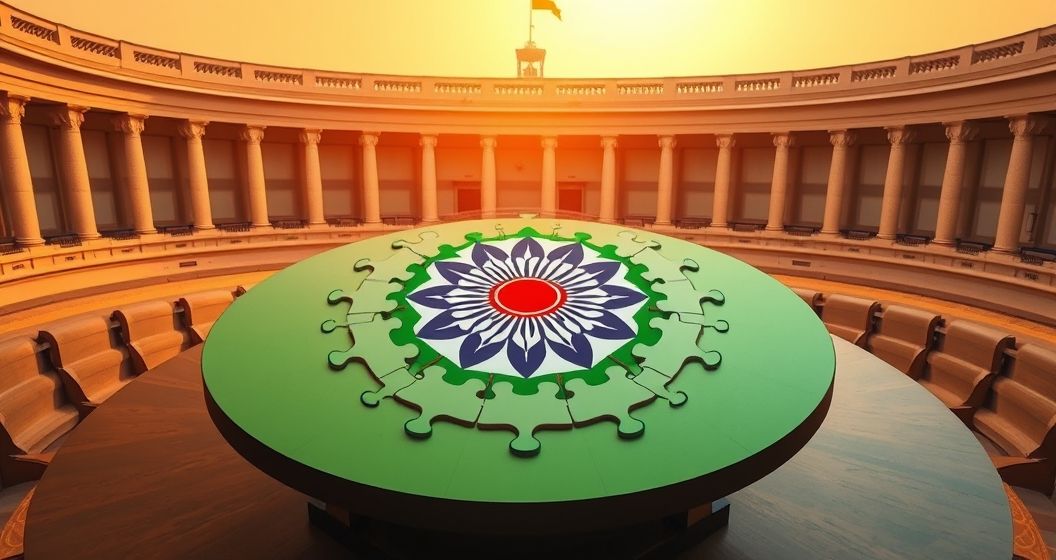
India is navigating a significant political transition as the new National Democratic Alliance (NDA) government prepares to take office. Led by Narendra Modi, who is set to begin his third term as Prime Minister, the government’s formation marks a shift to a coalition-based framework. This change comes after the Bharatiya Janata Party (BJP) fell short of an absolute majority on its own, making the support of key allies crucial for stability and governance.
A New Era of Coalition Politics
The focus has heavily been on the negotiations and portfolio allocations with key coalition partners. Parties like the Telugu Desam Party (TDP) from Andhra Pradesh and the Janata Dal (United) (JD(U)) from Bihar have emerged as kingmakers. Their support is vital for the NDA to maintain its majority in Parliament. The discussions surrounding cabinet positions are reportedly intense, as these allies seek significant roles in the new administration to address their regional priorities and policy goals.
This political landscape requires a more consultative approach to governance than in the previous two terms. The incoming government will need to carefully balance the national agenda with the demands and aspirations of its regional partners. The successful management of this coalition dynamic will be a defining factor in the administration’s effectiveness over the next five years, influencing everything from economic policy to legislative priorities.
Security Challenges Emerge in Jammu and Kashmir
Amidst the political developments in New Delhi, a grim reminder of the nation’s security challenges emerged from Jammu and Kashmir. A horrific terrorist attack on a bus carrying pilgrims in the Reasi district resulted in multiple fatalities and left many others injured. The incident has drawn widespread condemnation and has prompted a massive search operation by security forces to track down those responsible for the attack.
The attack underscores the persistent security threats in the region and presents an immediate challenge for the new government. Leaders from across the political spectrum have called for swift and decisive action. The incident highlights the delicate security situation in Jammu and Kashmir and will likely push counter-terrorism measures and regional security to the forefront of the new government’s agenda.
Economic Outlook Remains Stable
On the economic front, the Reserve Bank of India (RBI) provided a measure of stability by maintaining the status quo in its latest monetary policy review. The Monetary Policy Committee (MPC) decided to keep the repo rate unchanged at 6.5 per cent. This decision was largely expected by markets and is aimed at keeping inflation in check while supporting sustainable economic growth.
Furthermore, the RBI revised its GDP growth forecast for the current fiscal year upwards to 7.2 per cent, signalling confidence in the Indian economy’s resilience. This positive economic outlook provides a stable backdrop for the new government, though challenges related to inflation and global economic uncertainties remain. The administration’s fiscal policies will be closely watched as it aims to build on this momentum.