
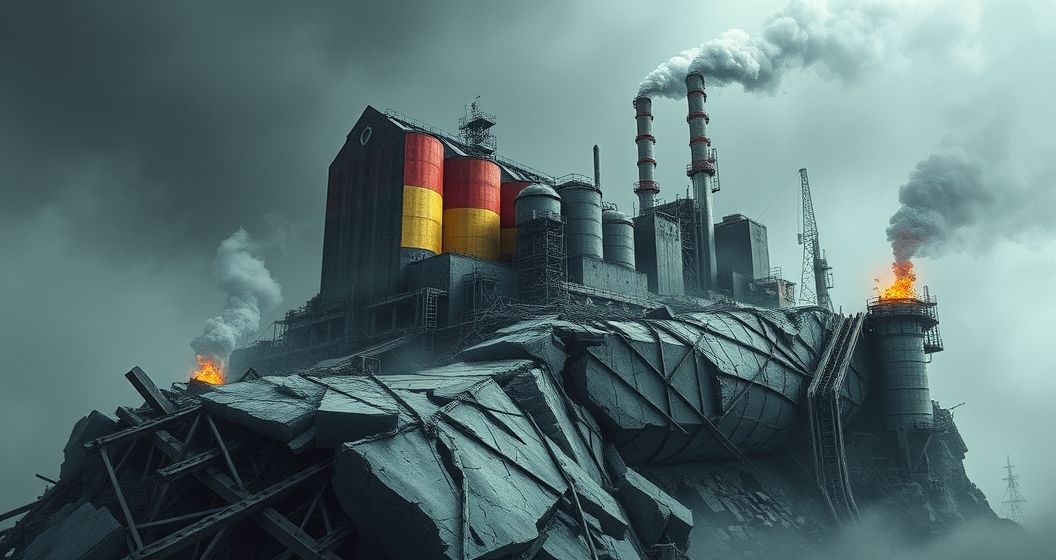
BERLIN, Germany – Europe’s economic powerhouse, Germany, finds itself at a critical juncture, navigating a complex web of challenges that threaten to reshape its industrial landscape and domestic politics. Recent data and ongoing political debates paint a picture of an economy grappling with persistent inflation, a potential recession, and internal disputes over fiscal policy, all while accelerating its ambitious energy transition.
The Budgetary Battle: Debt Brake vs. Investment Needs
The Scholz government is currently embroiled in intense negotiations over the federal budget, a process complicated by Germany’s constitutionally enshrined “debt brake.” This fiscal rule limits new borrowing, posing a significant challenge as the nation faces immense investment needs in climate protection, digitalization, and defense. “The debates are fierce,” noted a political analyst, “as the coalition partners – SPD, Greens, and FDP – each have different priorities and interpretations of fiscal responsibility.” The FDP, led by Finance Minister Christian Lindner, insists on strict adherence to the debt brake, while the SPD and Greens advocate for more flexibility to fund critical projects deemed essential for future competitiveness. The outcome of these negotiations will not only define Germany’s financial trajectory for the coming years but also test the stability of the ruling coalition.
The economic impact of these discussions is palpable. Businesses are seeking clarity and stability, yet the uncertainty around public spending and potential tax adjustments adds to an already challenging environment. Analysts warn that protracted disputes could further dampen investor confidence at a time when Germany desperately needs to stimulate growth.
Inflation’s Stubborn Grip and Recession Fears
Despite some recent dips, inflation in Germany remains a significant concern for both consumers and businesses. High energy prices, exacerbated by geopolitical events, continue to feed into the cost of production and daily living. While the European Central Bank (ECB) has taken steps to curb inflation, its effects are slow to materialize on the ground. Recent economic indicators suggest that Germany might be on the brink of, or already in, a technical recession. Industrial output has shown weaknesses, and the crucial manufacturing sector, long the backbone of the German economy, faces headwinds from global demand fluctuations and high input costs.
- Energy Costs: Still a major burden for energy-intensive industries.
- Global Demand: Weakness in key export markets impacts German manufacturers.
- Consumer Spending: High inflation erodes purchasing power, slowing domestic consumption.
Economists are closely watching forthcoming GDP figures, with many forecasting a stagnant or even contracting economy for the rest of the year. This slowdown has broader implications for the Eurozone, given Germany’s central role as its largest economy.
Accelerating the Energy Transition Amidst Hurdles
Germany’s ambitious “Energiewende” – the transition to renewable energy – is moving forward, but not without considerable challenges. The government aims to achieve 80% renewable electricity by 2030, a goal that requires unprecedented expansion of wind and solar power, alongside significant grid upgrades. However, bureaucratic hurdles, local opposition to new infrastructure projects, and supply chain issues for critical components are slowing progress.
Key Challenges:
- Permitting Process: Lengthy approval times for wind farms and transmission lines.
- Grid Infrastructure: Modernizing and expanding the grid to handle intermittent renewable energy.
- Storage Solutions: Developing sufficient battery and hydrogen storage capacities.
While the long-term benefits of energy independence and climate protection are clear, the short-term costs and logistical complexities are putting pressure on businesses and households. The government is pushing through legislation to streamline permitting and accelerate project development, recognizing that the success of the Energiewende is crucial for Germany’s industrial future and climate goals.
As Germany navigates these turbulent waters, the world watches closely. Its ability to manage these intertwined crises will not only determine its own prosperity but also have profound implications for the stability and direction of the European Union.


