
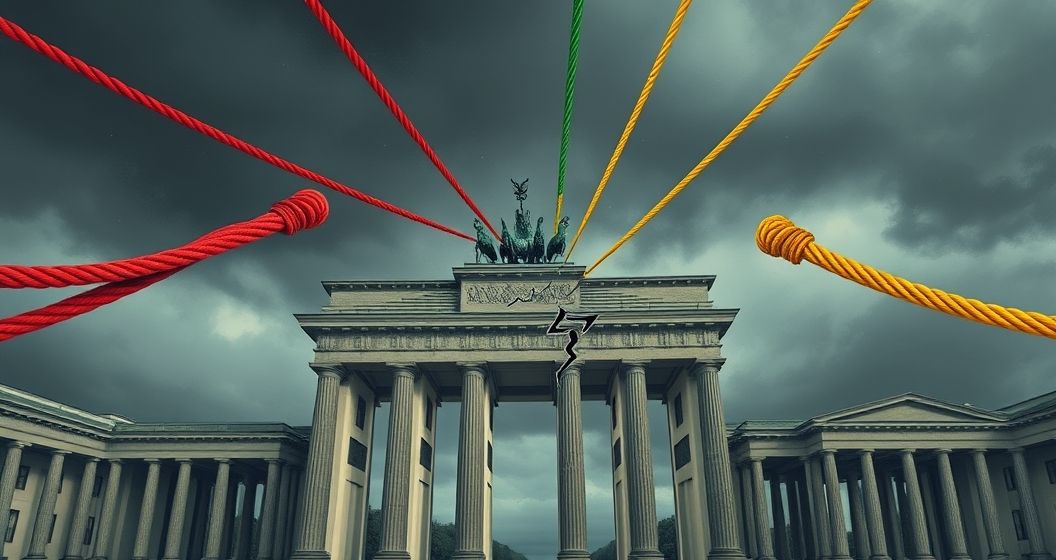
Germany’s ruling coalition is currently navigating a severe budget crisis, creating significant political uncertainty. A landmark constitutional court ruling has invalidated a key part of the government’s financial planning, leaving a multi-billion euro gap in the 2024 budget. Chancellor Olaf Scholz and his partners now face the difficult task of finding a compromise on spending cuts and priorities, with major implications for the country’s economic and climate policies.
The Core of the Financial Dilemma
The crisis was triggered by a ruling from Germany’s Constitutional Court, which declared the government’s reallocation of 60 billion euros in unused pandemic-era debt to its climate and transformation fund (KTF) unconstitutional. This decision not only affects future climate projects but also impacts financial planning for the current year. The government is now forced to adhere strictly to Germany’s constitutionally enshrined “debt brake,” which limits structural new borrowing, making it extremely difficult to close the financial gap without significant adjustments.
Competing Priorities within the Coalition
The search for a solution has exposed deep ideological divides within the three-party coalition, comprised of the Social Democrats (SPD), the Greens, and the Free Democrats (FDP). Each party has different priorities, making negotiations tense and complex.
The FDP’s Stance on Fiscal Discipline
The fiscally conservative FDP, led by Finance Minister Christian Lindner, is staunchly opposed to any tax increases or a suspension of the debt brake. Lindner argues for fiscal responsibility and insists that the government must make do with the available funds. His party is pushing for spending cuts across various sectors, including social benefits and subsidies, to balance the budget without accumulating further debt.
The Greens’ Climate and Social Agenda
In contrast, the Greens are fighting to protect funding for their core policy areas: climate action and social welfare. They warn that drastic cuts to climate protection projects would undermine Germany’s long-term environmental goals and its industrial transformation. They have shown more openness to reforming the debt brake, arguing that its strict application hinders necessary investments for the future.
Scholz’s Social Democrats as Mediators
Chancellor Olaf Scholz’s SPD is caught in the middle, attempting to mediate between its two partners. The SPD’s primary goal is to shield social programs and low-income households from the harshest cuts. Scholz has emphasized the need for a solution that maintains social cohesion while also respecting the court’s decision, a difficult balancing act that requires compromise from all sides.
Potential Consequences and Outlook
The ongoing negotiations are exploring various options, including cuts to energy price subsidies, reductions in departmental budgets, and the postponement of certain projects. The outcome will have a direct impact on citizens and businesses alike. Failure to reach an agreement could not only paralyze government functions but also severely damage the coalition’s stability, fueling speculation about its long-term viability. The coming weeks are critical as leaders work to forge a compromise that can steer Germany through this fiscal turmoil.


