
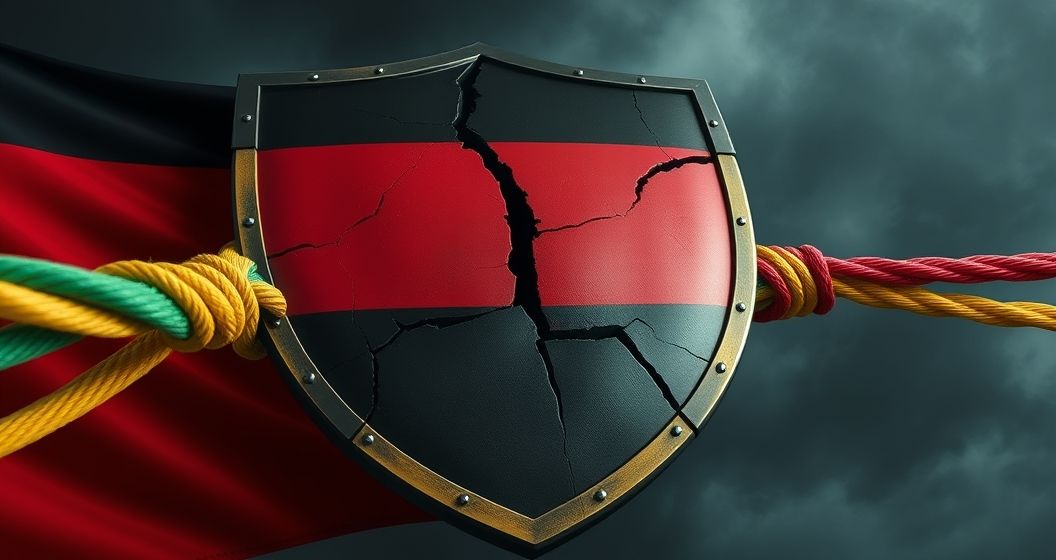
Germany’s three-party ruling coalition is facing a severe internal test as intense negotiations over the 2025 federal budget reveal deep ideological divides. Chancellor Olaf Scholz’s government, comprised of his Social Democrats (SPD), the Greens, and the pro-business Free Democrats (FDP), is struggling to close a multi-billion euro financing gap. The outcome of these talks will not only shape Germany’s fiscal policy but also determine the stability and future of the fragile coalition itself.
The Heart of the Dispute: The Debt Brake
The central point of contention is Germany’s constitutionally enshrined “debt brake” (Schuldenbremse), which strictly limits new government borrowing. After years of suspension due to the pandemic and energy crisis, Finance Minister Christian Lindner of the FDP is adamant about its full reinstatement. This has created a major hurdle, forcing ministries to identify significant spending cuts to balance the books, a move that his coalition partners strongly resist.
Lindner argues that fiscal discipline is essential for long-term economic stability and controlling inflation. He has demanded that all government departments, except for defence, propose substantial savings. This austerity-focused approach directly clashes with the spending priorities of the SPD and the Greens, who warn that drastic cuts could harm social cohesion and hinder crucial investments in the country’s future.
Clashing Visions for Germany’s Future
The budget debate has exposed the fundamentally different philosophies of the coalition partners. The FDP champions a state that is lean and business-friendly, prioritizing tax stability and reduced bureaucracy over expansive government programs.
SPD and Greens Demand Investment
In contrast, the SPD and the Greens are pushing for continued investment in social welfare, climate protection, and infrastructure modernization. Ministers from these parties argue that cutting funds for projects like citizen benefits, child support, and the green energy transition would be a grave political and economic mistake. They contend that such investments are not just expenses but necessary down payments on future prosperity and stability.
Chancellor Scholz Under Pressure to Mediate
Chancellor Olaf Scholz is in the difficult position of mediating between these opposing factions within his own government. He has urged all sides to find a workable compromise, but the deadline is approaching fast. The cabinet is expected to agree on a draft budget in early July, and failure to do so could trigger a full-blown government crisis. The pressure is mounting on Scholz to forge a consensus that prevents the coalition from fracturing while still presenting a credible financial plan.
The ongoing struggle highlights the inherent instability of this ideologically diverse coalition. A resolution will require painful concessions from all parties. The final budget will serve as a clear indicator of which political vision has prevailed and whether this government has the strength to continue leading Germany through challenging economic times.
