
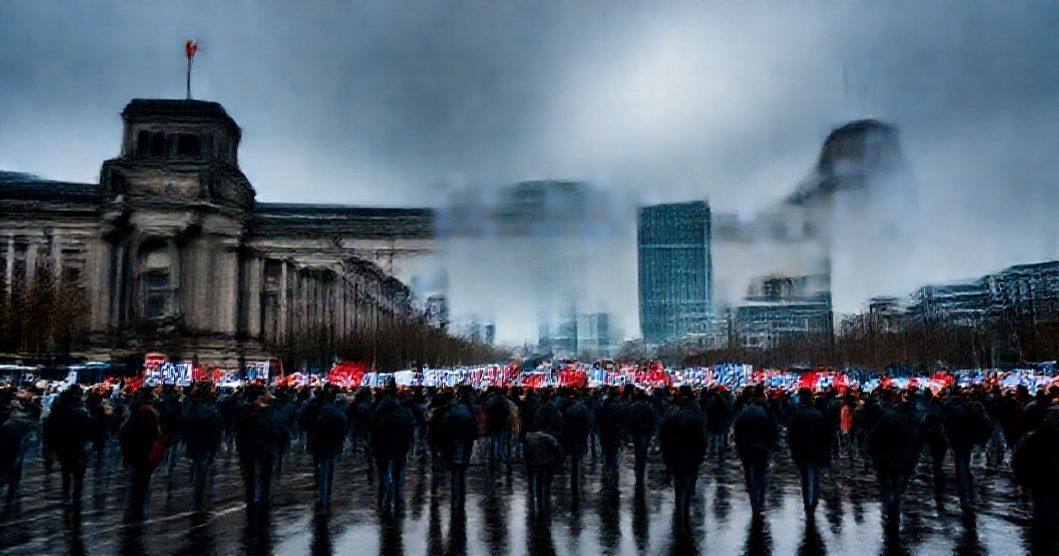
Germany, often seen as Europe’s economic powerhouse, is currently navigating a tumultuous period marked by significant political, economic, and social challenges. From an unprecedented budget crisis that threatens future investments to a wave of disruptive strikes and a shifting political landscape, the nation is grappling with a complex web of interconnected issues that demand urgent attention from Chancellor Olaf Scholz’s coalition government.
The Unfolding Budget Crisis: A Fiscal Tightrope Walk
At the heart of Germany’s current political maelstrom is the severe budget crisis triggered by a landmark ruling from the Constitutional Court. The court’s decision effectively reclassified billions of euros originally earmarked for climate protection and industrial modernization, declaring their transfer from pandemic-era unused funds as unconstitutional. This ruling instantly created a massive funding gap, forcing the ruling coalition of the Social Democrats (SPD), Greens, and Free Democrats (FDP) to embark on a desperate search for savings.
The implications are *profound*. Future investments in critical areas like the energy transition, digitalization, and infrastructure are now under intense scrutiny. The “debt brake,” a constitutional limit on new borrowing, is back in full force, severely restricting the government’s fiscal leeway. Debates within the coalition about potential cuts, tax increases, or even a temporary suspension of the debt brake have highlighted deep ideological divisions, creating significant uncertainty for businesses and citizens alike.
Economic Headwinds and Lingering Recession Fears
Compounding the budget woes, Germany’s economy continues to struggle. Often dubbed the “sick man of Europe” by some analysts, the nation is battling persistent high energy costs, inflation, and weakening global demand. Recent data points to a concerning trend:
- Industrial Output: Manufacturing, traditionally a strong pillar, has shown signs of contraction.
- Export Decline: Geopolitical tensions and slowing global trade have impacted Germany’s export-oriented economy.
- Recession Outlook: While a full-blown recession has been narrowly avoided, growth forecasts for 2024 remain subdued, with many economists predicting only marginal expansion or even a slight contraction.
The combination of fiscal austerity and economic stagnation presents a formidable challenge, requiring innovative solutions to reignite growth and restore confidence in Europe’s largest economy. Key sectors like the automotive industry are facing immense pressure to adapt to new technologies and global competition, adding another layer of complexity to the economic outlook.
Wave of Strikes Grips the Nation
Adding to the sense of disruption, Germany has experienced a surge in labor disputes and strikes across key sectors. Most notably, the *GDL train drivers’ union* has orchestrated several widespread strikes, bringing large parts of the Deutsche Bahn railway network to a standstill. These actions, driven by demands for shorter working hours and higher pay amidst rising inflation, have severely impacted daily commutes and freight transport, causing significant economic disruption.
Beyond the railways, ground staff at major German airports, including those working for Lufthansa, have also initiated strikes, leading to flight cancellations and travel chaos. This wave of industrial action underscores growing frustrations over real wages failing to keep pace with the cost of living, signaling a broader trend of labor unrest that could continue to challenge the government and employers throughout the year.
Political Fault Lines: The Rise of the Far-Right and Mass Protests
Perhaps the most striking development on the social front is the ongoing political turbulence surrounding the far-right Alternative for Germany (AfD) party. Following revelations about a secret meeting where “remigration” plans for German citizens of foreign origin were discussed, Germany has witnessed an unprecedented wave of nationwide protests. Millions of people have taken to the streets in cities across the country to demonstrate against right-wing extremism and in defense of democracy.
Despite these massive demonstrations, the AfD continues to poll strongly, presenting a significant challenge to mainstream parties. The debate over whether to consider banning the party, along with intensified discussions about the future of German democracy, highlights deep divisions within society. The government and established parties are under immense pressure to find effective strategies to counter the AfD’s appeal and address the underlying grievances that fuel its support.
As Germany navigates these multifaceted crises, the coming months will be critical in determining the nation’s trajectory, both economically and socially, within Europe and on the global stage.