
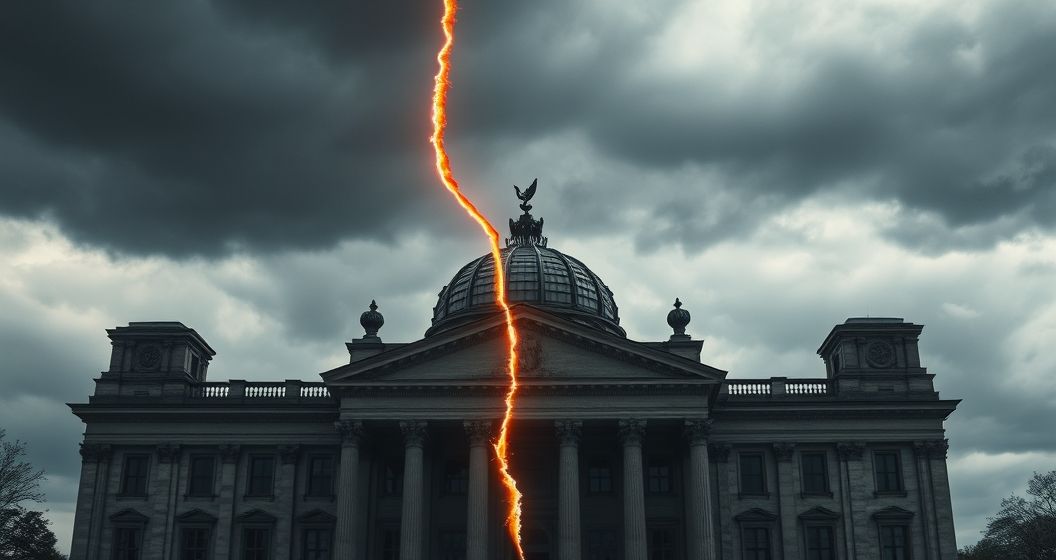
Germany’s ruling “traffic light” coalition is facing a critical test as intense negotiations over the 2025 federal budget reveal profound divisions. Finance Minister Christian Lindner’s insistence on strict fiscal discipline is clashing with the spending priorities of his coalition partners, the Social Democrats (SPD) and the Greens. This internal conflict has created a political deadlock, drawing sharp criticism from the opposition and raising concerns about the government’s stability and economic direction as deadlines approach.
The Sticking Point: Germany’s Debt Brake
At the heart of the dispute is Germany’s constitutionally enshrined “debt brake” (Schuldenbremse), which limits new government borrowing. Lindner, from the fiscally conservative Free Democratic Party (FDP), is adamant that this rule must be respected, necessitating significant spending cuts across various ministries. He argues that after years of crisis-related spending, a return to sound fiscal policy is essential for long-term economic health and to combat inflation. This stance puts him directly at odds with his coalition partners.
Conflicting Priorities on Spending
The SPD and the Greens argue that rigid adherence to the debt brake is untenable in the face of current challenges. They are pushing to protect funding for key areas, including social welfare programs, climate transition initiatives, and infrastructure investments. Furthermore, pressure is mounting to increase defense spending to meet NATO’s 2% of GDP target, a commitment that adds billions to the budget shortfall. These conflicting priorities have created a multi-billion euro gap that the parties are struggling to close.
Opposition Seizes on Coalition Infighting
The main opposition party, the Christian Democratic Union (CDU), is capitalizing on the government’s public disagreements. CDU leader Friedrich Merz has accused Chancellor Olaf Scholz of losing control of his government and leading the country into economic stagnation. The opposition is framing the debate as a failure of leadership, arguing that the coalition’s internal battles are harming Germany’s credibility and preventing decisive action on pressing economic issues, further eroding public trust in the current administration.
Broader Economic and Political Risks
This prolonged budget dispute carries significant risks beyond political infighting. Economists warn that drastic spending cuts could stifle Germany’s fragile economic recovery. Conversely, failing to present a credible budget could unnerve financial markets. The political stakes are equally high; if a compromise cannot be reached, it could trigger a government crisis, potentially leading to the collapse of the three-party coalition. The pressure is mounting on Chancellor Scholz to mediate a solution that holds his government together.
Ultimately, the outcome of these budget negotiations will be a defining moment for Chancellor Olaf Scholz’s government. Finding a compromise that satisfies fiscal hawks, social advocates, and defense proponents is a monumental task. The failure to do so could not only paralyze policy-making but also deepen the political uncertainty currently facing Germany, with major implications for both domestic and European stability. All eyes are on Berlin as the parties work against the clock to find common ground.