
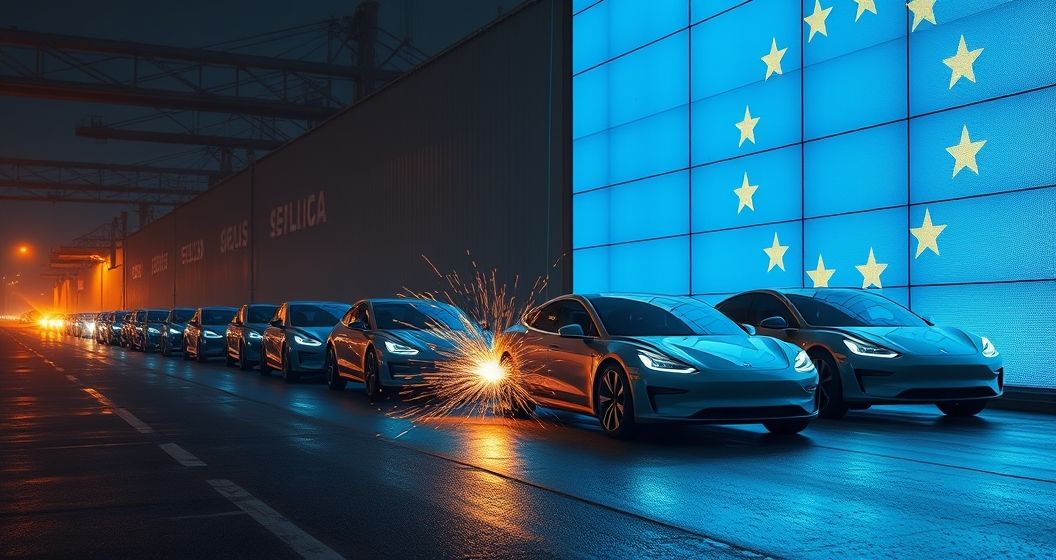
Trade tensions between the European Union and China have reached a critical point following the European Commission’s announcement of provisional tariffs on Chinese electric vehicles (EVs). This move, stemming from an anti-subsidy investigation, has prompted a sharp rebuke from Beijing and raised significant concerns about a potential escalating trade war between the two economic giants. The decision could reshape the global automotive market and have far-reaching economic consequences beyond the car industry.
The Core of the Dispute: Allegations of Unfair Subsidies
The European Commission alleges that Chinese EV manufacturers benefit from substantial state subsidies, allowing them to sell vehicles at artificially low prices in the European market. This, officials argue, creates an uneven playing field that threatens the viability of European automakers. The investigation concluded that the entire EV supply chain in China, from raw materials to shipping, receives unfair financial support, justifying the imposition of countervailing duties to protect local industry.
These new tariffs are set to be applied on top of the existing 10% import duty. The specific rates will vary by manufacturer, with some major brands facing additional duties of up to 38.1%. The move is designed to level the competitive landscape, but critics fear it may stifle consumer choice and slow down the transition to electric mobility by increasing vehicle prices.
Beijing’s Strong Condemnation and Potential Retaliation
China has vehemently rejected the EU’s findings, labeling the tariffs as blatant protectionism that violates international trade rules. The Chinese Ministry of Commerce stated that the decision disregards objective facts and is detrimental to global efforts to combat climate change. Officials in Beijing maintain that the success of their EV industry is a result of technological innovation, robust supply chains, and open market competition, not state-sponsored subsidies.
In response, China has warned that it will take all necessary measures to defend the legitimate rights and interests of its companies. While no specific actions have been announced, speculation is rife that Beijing could target European exports in sectors such as agriculture, aviation, and luxury goods. This potential for a tit-for-tat escalation has many European businesses with significant exposure to the Chinese market on high alert.
A Divided Stance Within Europe
The decision to impose tariffs has not received unanimous support within the EU itself. Major automotive nations, particularly Germany, have expressed strong reservations. German automakers like Volkswagen, BMW, and Mercedes-Benz have deep ties to the Chinese market, which is a crucial source of their revenue. They fear that retaliatory measures from China could severely harm their operations and profitability, creating a difficult balancing act for European policymakers.
Navigating a Path Forward
With the provisional tariffs set to take effect, a window for negotiation remains open. Both sides have an opportunity to engage in dialogue to find a mutually acceptable solution and avert a wider conflict. The coming weeks will be crucial in determining whether Brussels and Beijing can de-escalate the situation or if this dispute will spiral into a damaging trade war with global economic implications.