
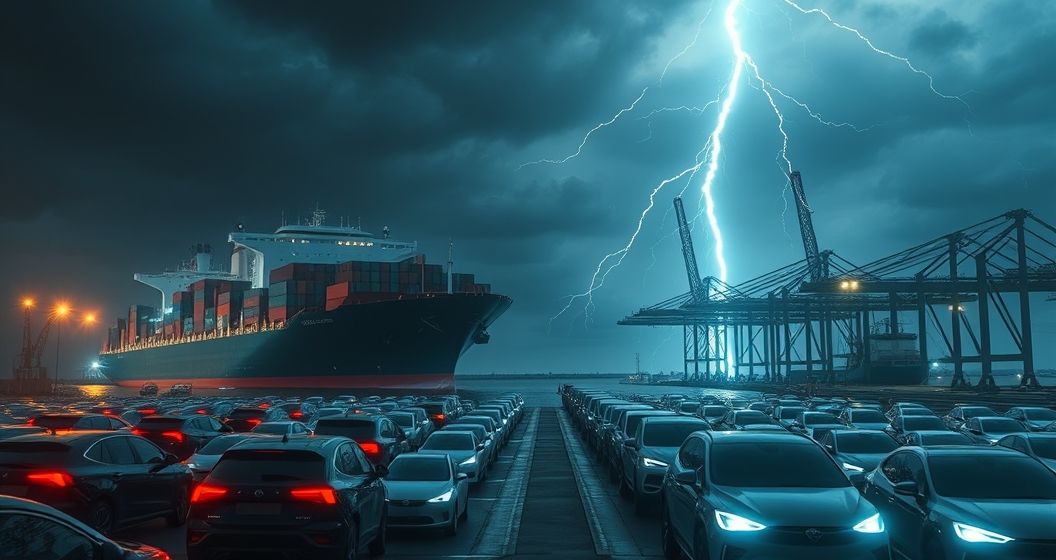
Tensions between Beijing and Brussels are escalating following the European Union’s decision to impose steep new tariffs on imported Chinese electric vehicles (EVs). China’s Ministry of Commerce has condemned the move, labeling it as blatant protectionism that will seriously disrupt the global automotive supply chain. The ministry warned that Beijing will take all necessary measures to firmly defend the legitimate rights and interests of Chinese companies, raising fears of a full-blown trade war.
EU Cites Unfair Subsidies for Tariff Hike
The European Commission announced its plan to introduce provisional tariffs of up to 38.1% on Chinese EVs, arguing that its investigation found evidence of “unfair subsidisation” in China’s EV value chain. These new duties are set to be applied on top of the existing 10% tariff. The Commission stated that the influx of subsidised Chinese imports at artificially low prices poses a clear threat of injury to EU industry. The specific rates will vary depending on the manufacturer, with companies that cooperated with the investigation facing lower duties.
Beijing’s Strong Condemnation and Potential Retaliation
In response, Beijing has been unequivocal in its opposition. Chinese officials argue that the EU’s investigation lacks merit and violates World Trade Organization (WTO) rules. They contend that the competitive advantage of China’s EV industry comes from innovation and efficient supply chains, not state subsidies. While no specific retaliatory measures have been officially announced, there is widespread speculation that China could target European agricultural products, aviation, and large-engine vehicles with its own set of tariffs, creating significant economic repercussions for EU member states.
Divisions Emerge Within the European Union
The EU’s decision has not been met with unanimous support within the bloc. Germany, a major automotive powerhouse with significant investments and sales in China, has voiced strong concerns. German automakers like Volkswagen, BMW, and Mercedes-Benz fear that retaliatory measures from Beijing could severely harm their business in the world’s largest car market. German Chancellor Olaf Scholz has publicly stated his opposition to the tariffs, emphasizing that protectionism and trade barriers ultimately hurt all parties involved. This internal division highlights the complex economic ties between Europe and China.
Global Economic Impact and an Uncertain Future
The escalating dispute casts a shadow over global trade stability. Analysts warn that a tit-for-tat tariff battle would not only harm the automotive industries in both China and the EU but could also lead to higher prices for consumers and disrupt the green energy transition. The coming weeks will be crucial as both sides engage in further dialogue. The key question remains whether a diplomatic solution can be found to de-escalate the situation or if the world is on the brink of another damaging trade conflict between major economic powers.