
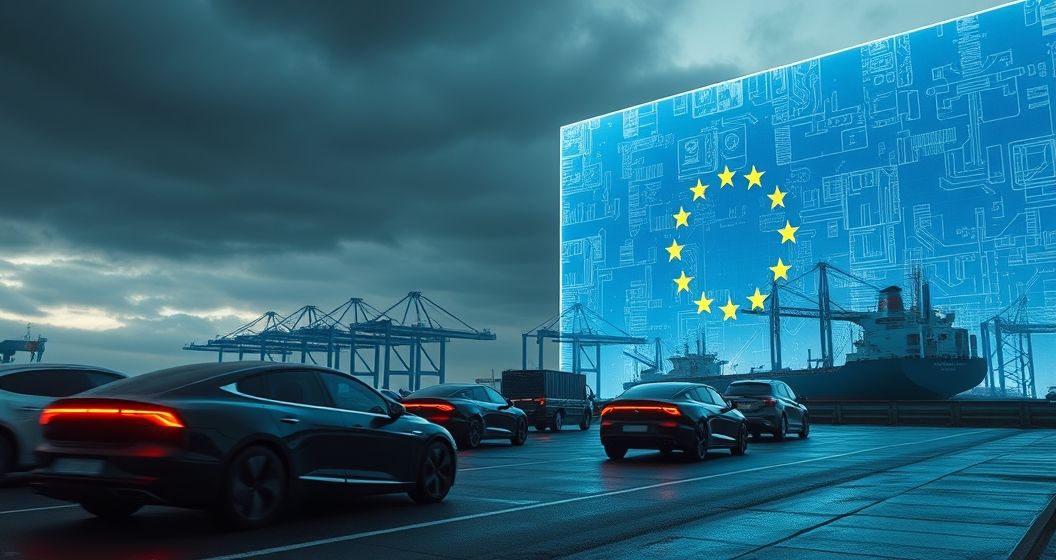
Trade tensions between China and the European Union have intensified following the EU’s decision to impose new provisional tariffs on Chinese electric vehicle (EV) imports. Beijing has strongly condemned the move, labeling it as protectionism and vowing to take all necessary measures to protect its legitimate interests. The dispute marks a significant escalation in trade frictions and threatens to disrupt the global automotive market, impacting both producers and consumers.
The Core of the Dispute: Subsidies and Fair Competition
The European Commission’s action comes after an investigation concluded that the battery-electric vehicle value chain in China benefits from unfair subsidies. Brussels argues that these subsidies are harming EU producers by allowing Chinese manufacturers to sell EVs at artificially low prices. The new duties are intended to level the playing field for European carmakers.
The tariffs vary depending on the manufacturer. Specific duties have been announced for major players like BYD, Geely, and SAIC, while other cooperating companies face an average tariff. Non-cooperating companies will be subject to a higher residual duty. These measures are provisional and could become definitive if a negotiated solution is not reached with Chinese authorities.
Beijing’s Firm Response and Potential Countermeasures
China’s Ministry of Commerce swiftly responded, accusing the EU of disregarding World Trade Organization (WTO) rules and engaging in blatant protectionism. Officials in Beijing stated that the investigation was flawed and that the findings lack factual and legal basis. They have urged the EU to immediately correct its wrongful practices and return to a path of dialogue and cooperation.
While specific countermeasures have not been detailed, analysts believe Beijing could target key European exports. Industries such as agriculture, aviation, and luxury goods could face retaliatory tariffs. There is also speculation that European automakers producing vehicles with large engines could be targeted, a move that would significantly impact German manufacturers.
Ripple Effects on the Global Automotive Industry
The tariffs are poised to create significant disruptions across the automotive sector. Chinese EV makers, who have been rapidly expanding their presence in Europe, will see their competitive pricing advantage eroded. This could slow their European market penetration and force them to reconsider their investment and export strategies.
Conversely, European automakers are not immune. Many, particularly German brands like Volkswagen, BMW, and Mercedes-Benz, rely heavily on the Chinese market for a substantial portion of their global sales. Any retaliatory action from Beijing could severely harm their profitability and operations within China, creating a complex and challenging business environment.
A Divided European Stance
The EU’s decision does not have unanimous support among its member states. Germany, in particular, has expressed significant concern about the potential for an escalating trade war. German officials and auto industry leaders have warned that the negative consequences of a trade conflict could far outweigh any potential benefits of the tariffs. This internal division highlights the delicate balance the EU must strike between protecting its industries and maintaining a stable trade relationship with its largest trading partner.
