
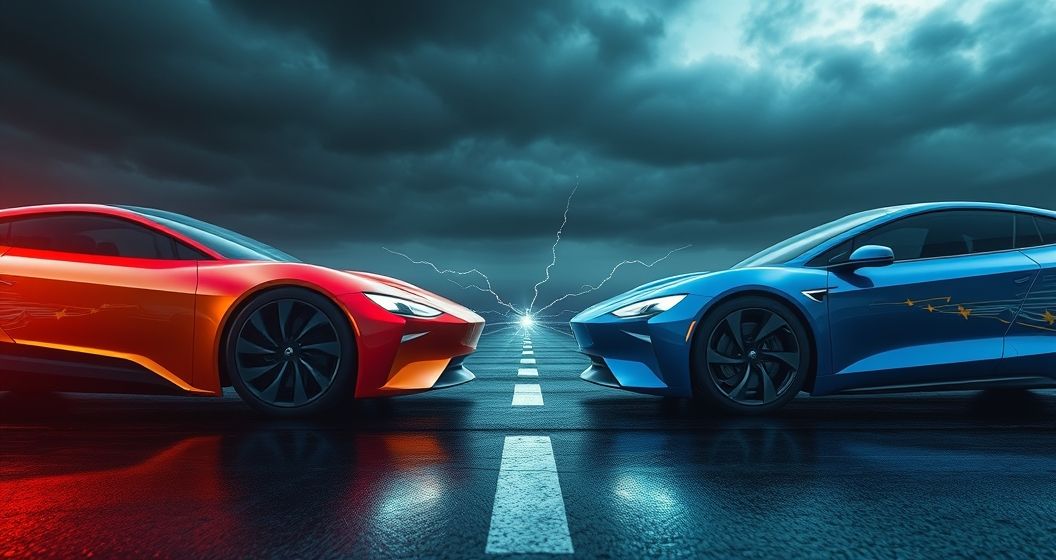
Trade tensions between China and the European Union are intensifying following the EU’s decision to impose provisional tariffs on Chinese electric vehicle (EV) imports. Beijing has strongly condemned the move as protectionism, warning of retaliatory measures that could impact European industries. This escalating dispute threatens to disrupt a critical economic relationship and has significant implications for the global automotive market and international trade rules.
EU Cites Unfair Subsidies for Tariff Decision
The European Commission announced its plan to apply additional duties on EVs imported from China, arguing that Chinese manufacturers benefit from unfair government subsidies. These subsidies, according to the EU, allow Chinese companies to sell their vehicles at artificially low prices, undercutting European competitors. The tariffs vary by manufacturer, with specific rates applied to major players like BYD, Geely, and SAIC, while others face a broader average duty. The decision follows a months-long investigation into China’s EV supply chain.
Beijing’s Swift and Firm Retaliation
China’s Ministry of Commerce responded immediately, calling the EU’s tariffs a “blatant act of protectionism” that lacks a factual and legal basis. Officials in Beijing have accused the EU of weaponizing trade issues and have vowed to take all necessary measures to defend the legitimate rights and interests of Chinese companies. As a first concrete step, China launched an anti-dumping investigation into pork imports from the EU, a move widely seen as a direct and targeted retaliation against the EV tariffs.
European Industries Divided on the Issue
The EU’s tariff decision has not received universal support within the bloc, exposing divisions among member states and industries. Germany, home to major automakers like Volkswagen, BMW, and Mercedes-Benz, has expressed serious concerns. These companies have substantial investments and sales in the Chinese market and fear that a trade war would harm their operations far more than the tariffs would help. They argue that open markets and fair competition, not protectionism, are the keys to long-term success.
Broader Implications for Global Trade Dynamics
This dispute is more than just a conflict over cars; it reflects a larger shift in global economic strategy. The EU’s action aligns with a broader Western trend of “de-risking” from China and protecting key domestic industries from what they perceive as unfair competition. However, it also raises the risk of a tit-for-tat trade conflict that could disrupt supply chains, increase consumer prices, and create instability in the global economy, which is already facing numerous challenges.
As both sides stand their ground, the path forward remains uncertain. While the EU’s tariffs are currently provisional, allowing for a period of negotiation, the initiation of retaliatory measures by China suggests that de-escalation will be difficult. The outcome of this standoff will be a critical test for EU-China relations and will set a precedent for how global powers manage economic competition in an increasingly fractured world.


