
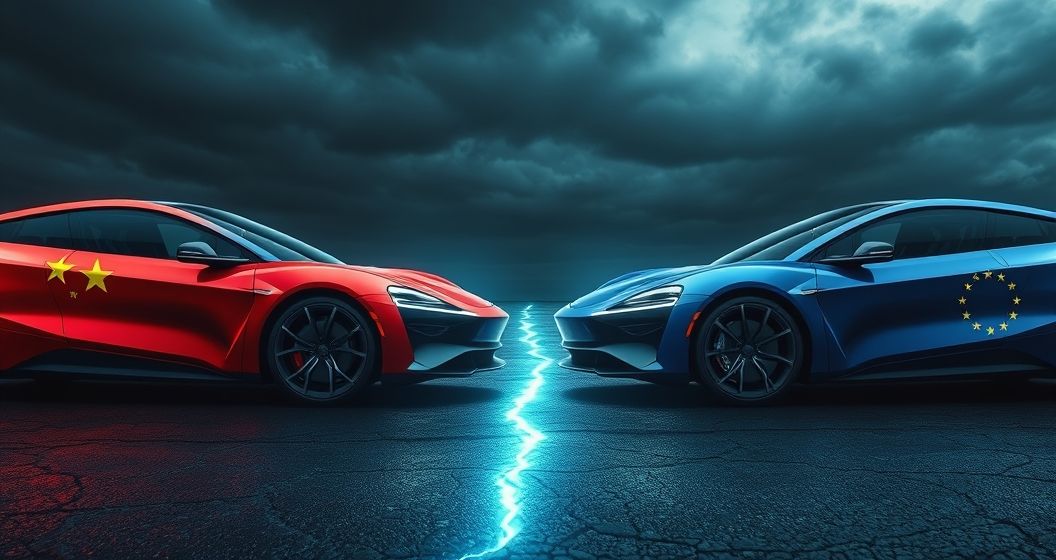
Tensions between China and the European Union are escalating sharply following the EU’s decision to impose significant new tariffs on Chinese-made electric vehicles (EVs). Citing unfair state subsidies, Brussels has taken a step that Beijing condemns as blatant protectionism. China has vowed to take all necessary measures to defend its interests, raising fears of a retaliatory trade dispute that could impact multiple global industries and disrupt fragile supply chains.
The European Union’s Tariff Rationale
The European Commission announced the provisional tariffs after a months-long investigation into China’s EV industry. The probe concluded that Chinese automakers receive substantial government subsidies, allowing them to sell vehicles at artificially low prices in the European market. Officials argue this practice creates an unfair competitive advantage and threatens the viability of European car manufacturers. The tariffs are not uniform; they will vary by company, with some facing duties of up to 38.1% on top of the existing 10% tariff. The move is framed as a necessary measure to level the playing field and safeguard European jobs and industrial capacity.
Beijing’s Firm Response and Potential Retaliation
China’s Ministry of Commerce immediately denounced the EU’s decision, calling it a violation of international trade rules that ignores facts and harms the legitimate rights of Chinese companies. Beijing has strongly urged the EU to reverse its course, warning that it will not stand idly by. While no formal retaliatory tariffs have been announced, Chinese state media and industry associations have hinted at potential targets. These include an anti-dumping investigation into European pork products and possible tariffs on imported luxury cars with large-engine capacities, a move that would directly affect major German automakers who have been vocal critics of the EV tariffs.
Economic Implications for a Global Market
A full-scale trade war would have far-reaching economic consequences beyond the auto sector. For European consumers, the tariffs will likely lead to higher prices for more affordable EVs, potentially slowing the continent’s green transition. Major European car brands that have a significant manufacturing footprint in China or rely heavily on the Chinese market for sales could be severely impacted by countermeasures. The conflict also threatens to disrupt the deeply integrated global automotive supply chain, as European firms depend on China for essential battery components and raw materials. This mutual dependence makes the dispute particularly risky for both sides.
Navigating a Path Away from Conflict
With the new EU tariffs set to take effect, both sides are at a critical crossroads. There is still a window for negotiation to prevent a further escalation, and some EU member states, particularly Germany, have expressed strong reservations about the tariffs, fearing the economic fallout. The coming weeks will be crucial in determining whether dialogue can lead to a resolution or if this dispute will spiral into a broader and more damaging economic conflict. The outcome could set a precedent for how Western nations handle trade relations with China in other high-tech industries for years to come.
