
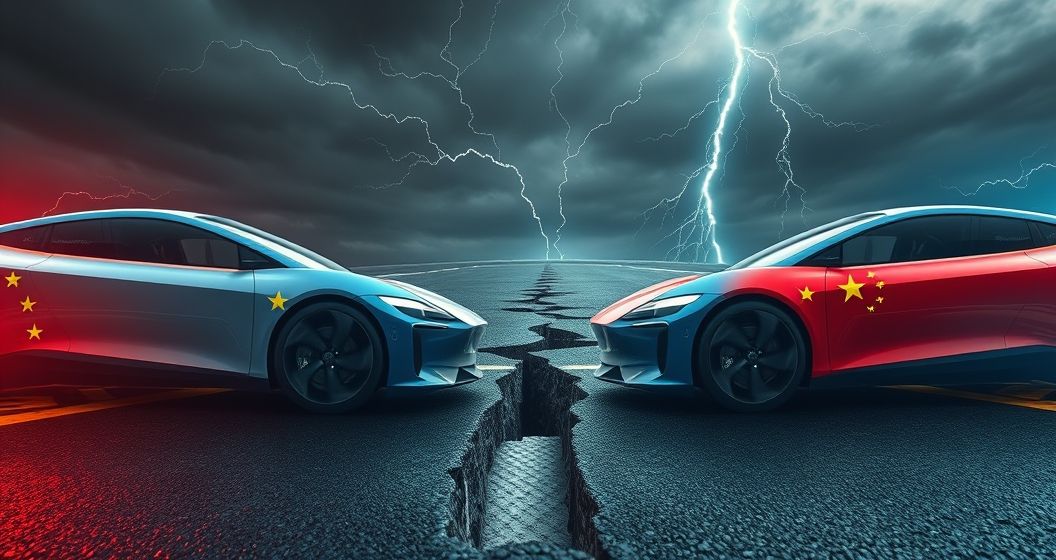
Trade tensions between Beijing and Brussels are escalating, placing the global automotive industry at the center of a potential economic conflict. The European Union’s decision to impose significant provisional tariffs on Chinese electric vehicle (EV) imports has triggered a firm response from China, raising concerns about a broader trade dispute that could impact multiple sectors across both economies.
The EU’s Move Against Chinese Subsidies
The European Commission has announced its intention to apply additional duties of up to 38.1% on imported Chinese EVs. This decision follows a lengthy investigation into what the EU describes as unfair state subsidies provided to Chinese automakers. Officials in Brussels argue that these subsidies give Chinese companies an unjust advantage, allowing them to undercut European manufacturers and distort the market.
These tariffs are not uniform and will vary depending on the manufacturer. The move is framed as a measure to protect European industry and ensure a level playing field. However, the action has been met with significant criticism, not only from Beijing but also from within the EU itself, particularly from nations with strong economic ties to China.
Beijing Vows to Take Necessary Measures
China’s Ministry of Commerce has strongly condemned the EU’s decision, labeling it as a blatant act of protectionism that ignores established facts and international trade rules. Beijing has warned that it will closely monitor the situation and is prepared to take all necessary measures to safeguard the legitimate rights and interests of its companies. This has been widely interpreted as a threat of retaliatory tariffs.
While specific countermeasures have not been officially announced, there is widespread speculation that European industries such as automotive, agriculture, and aviation could be targeted. The Chinese government maintains that its EV industry’s success is built on innovation and robust supply chains, not on subsidies, and accuses the EU of weaponizing trade issues.
Germany Expresses Deep Concern
A notable voice of caution has come from Germany, whose powerful automotive industry is heavily reliant on the Chinese market. German officials and industry leaders have expressed deep concern that the EU’s tariffs will ultimately lead to a damaging trade war. Major German car brands have significant investments and sales in China, making them highly vulnerable to any retaliatory actions from Beijing.
Economic Implications and Future Outlook
The unfolding dispute carries significant risks for the global economy. For European consumers, the tariffs could lead to higher prices for electric vehicles, potentially slowing the transition away from fossil fuels. For Chinese EV makers, the duties represent a major obstacle to their ambitious expansion plans in the European market.
The situation remains highly fluid as diplomatic channels are explored to de-escalate the conflict before the provisional tariffs become permanent. The coming weeks will be critical in determining whether Brussels and Beijing can find a resolution or if they are heading for a costly trade showdown with far-reaching consequences for global supply chains and international relations.


